A 'church plant mentality' can be problematic

John Newton Webb  |  Features
Date posted:  8 Aug 2025
Share Add       
A 'church plant mentality' can be problematic

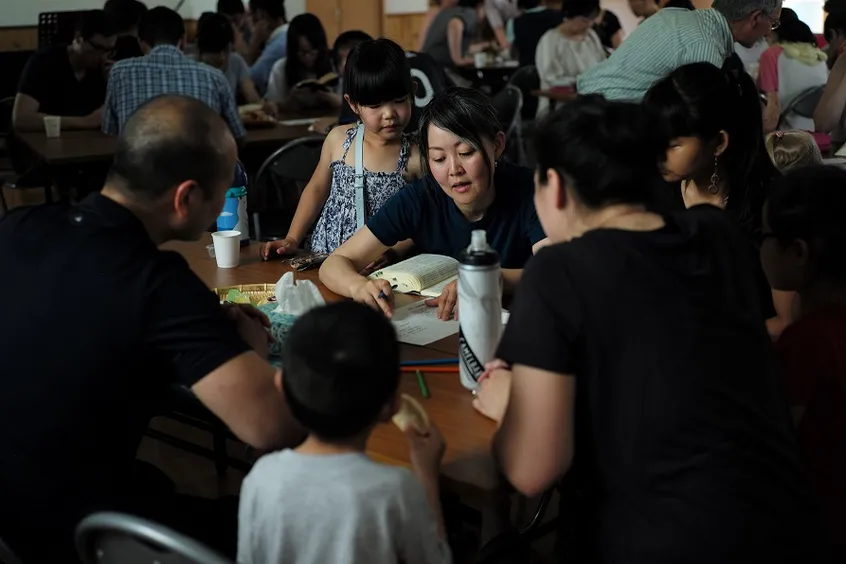
Source: James Kuan via OMF International website.

"The reason that we’re so active in evangelism is because we’re a church plant.” “I suppose we do Sunday services this way because we’re a church plant.” I heard many of these sorts of sentiments expressed when I came to pastor Izumi Church, Japan (which started in 2009) in 2016.

Talking to the believers who thought like this, I discovered a mistaken ecclesiology and a large set of unbiblical assumptions about the difference between having a missionary leader and local pastor. Working through these issues led me to reassess the church and church plant distinction.

My conclusion was that the distinction between church plants and churches is mistaken and unhelpful.


If you plant a chrysanthemum, as soon as it begins to grow you have a chrysanthemum. Whether it is a tiny shoot or in full flower, it is nonetheless a chrysanthemum. There may be significant differences between a new church and a more established church (for example, a lower number of mature believers, a greater need for outside help, more rapid change, etc.), but I do not find in the Scriptures a fundamental difference between the two.

When does a church plant become a church?

In the model where a church plant graduates into a church at some point in its life, we may ask at what point this would be. The answer that is often given is independence. Financial independence, legal independence, independence from a missionary organisation or mother church, and so on. But we must ask where in the Bible independence is used as part of the definition of a church, or as a mark of a mature church. Rather, the New Testament surely values interdependence over independence and never thinks of a church as immature because it is still dependent on outside help.

This is not simply a semantic issue. A church plant mentality can adversely affect a church’s growth.

As in the examples given above, common assumptions about church plants include the following:

  1. They are more proactively evangelistic than a mature church (and therefore that once independence is reached the evangelistic drive will lessen).
  2. They can’t mature beyond a certain point until they are independent.
  3. There are certain essential functions of a church that they can’t perform.

More assumptions could be added. One particularly damaging attitude is that the way things are done in a younger church is temporary. Of course, many things are - a growing church will and must change - but this attitude can lead believers to relativise Bible teaching that they don’t like. I have, on more than one occasion, had someone say in response to clear biblical teaching, “that will change when we’re a proper church.”

"The New Testament surely values interdependence over independence."

A few years ago, I talked these issues through with our church members and encouraged them to no longer think of us as a church plant, but just as a church. As a result, we have seen church members invest more in the church, grapple more seriously with the Bible’s full counsel about church life, and have more confidence in what we believe and do as a church.

While the verb “to church plant” may be valid, the noun “church plant” seems confusing and largely meaningless.

The missionary/pastor distinction

Related to the distinction often made between a church and a church plant is the sharp distinction between a missionary church leader and a national church leader. This also needs rethinking in light of the Word of God, and secondarily, in light of its helpfulness.

As touched on above, missionary leadership (often supported from overseas) is frequently equated with the church being immature, and a church-supported national church leader with the church being mature. Again we ask, where in God’s Word is this distinction made?

I believe in local leadership and that it is healthy for churches, where possible, to support their own workers. However, I also believe that it is unhelpful to emphasise a missionary/pastor distinction. Again, it can lead to believers relativizing the Scriptures or dismissing teaching because it comes from foreign lips.

I have been told such things as, “But Japanese people don’t like being told about sin” (i.e. you shouldn’t talk about it here). I have also heard criticism that an element introduced into our Sunday services was too Western, even though it was something we learned from other Japanese churches and that I have never seen done in the West!

The distinction also contributes to the mistaken view that missionaries evangelise and pastors disciple, whereas both should surely do both.

Recently, a couple of young (and very gifted) Japanese pastors have publicly voiced a view that it is not possible for foreign missionaries to effectively disciple Japanese believers. These are wise men with much experience (including that of working closely with missionaries) and their views reflect past and present failings of missionary work here. However, to say it is not possible overlooks the work of the Holy Spirit, makes shared cultural background of greater importance in discipleship than the Scriptures, and implicitly discourages missionaries from discipling believers.

Irrespective of who is leading the church, all congregations need careful and thorough discipling.

Emphases and practical application will change with the age of the church and the gifts and experience of the leaders, but unnecessary emphasis on distinctions between foreign leaders and native leaders, or between church planters and pastors, can lead to churches having wrong expectations, imbalances in the church’s activities, and leaders neglecting important parts of their roles.

A final reflection

We must remember that it is Jesus Christ Himself who will build His church, and not always according to our plans, methods, or hopes. Our first responsibility in church planting is to be on our knees before our God in worship, repentance, and persevering prayer.

This piece was originally published as part of a larger article 'A Few Reflections on Church Planting' in Mission Round Table 20, no. 1 (January-April 2025): 24-30. Read the full piece here.

Share
< Previous article| Features| Next article >
Read more articles on:   church planting
Read more articles by John Newton Webb >>
World
‘One generation shall commend your works to another...’

‘One generation shall commend your works to another...’

One of my favourite things about the city of Sapporo is how safe it is for children.As soon as …

World
Drawn to Jesus – but repelled by Trump

Drawn to Jesus – but repelled by Trump

In the space of ten days, three Japanese people have asked me about Donald Trump and Christianity.A non-Christian academic, …

About en

Our vision, values and history

Read more

New here?

Register and get three free articles each month!

Register