
Should we have an evangelism target?

David Robertson
Date posted: 19 Dec 2025
Remember the old adage – if you don’t have a target, you will miss it? Or, if you aim at nothing you will hit nothing? It’s an interesting feature of many contemporary evangelical churches that they have strategies, plans, goals and mission statements. And some have even adopted specific percentage goals.
When I first came to Australia to work in evangelism, I was asked to state what my “KPIs” were. This was somewhat difficult, given that I didn’t know what a KPI was! I know now. Key Performance Indicators. I didn’t know what to say. More people praying? People becoming Christians? Preaching the word faithfully. What were they looking for? They wanted facts. Percentages. Measurable outcomes. Figures. Apparently, this is what funders look for.
Is it still possible to be Anglican and evangelical?

Andy Lines
Date posted: 24 Oct 2025
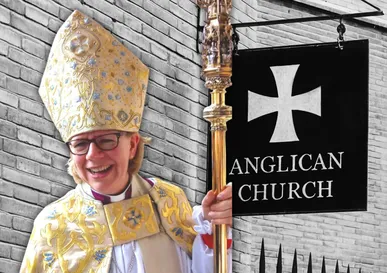
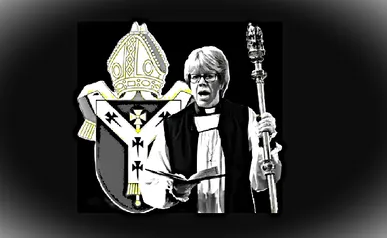
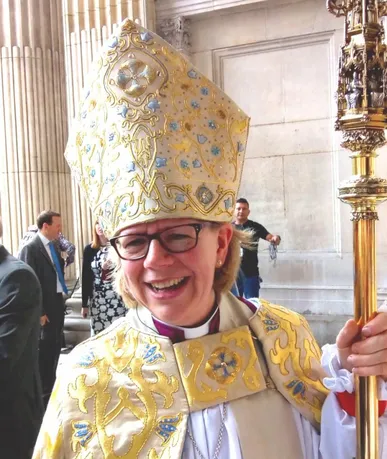
The appointment of Dame Sarah Mullally to one of the highest offices in the land has generated a huge amount of comment on different media platforms. As an Anglican leader myself, I’m going to try to briefly answer four questions that commonly arise.
- What message does the appointment of a theologically liberal woman as Archbishop of Canterbury send to the world and to the church?
For supporters, this shows that one of the last remaining “glass ceilings” for women in public life has been broken. A former senior nurse being the Archbishop now explicitly links the national Church of England, the kindness and care of the NHS, and the liberal values of the ruling establishment. Theologically orthodox churches around the world have received the message that their views have been ignored, even though this office is supposed to bring unity to a Communion of churches. The impact will go wider than this: how will the appointment be interpreted by powers with political, religious and commercial agendas around the world concerning the state of Britain today?
- Is it still possible to be Anglican and “evangelical” (in the sense understood by the founders and readers of en)?
The Thirty-Nine Articles, one of the key founding documents or “formularies” of the Anglican Church, locates the source of authority concerning knowledge of God as trinity, human sin, the gospel of salvation, the Christian life and the church in the Scriptures not in any church leader, office or institution. The Book of Common Prayer on which Anglican worship is based, is reformed and evangelical in its theology. Article 26 recognises that “sometimes the evil have chief authority in the Ministration of the Word and Sacraments”, but this does not invalidate “the grace of God’s gifts” which are received by faith regardless of the faithfulness or otherwise of the minister. Despite leadership by theologically compromised senior leaders especially in the Western world, there are many congregations in the Cof E where the word of God is faithfully preached and received, and millions of Anglicans around the world committed to “proclaiming Christ faithfully to the nations” (the GAFCON slogan of the 2018 Jerusalem conference).
- Can a faithful believer in England be a member of an Anglican church and yet not be associated with the leadership of the Archbishop of Canterbury?
The GAFCON Jerusalem Statement of 2008, of which the shorter, 14 point Declaration is a part, states clearly that the foundation of Anglicanism is doctrinal: “While acknowledging the nature of Canterbury as an historic see, we do not accept that Anglican identity is determined necessarily through recognition by the Archbishop of Canterbury.” This ground-breaking concept has been backed up with action. In parts of the world where governing bodies have led the “official” Canterbury-aligned denomination away from Bible-based faith, GAFCON, representing the majority of the world’s Anglicans, has stepped in to authorise a separate, orthodox Anglican jurisdiction. This means that, here in the UK and in continental Europe, there is a structure led by godly, Biblically faithful bishops, under which individuals can join existing congregations, congregations from other jurisdictions can join, and new churches can be planted. This is the Anglican Network in Europe (ANiE), and perhaps it needs to be stressed, our region of Europe includes Britain and Ireland!
- Why would any genuine Christian continue as an Anglican today?
Many Anglican evangelicals have reiterated their commitment to remain in the Church of England, in impaired communion with bishops, perhaps with the hope of reforming it in future, while taking advantage of opportunities for mission which remain at local level. Some question the integrity of this, and are leaving, feeling that Anglicanism itself is inherently compromised. ANiE holds out another option: retaining good aspects of Anglican church governance, Scripture-soaked liturgy and being part of an historic movement of a genuinely global fellowship, having completely broken ties with Canterbury.
Ten questions with Chris Sugden

en staff
Date posted: 12 Oct 2025
Chris Sugden has been married for 52 years to Elaine, a retired consultant cancer doctor, with three married children and nine grandchildren. He leads the PhD Programme of the Oxford Centre for Mission and Public Life with Stellenbosch University and is an associate minister at St Andrew’s Dean Court, Oxford.
1. How did you become a Christian?
My father was a vicar, as was my maternal great grandfather in Ireland, and I was a choirboy. So I grew up in the Christian community. I committed my life to Christ in the Sixth Form through the work of VPS camps at Lymington.
2. What lessons have you learnt since that you would want to pass on to a younger Christian version of yourself?
Do not be afraid to stand up for what you know is right. You may lose (a role or post) in the short term, but God will use it to open new and wider fields of ministry.
3. How would you describe your prayer life?
Based on a daily reading of the Bible, focused on family and ministry needs and tasks, and shared with and helped by my wife.
4. Which two or three Christian books apart from the Bible have most influenced your faith?
Shadow of the Almighty by Elizabeth Elliot which I read as a student, to dare great things for God and expect great things from God. Theology of Liberation by Gustavo Gutierrez challenged me to take the Bible seriously on its teachings about the poor.
5. Who or what have been your biggest Christian influences?
My senior colleagues Vinay and Colleen Samuel with whom we worked in Bangalore for six years, and their family, and have continued to work with in a variety of ministries since then. They combine global vision, high academic standards, and grassroots involvement among poor people.
6. What are the main challenges you believe Christians face today?
To maintain the Biblical and Christian teaching and practice of man/woman marriage as taught in the Bible against the pressure to conform to passing preferences in the culture.
7. What encourages and what discourages you?
I am encouraged when someone steps forward and takes up a task as part of a team. I am discouraged when I see clergy trying to be one-man bands.
8. What makes you laugh?
Morecambe and Wise, Yes Minister, Dad’s Army, Private Eye, and jokes our grandchildren send us.
9. What would you want to say to the wider evangelical world?
Do not give up on the Anglican Communion around the world, whatever some noisy people in the CofE might do. Christians in Africa and Asia have a lot to teach us about keeping faith and passing it on.
10. Which Biblical person (other than Jesus) do you most look forward to meeting in glory and why?
The apostle Thomas. Did he really travel through West and South Asia and establish churches there, including the churches in India which are thus far older and have a deeper history going right back to Jesus than many Western churches?
the ENd word
Trust and obey like Joshua

Jon Barrett
Date posted: 7 Oct 2025
Back in the sultry, sunny days of the summer just gone, I spoke at an event that is an annual highlight of my year. It’s a bit of a niche gig, but it’s a weekend-long camp for Christian anglers.
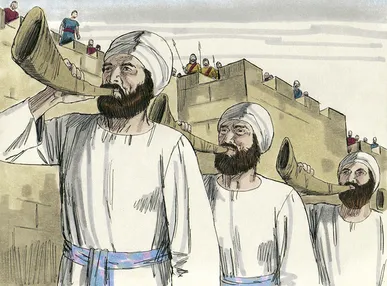
From Friday evening until the middle of Sunday afternoon we live under canvas and pass the time sharing fellowship, eating together, fishing, and meeting for short Bible talks, times of prayer and worship, and an outdoor communion service on the Sunday morning. This year we took “Courage” as our theme and we began by looking at the first chapter of the book of Joshua.


























Should you consider visiting a mission partner?
I used to be the senior minister at a church named after a Victorian missionary martyr - so I thought we’d better take world mission seriously, and therefore take our mission partnerships seriously, too.
But why should that be reserved for the handful of churches who think they ought to do that because of what they’re called?