evangelicals & catholics
A Roman stop after a Catholic push

Leonardo de Chirico
Date posted: 1 Oct 2022
Roman Catholicism can seem to be a pairing of contradictions. It is both Catholic (inclusive, welcoming, absorbing) and yet at the same time it is Roman (centralised, hierarchical, institutional).
The former characteristic gives it its fluidity, the latter its rigidity. Certainly there are historical phases in which the Catholic prevailed over the Roman and there are different combinations in the way the two qualities are intertwined with each other.
evangelicals & catholics
Rome sweet Rome? The shock awaiting Nazir-Ali
Leonardo de Chirico
Date posted: 1 Feb 2022
I am not English, nor Anglican, but the story of the conversion of the former Anglican bishop Michael Nazir-Ali to Catholicism struck me.
Bishop Nazir-Ali’s concerns over the trajectory taken by the Anglican Church on some key doctrinal and moral issues made him look at Rome as a much safer place to identify with. Rome’s image was perceived as being a traditional, stable, authoritative institution with an aura of doctrinal and moral integrity. The question is whether Bishop Nazir-Ali is aware of the evolutions of Roman Catholicism under the papacy of Francis, which are the result of trends stemming from Vatican II.
evangelicals & catholics
Catholicism burning?
Leonardo de Chirico
Date posted: 1 Dec 2021
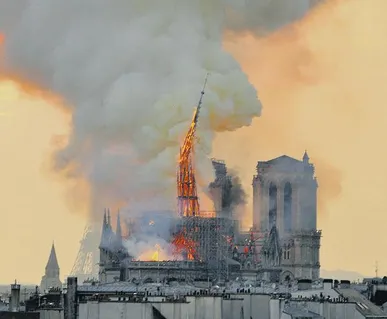
The fire at Notre-Dame cathedral (see photo) in Paris on 15 April, 2019 is a symbol of the church that burns in secularised Europe and, more generally, in the globalised world.
Andrea Riccardi’s book, La Chiesa brucia: Crisi e futuro del cristianesimo (The Church Burns: Crisis and Future of Christianity) (Bari-Rome: Laterza, 2021) starts with the evocative image of the burning Notre-Dame. Riccardi is well-placed to bring forth his analysis, being professor of Contemporary History at the University of Rome III and a biographer of John Paul II. His is an insider’s and scholarly voice on the inner dynamics of Roman Catholicism.
evangelicals & catholics
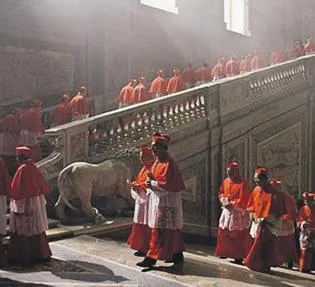
Who will be the next Pope?
Leonardo de Chirico
Date posted: 1 Oct 2021
There is a general perception that Pope Francis’s pontificate has entered an irreversibly declining phase.
It is not just a question of age: yes, Pope Francis is elderly and in poor health. But aging aside, the pontificate finds itself navigating a descending parabola. It started with the language of ‘mission’ and ‘reform’. Francis’ reign, now nearly ten years old, was immediately engulfed in difficulties, particularly within the Catholic Church.
evangelicals & catholics
No laughing matter
Leonardo de Chirico
Date posted: 1 Aug 2021
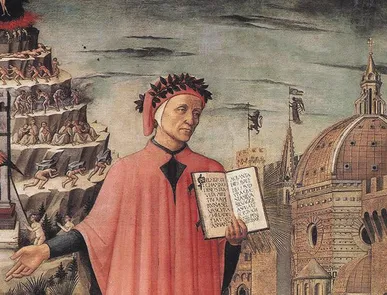
On the occasion of the 700th anniversary of Dante Alighieri (1265–1321), Pope Francis wrote an Apostolic Letter to celebrate Dante as a ‘prophet of hope and poet of mercy’.
The magnitude of Dante’s significance for Western civilisation is extensive. Here the focus will be to sample Dante’s relationship with the Bible in The Divine Comedy, his most-known work.
evangelicals & catholics
Are we all ‘Children of Abraham’?
Leonardo de Chirico
Date posted: 1 Jun 2021
Whenever we talk about lands tormented by decades of wars and violence, sometimes perpetrated in the name of religions, we must do so with sobriety.
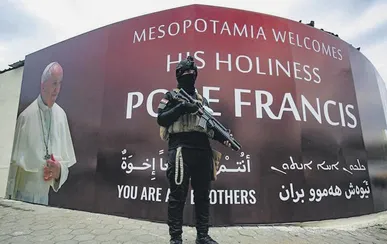
This is to say that commenting on Pope Francis’ recent trip to Iraq (5-8 March 2021) can become a pretext for easy criticism if one does not try to enter the complexity of the situation. Therefore, it must be acknowledged that the Roman pope’s call to religious freedom, his appeal to respect for minorities, and his invitation to national conciliation were commendable.

letter from Italy
Right-wing renaissance?
Leonardo de Chirico
Date posted: 1 Nov 2022
The victory of a nationalist coalition headed by Giorgia Meloni, Italy’s first female Prime Minister, chimes with concerns also visible elsewhere in Europe, such as Hungary, Poland and Sweden.
The global crisis, the pandemic, the war in Ukraine, increased energy prices and migrations arouse anxieties that the right seem better able to interpret.
evangelicals & catholics
Pope Francis, United Nations Chaplain?
Leonardo de Chirico
Date posted: 1 Apr 2021
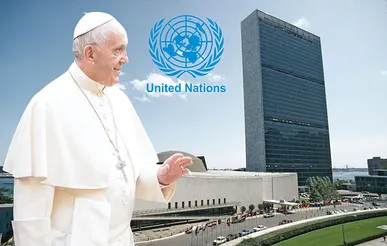
In observing the recent global activities of Pope Francis, the Argentinian philosopher Rubén Peretó Rivas asked whether Pope Francis aims at becoming the ‘Chaplain of the United Nations’.
His 2020 ‘universal’ initiatives indeed look like those of the United Nations in language, scope and content. While the encyclical ‘All Brothers’ reiterated the Roman Catholic universalism two (en, December 2020), other projects deserve to be mentioned in this respect.
evangelicals & catholics
The ongoing scandal of indulgences today
Leonardo de Chirico
Date posted: 1 Feb 2021
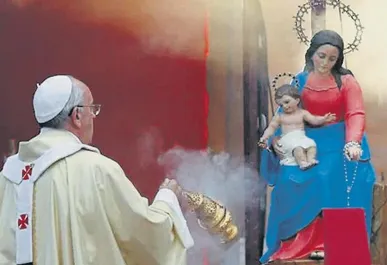
Indulgences make us think of the time of the Reformation. Some may think of indulgences as a matter of the past, relating to the days of Martin Luther, and not be aware that the Roman Catholic Church has been offering them since, and is still offering them today.
In the teaching of the Catholic Church, an indulgence is ‘a way to reduce the amount of punishment one has to undergo for sins’ according to Catholic author, Edward Peters.
evangelicals & catholics
Roman Catholic universalism?
Leonardo de Chirico
Date posted: 1 Dec 2020
It has been rightly called the ‘political manifesto’ of Pope Francis’ pontificate.
In fact, there is a lot of politics and a lot of sociology in the new encyclical All Brothers, a very long document (130 pages) that looks more like a book than a letter. Francis wants to plead the cause of universal fraternity and social friendship. To do this, he speaks of borders to be broken down, of waste to be avoided, of human rights that are not sufficiently universal, of unjust globalisation, of burdensome pandemics, of migrants to be welcomed, of open societies, of solidarity, of peoples’ rights, of local and global exchanges, of the limits of the liberal political vision, of world governance, of political love, of the recognition of the other, of the injustice of any war, of the abolition of the death penalty. These are all interesting ‘political’ themes which, were it not for some comments on the parable of the Good Samaritan that intersperse the chapters, could have been written by a group of sociologists and humanitarian workers from some international organisation, perhaps after reading, for example, Edgar Morin and Zygmunt Bauman.
evangelicals & catholics
Packer’s papal mistake?
Leonardo de Chirico
Date posted: 1 Oct 2020
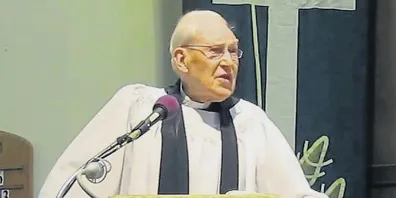
The global church owes a debt of gratitude to James I. Packer (1926–2020). During the second half of the 20th century he has embodied Evangelical theology at its best, especially on issues like the authority of Scripture, penal substitutionary atonement, and the interplay between theology and spirituality. This is to say that, if I dare critique one minor – albeit significant – instance of his theological involvement, I do so out of immense respect.
It is no secret that in Packer’s theological biography his involvement with the ‘Evangelicals and Catholics Together’ (ECT) initiative has puzzled many of his admirers. How such a solid theologian could be prone to sign theologically-blurred documents and encourage confusing ecumenical activities has been a standing question in many people’s minds.
evangelicals & catholics
The unsettled legacy of Pope John Paul II
Leonardo de Chirico
Date posted: 1 Aug 2020
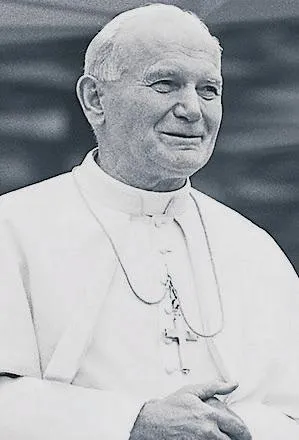
Karol Wojtyła (1920–2005), since 1978 better known as Pope John Paul II, has been one of the most influential men of the 20th century.
The centenary of his birth is a useful opportunity to reflect on his legacy. His life was at the centre of the major affairs of the 20th century: the tragedy of Nazism and the trauma of the Second World War, the apex and fall of Communism, the Second Vatican Council and its debated implementation, the apparent triumph of Western democracy and the oppressive costs of globalisation for the Majority world, the fracture of ideologies and the rise of secular hedonism. Supporters have acclaimed his achievements in terms of navigating, surviving and overcoming the dangerous streams of our post-something world. Critics have pointed out the double-faced, contradictory trajectory of his life and his very backward-looking Catholic outlook.
evangelicals & catholics
Who really cares for us?
Leonardo de Chirico
Date posted: 1 Jun 2020
Under pressure, the true and deep commitments of the heart are exposed. When facing hardships, we reveal what is really important for us.
In these weeks of the coronavirus emergency, the message that Roman Catholicism is giving is a disarming detachment from the basic principles of the biblical faith. This should come as no surprise. What is happening belongs to the core of Roman Catholic beliefs and practices, as they are taught in the Catechism of the Catholic Church and as they are lived out in Roman Catholic parishes. However, given the favour with which even some Evangelicals view the self-styled ‘renewal’ of Roman Catholicism and the action of Pope Francis, it is worth mentioning the spiritual regression we are witnessing in the midst of the pandemic crisis that is severely hitting Italy.
evangelicals & catholics
The tale of two popes?
Leonardo de Chirico
Date posted: 1 Apr 2020
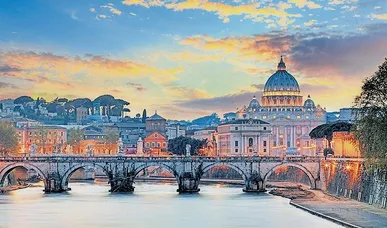
When Pope Benedict XVI resigned in 2013 nobody could have imagined what has been happening since: the Roman Catholic Church has one reigning pope (Francis), but also a former yet-living pope (Benedict) who still speaks, acts, and intervenes in ecclesiastical matters.
There were hints that the prospect of having two living popes would cause some confusion, if not controversy. The fact that Benedict wanted to keep his title as Pope (only adding ‘Emeritus’ to it) as well as his white papal robe (a symbol of the papal office) and his residence inside of the Vatican walls (the home of popes), indicated that, in spite of his pledge to remain silent for the rest of his days, the cohabitation between two popes would easily result in misunderstandings, even conflicts.
evangelicals & catholics
Christ alone or the whole Christ?
Leonardo de Chirico
Date posted: 1 Feb 2020
Solus Christus (Christ alone) versus totus Christus (the whole Christ). If one wants to capture the difference between the evangelical faith and Roman Catholicism, here it is.
On the one hand, the evangelical stress on the uniqueness of Jesus’s person (the God-man) and His atoning work; on the other, the Roman Catholic insistence on the organic relationship between Christ and the Church.
evangelicals & catholics
The truly ‘catholic’ church
Leonardo de Chirico
Date posted: 1 Dec 2019
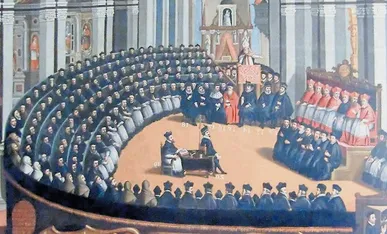
The adjective ‘catholic’ and the noun ‘catholicity’ have a bittersweet usage in ordinary evangelical language. They seem too strictly associated with the reality of Roman Catholicism to be used in a way free from cumbersome superstructures of meaning.
The Bible never uses the expression kath’olon (according to the whole) in the theological sense. The only explicit reference, which is used in a negative form, is in Acts 4:18. The profane use of kath’olon has a variegated range including the meaning of ‘total’ and ‘complete’. In borrowing the term, the church began to understand it as describing the universality of the church (made of Jews and Gentiles), the fullness of the gospel (once and for all delivered to the saints), and the global extension of the people of God (from Jerusalem to the ends of the earth).
evangelicals & catholics
JDDJ: ‘By grace alone’?
Leonardo de Chirico
Date posted: 1 Oct 2019
Many commentators with good intentions, even on the evangelical side, have rightly given attention to a section of the 1999 Joint Declaration on the Doctrine of Justification (JDDJ) signed by the Roman Catholic Church and the World Lutheran Federation. No.15 solemnly says:
‘By grace alone, in faith in Christ’s saving work and not because of any merit on our part, we are accepted by God and receive the Holy Spirit, who renews our hearts while equipping and calling us to good works.’
evangelicals & catholics
Still under the mantle of Mary?
Leonardo de Chirico
Date posted: 1 Aug 2019
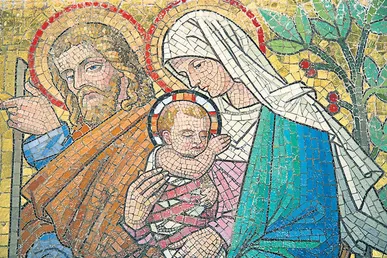
At the end of September 2018, in the midst of the annus horribilis for the Roman Catholic Church (with the deflagration of the sexual abuses and the growing spiral of inner conflicts within the curia), Pope Francis called his people to pray to Mary in order to ask for her protection.
He asked the faithful to conclude the Rosary with the ancient invocation Sub tuum praesidium (We fly to Thy patronage). The full Marian invocation is recited as follows:
evangelicals & catholics
Nicaea the basis for ecumenism?
Leonardo de Chirico
Date posted: 1 Jun 2019
The Council of Nicaea (325 AD) affirmed the consubstantiality between the Father and the Son (i.e. the Son having the same divine nature as the Father).
It has given historical recognition to the Trinitarian faith in God the Father, Son, and Holy Spirit, thus becoming a symbol of orthodox Christianity.

Grace alone?
Leonardo de Chirico
Date posted: 1 Oct 2017
Leonardo De Chirico asks if the Roman Catholic Church is now committed to ‘Grace Alone’?
Many commentators have had good intentions.
ROME IN TURMOIL
Leonardo de Chirico
Date posted: 1 Oct 2018
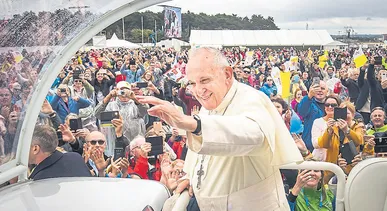
After Dublin, where does Rome stand on the family?
Not one but two World Meetings of Families took place in Dublin from 22 to 26 August. One was the official event that ran according to the planned programme centred on religious and cultural activities; the other was dictated by the vast echo of the scandals related to sexual abuses committed by Catholic priests and the unexpected controversy caused by former nuncio Carlo Maria Viganò, who accused vast sectors of the Roman Curia of covering them up, and invoking Francis’ resignation due to his inability to properly deal with the abuses. It is fair to say that the second meeting caught the attention of the public opinion much more than the first.
How evangelical is the Pope?
Leonardo de Chirico
Date posted: 1 Dec 2016
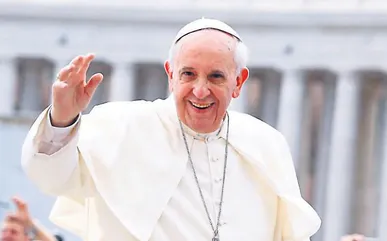
Leonardo De Chirico uncovers the particular brand of Catholicism that Pope Francis advocates and gives a biblical assessment
Cardinal Jorge Mario Bergoglio was elected as Pope Francis on 13 March, 2013.
Italy: new church in Rome
Leonardo de Chirico
Date posted: 1 Aug 2017
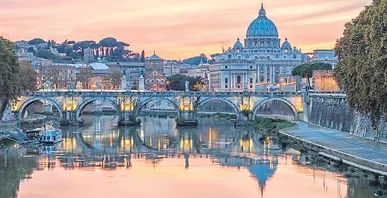
The first building since 1925 has been purchased by an evangelical church in central Rome (half a mile from the Coliseum) to be a space for public worship.
The first hub for gospel work in decades has been launched to foster evangelical collaboration in the city and the first Protestant library to be opened in Rome since 1870 will encourage training and scholarship.