The moral questions behind 'Death Note: The Musical'

Cassie Martin  |  Reviews
Date posted:  28 Aug 2026
Share Add       
The moral questions behind 'Death Note: The Musical'

deathnotethemusical.com

“Where is the justice
When the guilty all go free?
Why don’t we lock them up
And throw away the key?”

Thus begins the opening number of Japanese hit musical Death Note, and for the next two hours, questions of justice, utilitarianism, Machiavellianism, human nature, and self-sacrifice are explored via a catchy score, a high-tech Tokyo-influenced set and some powerhouse performances.

For those not familiar with the franchise, the popular Japanese Manga has spawned 37 anime episodes, various TV film-length versions, a Japanese language film, a Netflix adaptation and a musical – the UK version of which opened at London’s Barbican theatre in July.

Key plot points

A brief outline of the plot goes something like this (although my Manga-reading teenage son tells me that this is a necessary oversimplification of the source material for a two-hour show!):

Light Yagami, a stellar Japanese high school student, picks up a notebook intriguingly titled "death note". Inside the notebook are instructions that whoever's name is written inside the book will die.

Seeing a hostage crisis unfold in a local nursery and the name and picture of the perpetrator being shown on TV, Light decides to try this out by writing the name in the notebook. To his shock, the hostage-taker mysteriously dies exactly 40 seconds later, proving the truth of what the notebook told him.

Light then embarks on a mission to cleanse society of all criminals, writing dozens and dozens of names in the book.

At this point he meets the Shinigami Ryuk (a Japanese god of death who only Light can see) who tells him that he dropped the notebook because he was bored and that eventually he will be the one to write Light’s name in the book.

As the death toll increases, Light's father (a police officer leading the investigation, with no idea that his son is responsible) is told that the mysterious detective known only as "L" will come on board to help solve the case. The rest of the musical revolves around a battle of wits between the hyper-intelligent Light and his equal and opposite "L".

Both characters face ethical dilemmas; Light’s initial "righteous" desire to rid the world of criminals soon deteriorates into a hubristic desire to be "the god of a new world". And the detective, L, uses dubious methods which are lamented by the police; these include using a criminal as bait, and imprisoning and threatening Light’s wannabe-girlfriend Misa (who also possesses a death note), in order to try and catch the killer (named Kira by his multitude of online fans).

Who gets to decide who lives and who dies? Do the ends justify the means?

As the stakes increase, the lines between the super-criminal and the enigmatic detective become increasingly blurred. This is shown through clever staging and a number of power-duets whilst the sardonic, apple-munching Ryuk watches on.

Biblical and cultural allusions

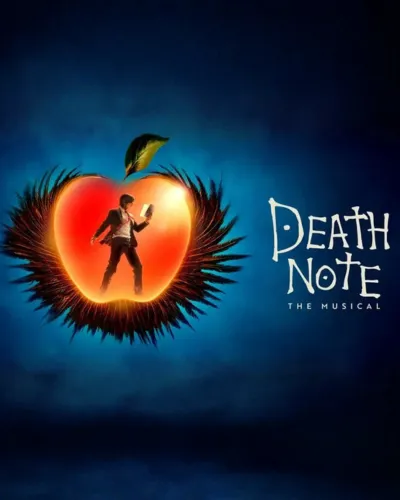
There are a number of Biblical and cultural allusions at play here – Ryuk functions almost as a Mephistophelean character and there are elements of the Faust legend throughout. His love for apples is a clear nod to the temptation of Genesis 3.

There were also two key Bible verses which kept coming into my mind whilst watching. Firstly: "Vengeance is mine, I will repay, says the Lord," (Romans 12v19). And secondly: "What profit is it for a man to again the whole world but lose his soul?" (Mark 8v36). Both of these intersect pertinently with the Death Note storyline and give much food for thought for a Christian viewer.

The most compelling gospel-tinged feature of the plot, however, comes from Ryuk’s fellow Shinigami. Despite his warnings not to get involved – "they’re only human" – and his cynicism, two of his comperes end up sacrificing themselves to save a human being out of love and compassion.

The Shinigami Rem’s song in act two, "When Love Comes", is a poignant realisation:

“Finally, there's someone to cry for
Someone I would gladly die for
Someone who is all the way alive
Can't believe the peace I'm feeling
Almost like it can't be real
Even if I die, love will survive”

The gospel echoes of someone from the realm of the gods sacrificing themself for love of a human points us to the God to whom we can safely leave decisions about justice and mercy, and to one whom we have seen make the ultimate sacrifice and be the ultimate representation of love.

The audience for this production was far more diverse than for a lot of West End shows – lots of young people, some dressed as their favourite characters. The cast is predominately East Asian, reflecting and respecting its source material, and has an impressive ensemble, creating a powerful, high-energy show. I’m sure it will extend its run or move to the West End in due course.

If you can catch it, I would highly recommend Death Note: The Musical for a thought-provoking and thoroughly entertaining night out! Death Note: The Musical runs at London’s Barbican Theatre until 12 September.

Share
< Previous article| Reviews| Next article >
Read more articles on:   TV & film
Read more articles by Cassie Martin >>
Comment
When did you last get lost in a good book?

When did you last get lost in a good book?

A YouGov poll in 2025 stated that 40% of UK adults have not read or listened to a single book …

Comment
Honouring God in a really tough employment market

Honouring God in a really tough employment market

Youth unemployment is currently running at just under 16%, with the graduate job market being particularly hard hit.Last year …

Subscribe

Enjoy our monthly paper and full online access for just £40/year

Find out more

About en

Our vision, values and history

Read more