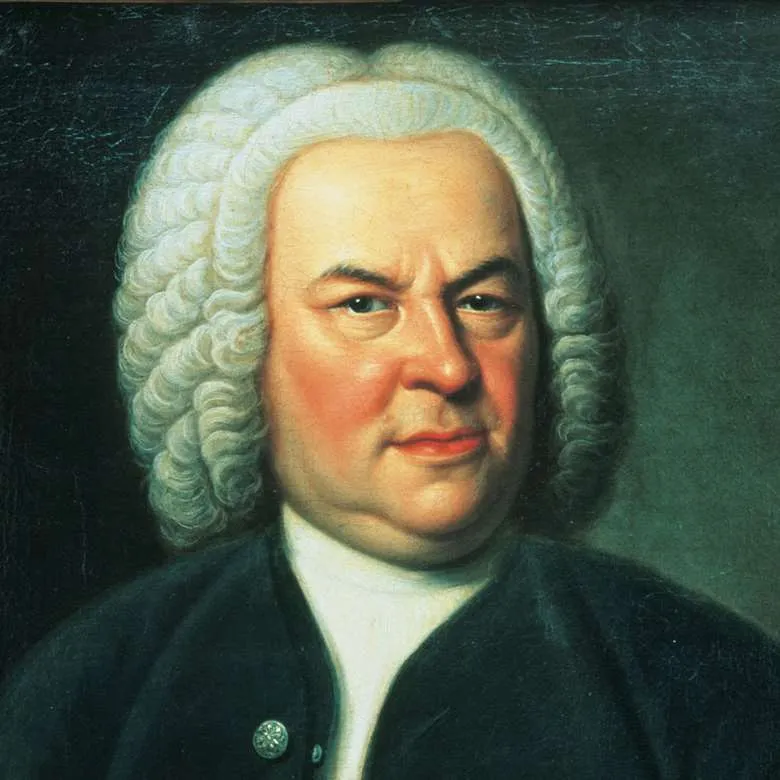
In my last en article, we thought about what we could learn about J.S. Bach’s deeply Christian answer to the question “Who is music for?”
This month, I want to follow this up by seeing what Bach can teach us about evangelism, through an encounter he had with Prussian King Frederick the Great in 1747, three years before Bach died.
Frederick was the ultimate Enlightenment monarch: secular, modernising, excelling not only in war, but also in music and philosophy. He evidently acknowledged Bach as a master musician, wanting his opinion on the recently invented fortepiano. However, Bach would also have stood as an embodiment of everything Frederick was trying to overturn: an old-fashioned composer with old-fashioned Lutheran beliefs writing old-fashioned music. Bach’s invitation to the palace was not so much the King showing respect to a master, but for the King to show the old being overshadowed and surpassed by the new.

Upon arrival, the King challenged Bach to improvise a fugue on a fiendish, deliberately too difficult theme, (allegedly) of Frederick’s own composition. Bach in response improvised a brilliant three-part fugue; Bach is not revered by musicians the world over for nothing. The King then asked him to repeat the feat, but in six parts. Though Bach improvised a six-part fugue on his own theme, he conceded defeat.
Three months later, a manuscript arrived at Potsdam with Bach’s solution to the King’s challenge, along with a dizzying variety of other pieces inspired by it (including a piece that works being played both forwards and backwards at the same time). This collection is known by the title Bach gave it: “The Musical Offering”, described by musicologist Charles Rosen, writing in The New York Times, as “the most significant piano work of the millennium”.
Two things that Bach teaches about evangelism from this encounter:
- First, in response to a culture that would seek to “cancel” Christianity, Bach responds not angrily, but excellently. His Christian counter-culture is vibrant, compelling and a vehicle to say profound things. It speaks of the gospel shaping every corner of his life. All too often, we can get hung up on expressing what we believe accurately, but do we then let that rich gospel message fill our lives and our culture in a way that our contemporaries cannot help but listen?
- Second, Bach’s response models what it means to fear God first. “The Musical Offering” is not just profoundly excellent music, but a subtly pointed message for Frederick. Looking only at the title, it is in German, the common language, rather than the court’s Enlightened French. Moreover, in the original German, the title does not use the usual word for an offering or a gift, but the word for Biblical sacrifice or even sacrificial victims. In just three words, Bach is telling Frederick that he sees as God sees: through the pomp and circumstance of power to the mortal man underneath, and though Frederick would rather see Bach’s tradition sacrificed on the altar of progress, Bach has responded with a sacrifice of praise, not for Frederick, but for his God. And that’s before we get to the music itself ! For that, I would encourage you to read chapter seven of Michael Marissen’s Bach and God.
There is no evidence that Frederick ever received “The Musical Offering”, but let us learn from its valuable example in evangelism.
Why do I feel vulnerable when I evangelise?
What do you think the greatest fear in the Western World is? Death? Poverty? Climate Change? For decades, the number …