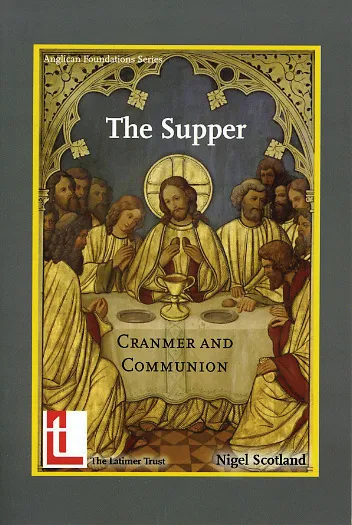
THE SUPPER
Cranmer and Communion
By Nigel Scotland
The Latimer Trust. 59 pages. £5.99
ISBN 978 1 906 327 200
Nigel Scotland helpfully expounds Thomas Cranmer’s doctrine of the Lord’s Supper. An examination of his published writings against the dramatic background of events of the Reformation leads on to his mature conviction that the Lord’s Supper is a gospel meal using common bread and ordinary wine.
Our Lord ordained it for fellowship, spiritual food, remembrance and thanksgiving. Each of these themes is examined in turn. Dr Scotland then, rather more riskily, tries to anticipate directions in which Cranmer’s teaching would have moved had he survived longer. Then he applies Cranmer for today.
Scotland aims to expound the Reformed basis of Anglican doctrine and practice. Cranmer worked in the heat of the conflict with Rome and so gave special attention to the nature of Christ’s presence in the sacrament. He clearly rejected the teaching that the elements are changed in substance into the physical body and blood of Jesus Christ.
Stinking dunghill
His rejection of the idolatrous implications of Romanism was abundantly clear when he wrote that the doctrine of transubstantiation ‘although holy in name is the most stinking dunghill of all wickedness’ (p.19). Not only did Cranmer appeal to Scripture, but he was able to marshal support from the Church Fathers in his denial of the physical presence of Christ’s body. His strong convictions did not imply a rejection of Christ’s spiritual presence – Scotland points out that that presence does not depend upon an act of consecration in the service: ‘Spiritual feeding need not and should not end in the Communion service. Rather, Christians should be those who feed continually on the presence of Christ. Holy Communion should both encourage and assist the believer to grow in this practice’ (p.38). Cranmer is clear that the realisation of that presence is nourished by the Word of God.
By way of application, Scotland points out that the meal is not for the unbeliever or the unbaptised. The Communion service is not a part of the Church’s evangelistic message. To ensure its proper place in the life of the church, the timing of the service needs to be considered carefully. He seems to be pleading for less formality. In spite of appeals for a New Testament pattern, somewhat surprisingly he advocates the recent innovation of communicants eating the bread simultaneously. Thankfully, by contrast he seems to advocate the biblical practice of the common cup with ordinary wine. Although intended for Anglican readers this book provides stimulating thought for nonconformists.