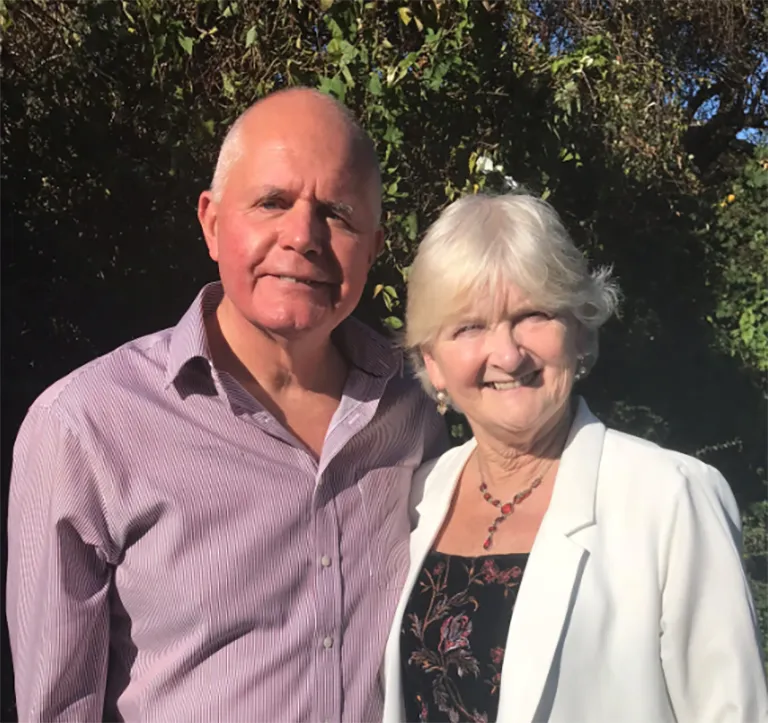
Wes Erpen is retiring from Birmingham City Mission (BCM) after 51 years’ service – 30 as CEO. He has also been the pastor at Fatherless Barn Evangelical Church in Halesowen for more than 20 years.
Established in 1966 – BCM celebrates 60 years this year – it is young for a city mission (London City Mission, for example, dates back to 1835 and Glasgow City Mission even earlier, to 1826).
BCM was not even a decade old when Wes joined the staff in 1975 – the year the Vietnam War ended, Margaret Thatcher became leader of the Conservative Party, and the iconic Jaws movie was released.
Wes and his wife Jackie have six children and 12 grandchildren. He supports Aston Villa – and loves an Indian takeaway.
en spoke to Wes about his years with BCM.
en: How did you first get involved with BCM?
Wes: I was converted at 14 in 1966, the same year Edwin Orton established BCM. We were the teenagers that went along with Edwin at the beginning of the mission. In the early years, there were no buildings and we would go into the city and sing, and give out literature on a Saturday night while Edwin and the adults were preaching.
I started in industry with Dunlop in Birmingham. I left and spent a number of summers with Operation Mobilisation. During a year with OM in France my mother became ill with cancer and I came home. In 1975 I joined the student team when I was about 24 – that was when I first became part of BCM.
en: What did your early work look like?
Wes: There were one or two staff and a group we used to call “students”. In those days, we didn’t have a day off (it was quite naughty, really!). Our work was very similar to what we do now – we were on the streets on Tuesdays and Saturdays; we had a feeding station for the homeless; and we would go out as a team into various areas of the city, working with churches and doing door-to-door work.
Often on Saturdays, the mission held things like Gospel Crusades; and we’d go and join churches and spend the whole day with them. The work was very much evangelistic, but there was still this social side of helping people practically. And today, people still go into the city on a Tuesday and a Saturday to preach the gospel.
en: Did you experience much interest, resistance or antagonism?
Wes: Yes, and there always has been. Probably in those days there was more interest – we would have open airs in the old Bull Ring or the city centre and you might get a crowd of 50, 100 or 200. And we’ve had people who had come up and taken gospels and Bibles, who would write to us over the years saying it was that open-air meeting that was “the start of my faith journey”.
And we would also have people come along and heckle, and throw things at us. I’ve had people try to drag me off the box. I’ve been in places like Coventry where flour and water was thrown at us. Today (I’ve not been in the open air regularly for years now), my understanding is the numbers of people willing to listen are far less, but there are always spiritual conversations.
en: What about today?
Wes: I think there’s more antagonism today; more objections to the gospel being preached, and it’s a reflection of our post-Christian age.
In terms of the authorities, it has changed in recent years. To be fair, the city has tried to be consistent. Last year, they imposed an order (for all groups) where you couldn’t have a preaching box or even a table.

Flag of Birmingham
And we have had situations where people have been asked to move on. In fact, in the last year, our guys saw others with their tables out so they put theirs out – and then we were issued with a £100 fine. That’s the first time that’s ever happened in the life of BCM. Yet we still see other faith groups with their stands, etc, so we’re navigating that.
I can remember in the Bull Ring the police would come along and could see what was going on, and we weren’t the people causing the problems. But because we were Christians, we would become an easy touch and asked to move on.
en: Is the city much more multicultural today than in your early years with BCM?
Wes: In Birmingham, we have 400,000 Muslims (over 30% of the population). Let’s say you might get 7-8% of people going to any kind of church (an evangelical church – it might be as low as 3-4%). On any Sunday, in a city of 1.2million, you might only have about 60,000–70,000 people going to any church. That means there’s over 1.1million people who need to be reached. So if we needed a city mission in 1966, we need a city mission more so in 2026. But our ministry is in partnership with the wider church, not in competition – we sow the seed.
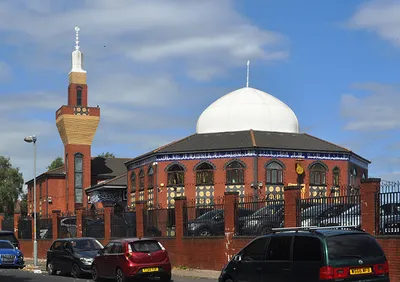
Hussainia Mosque, Birmingham (photo: Wiki)
There’s certain parts of the city that I can remember, places like Alum Rock and Ward End that were predominantly white. As the population and various areas have changed, so the people living there have changed as well. And so places like Small Heath have become much more multicultural.
en: How has the need for the homeless changed over the years?
Wes: It’s a bit like what the Lord Jesus said, in some ways – you’ll always have the poor with you. And we’re only a small organisation compared to the number of homeless; in our city there are probably 20,000 needing a home at the moment.
Now, if you go back to the 60s and 70s, the big difference is the profile of the homeless and their needs. Those that came to us were mostly white, mainly from Ireland; and predominantly the problems were homelessness and alcoholism.
The big shift now is that people come from anywhere, but the problems are mental health issues and use of drugs. As the drug world develops and people are locked into the cycle of homelessness, they get abused and exploited and clearly make wrong decisions.
Our Care Centre (open Monday to Thursday 10:30am to 2:30pm) is a place where they can get food, a hot meal, a place of safety; and they can get signposted to help with accommodation, and to other partners.
en: How has Toy Link developed since the early years?
Wes: I can remember way back in the late 60s and early 70s, the Toy ministry just began with Edwin Orton and his car; and I would go along with him with a few toys in bags and give them to needy people that we knew from Kingshurst Church. So that was the seed.
In the last couple of years, we’ve had up to 70 companies support the Toy ministry – as well as the churches! They come and help us make this project work. One local company, Hendricks, has given us over £20,000 worth of toys.
Land Rover has partnered with us for quite a number of years. They used to give us a brand-new Land Rover for a whole month. Now, they send 100 cars with around 250 staff over a period of two or three weeks. And they do most of the delivery across the city – to up to 1,700 families and 4,000 children.
Every child gets at least four brand-new gifts and every family bag has Christian literature in which we give out to anybody.
Lots of soft evangelism goes on in conversations; and we give every volunteer Christian literature when they go home.
A manager of a Costa Coffee has supported us for quite a few years. She does that because when she was a little girl, she received toys from BCM.
en: What are the challenges and encouragements?
Wes: We’re very much the coal face where we’re digging the ground and sowing the seed, but there have been many people who have come to the Lord over the decades. A number of them have become workers in some of our projects.
I think the big encouragement for me is just seeing how, for people who come to work at the mission – particularly student teams – it becomes a spiritual hothouse for them. And as they gain experience and grow in the Lord, you see them change dramatically, very quickly in confidence – confidence in the Word of God, confidence in the power of the gospel, confident of being able to share their faith.
And many of them have gone on to become missionaries or pastors or vicars. The vicar of St Martin’s Church used to be one of our staff members.
en: How much has the BCM team grown?
Wes: When I first went to work with BCM there might have been around three or four of us. Today, we have 40 staff, though some years ago we ran three hostels for the homeless and had up to 80 staff (our funding was withdrawn in 2010).
We also have around 130 regular volunteers, and up to 500 irregular volunteers for different projects, particularly at Christmas.
en: What’s a key challenge for your successor, Giles Coghlan?
Wes: We’re reliant upon God’s people and the kindness of others with legacies, etc, but we’ve had two very difficult financial years. So I think the challenge ahead for BCM is to raise the support and the financial income.
Also, in the last two years we’ve had four or five managers retire – with 20, 30, 40 years’ experience with BCM. And so we’re looking to God to bring in people with a similar vision.
Edwin Orton was my school teacher. He was my pastor. Edwin married me and Jackie. He buried my mum. I had the privilege of burying Edwin’s wife. I had the privilege of burying Edwin. So our hearts have been the same. And our heart for 60 years has been proclaiming the gospel and helping those in need. And so I think my prayer and the prayer of the staff who have now left is that Giles will carry on that same vision. And I think he will, it’s proclaiming the gospel and helping the needy.