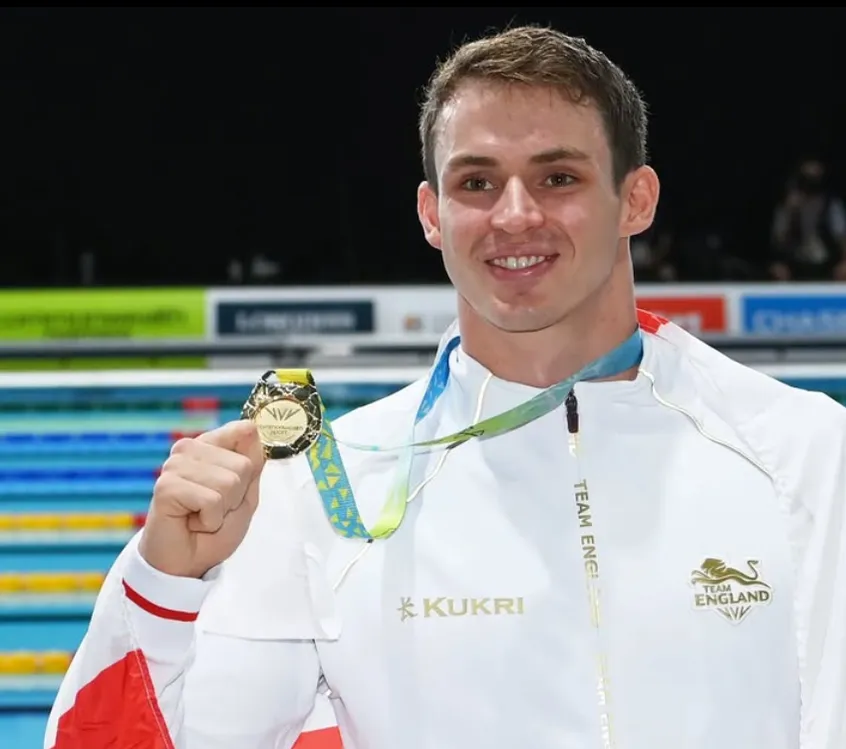
British Olympic swimmer Ben Proud has joined the Enhanced Games. It’s a decision, and a potential trajectory, for sport, with significant consequences and challenges for Christians to reflect on.
The Enhanced Games encourages the use of performance-enhancing drugs to break world records. It claims to be the future of sport “on a mission to redefine super humanity through science, innovation and sports.”
Last month, I hurt my back stretching too far for a hockey ball in South Central Division Six, and spent two days struggling to walk. Superhumanity sounds like a good thing to me as I near 40… or does it?
There’s no denying that technological and medical advances can bring remarkable benefits. Yet we should also ask what might be lost from sport if enhancement becomes its norm.
Some might argue this has already begun: the commercialisation and scientific precision of elite sport already blurs the line between natural and enhanced performance. Would enhanced sport make it more compelling or quietly empty it of meaning? Healthy competition would become less about understanding more of our and our opponents’ God-created bodies and talents, and more about seeing whose drugs or technological advancements worked better.
The narrative driving projects like the Enhanced Games tells us that ageing is a defect, not a feature, and that injury is something only to be mourned rather than learned from. Its founder, Aron D’Souza, told The Athletic that the ultimate aim of the Games is to “cheat death,” since he believes “ageing is a disease that we should be able to treat, cure and eventually solve.”
How should we respond?
This vision is about far more than sport. It reflects a growing cultural conviction that our greatest enemy is limitation and our salvation lies in overcoming it. But as Christians, we need a richer story: one that sees human progress not as our highest goal, but as a signpost pointing beyond itself. Eternity will not be filled with enhanced bodies, but with transformed ones.
"Eternity will not be filled with enhanced bodies, but with transformed ones."
That conviction matters both pastorally and missionally. It shapes how we disciple ageing bodies in our churches, how we walk with teammates through injury, and how we bear witness to a hope that outlasts decline.
The aches, injuries, and wrinkles of life point to a deeper fracture in creation itself. But they also direct our longing beyond this present world - to a day with no more crutches, MRI scans, or sleepless nights spent tossing and turning with a spasming back.
The Bible tells us our bodies have been fearfully and wonderfully made - a gift from our Creator. But they are also “jars of clay” (2 Corinthians 4v7) - fragile, temporary and prone to breaking. Our weaknesses help direct us beyond this present world to a world where they will be distant memories.
In a culture chasing enhancement, the gospel invites us to embrace embodiment and limitation. Our hope as Christians is not in becoming superhuman, but fully human - redeemed and restored in Christ.
Why Christian celebrities matter so much to us
“This is a World Cup swimming in star names...”Jonathan Liew in The Guardian 1 has argued that the …