Have we forgotten how to enjoy sport?

Jonny Reid  |  Comment
Date posted:  5 Sep 2026
Share Add       
Have we forgotten how to enjoy sport?

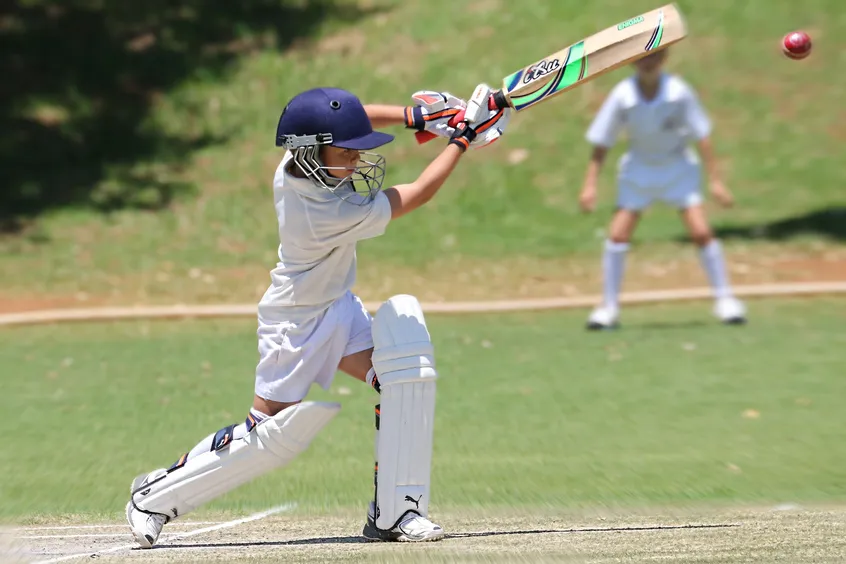
Photo by Patrick Case via Pexels

This summer, my seven-year-old son fell in love with cricket.

Ignited by a trip to the glitzy Hundred competition in Birmingham, fuelled by trips to our local club for training sessions and fanned by a cricket-mad dad, we are now playing daily wherever we find ourselves.

Windswept parks, sandy beaches, corridors and garage walls are our stadiums. Walls, bins, swings and his little sister the fielders to avoid.

Seeing his daily joy has been beautiful and reminded me of when I fell in love with sport for the first time.

He seems to love the daily grind as he works hard at new techniques. He loves the thrill of connecting with bat on ball. The delight of working out the scoring system in his head. And he seems to genuinely love the time spent with me, as do I – passing on my great passion and competing together.

Sport in today's world

We were made to play in God’s world. Whether that playfulness is expressed through sport or another of God’s good gifts, this capacity for joy and delight is part of what it means to be human.

It would be idealistic and naive though, to state that sport in its current form is purely good. Even in the games with my son this summer it has not been hard to see the distortions that can come when a good gift gets infected by sinful hearts and institutions.

To recognise distortions though, we need to define what the ideal is – what is sport and what makes it good?

My definition of good sport (as worded with Graham Daniels in Spiritual Game Plan) is that it is a competitive, rule-governed expression of our God-given creativity and community, played for His ultimate glory.

Sport is one aspect of God’s ordered world. It forms part of His good creation that contributes towards the wonderful multifaceted diversity of human life.

Dutch politician and theologian Abraham Kuyper described the world in this way, stating that “there are in life as many spheres as there are constellations in the sky and that the circumference of each has been drawn on a fixed radius from the centre.” Under God’s absolute sovereignty, these spheres operate and engage with each other. Problems come though when another good – such as money, political authority or power – becomes the controlling good on another.

Sport becomes distorted when things that belong within sport become the reason sport exists.

A quick glance at the back pages gives us countless examples of this in the world of sport.

Indeed, this summer especially there have been a number of times when my love of sport has been tested by some of the grim stories of political interference, win-at-all-costs decisions and commercial dominance that have come across my timelines.

A gift to be enjoyed

As Christians, we’re not surprised to see distortions in all areas of life, as sin affects all aspects of God’s good creation. But what do we do then, if like me, you’re increasingly uncomfortable with how the good gift of sport seems to be more and more distorted?

Part of the answer I think comes from an unlikely source: serial winner, former Manchester City manager Pep Guardiola.

In a recent documentary he declared: “I want my players to be amateur, not professionals. Amateurs are those who go to the street, play in the square. They finish school and they play! They have to do it for the joy and the pleasure.”

Guardiola puts his finger on something important: this is why people play sport in the first place. And perhaps it helps us recover something we easily lose sight of, whether professional players or those playing in the garden: sport is a gift to be enjoyed, not simply a product to be consumed or an industry to be exploited.

One way of remembering this, and pushing back against the dominance of other spheres in sport, is to remember and embrace our own local involvement with sport.

My main engagement with sport is in the park with my son, on the pitch at my local club and amongst the players in my town. These local expressions of sport are more important than my fandom where I regularly feel frustrated with how sport is being abused or distorted away from its original good design.

As Christians, I think sport has an important part to play in this world. I, and others, have recently reflected that this embracing of sport and its goodness feels especially important in our current times. Christian sports historian Paul Putz puts it better than I can: “In an online-first, digital world, [sport] reminds us that our bodies matter. In a time when the frictionless ease of AI promises to do the work for us, it teaches us that growth comes through struggle. In a time when loneliness is on the rise, it provides a point of connection. In a time of deep division and polarisation, it remains one of the few places where common ground across areas of difference can be found.”

This is really why I’m thrilled my son has begun to show more interest in sport. I hope there will be many more windswept parks, sandy beaches and garage walls where he won’t just improve at cricket but he’ll learn to delight in its gift and so praise and worship its giver.

Share
< Previous article| Comment| Next article >
Read more articles on:   sport
Read more articles by Jonny Reid >>
Comment
Why Christian celebrities matter so much to us

Why Christian celebrities matter so much to us

“This is a World Cup swimming in star names...”Jonathan Liew in The Guardian 1 has argued that the …

UK & Ireland
Class and ministry today

Class and ministry today

Oak Hill College has hosted its annual School of Theology, focusing on “Class and Ministry in the UK today”.The …

Give a subscription

Our monthly newspaper is the perfect gift for those who love to think deeply

Give here

Looking for a job?

Browse all our current job adverts

Search