Jesus' birth: The fulfilment of ancient promises

Mitch Chase  |  Features
Date posted:  24 Dec 2025
Share Add       
Jesus' birth: The fulfilment of ancient promises

Image: iStock

The Gospel writers boldly associate Jesus’ birth with David’s name. And they do this in order for us to learn about Jesus’ birth as a fulfilment of ancient promises.

In 2 Samuel 7v12–13, God had promised David that a future son—the seed or offspring of David—would rule forever on the throne.

There are at least seven places in the Gospels of Matthew and Luke where the name of David is mentioned in relation to Jesus’ birth.

First, in Matthew’s genealogy. The opening words of Matthew 1v1 read like this: “The book of the genealogy of Jesus Christ, the son of David…” And David’s name is mentioned twice in the genealogy itself, in 1v6. After the genealogy, a summary of the sections mentions David’s name twice (see 1v17).

Second, in the angel’s words to Joseph. While dreaming, Joseph heard the words of an angel of the Lord, who said, “Joseph, son of David, do not fear to take Mary as your wife” (Matt. 1v20).

Third, in Luke’s reference to Mary’s betrothal. According to Luke 1v26–27, the angel Gabriel appeared to Mary, who was “a virgin betrothed to a man whose name was Joseph, of the house of David” (Luke 1v27).

Fourth, in Gabriel’s words to Mary. According to Luke 1v32–33, Jesus “will be great and will be called the Son of the Most High. And the Lord God will give to him the throne of his father David, and he will reign over the house of Jacob forever, and of his kingdom there will be no end.”

Fifth, in Zechariah’s song. The priest Zechariah (who would father John the Baptist with Elizabeth) praised the Lord with these words: “Blessed be the Lord God of Israel, for he has visited and redeemed his people and has raised up a horn of salvation for us in the house of his servant David” (Luke 1v68–69).

Sixth, in a reference to Jesus’ birthplace. Jesus was born in Bethlehem, and the significance of that town has to do not only with an ancient prophecy (in Micah 5v2) but also in the fact that Bethlehem was David’s hometown. In Luke 2v4 we read: “And Joseph also went up from Galilee, from the town of Nazareth, to Judea, to the city of David, which is called Bethlehem, because he was of the house and lineage of David.”

Seventh, in the angel’s words to the shepherds. When an angel of the Lord appeared to shepherds, he declared to them, “Fear not, for behold, I bring you good news of great joy that will be for all the people. For unto you is born this day in the city of David a Saviour, who is Christ the Lord” (Luke 2v10–11).

"The Davidic background to Jesus’ birth is important because of covenant promises that we find in 2 Samuel 7."

The Gospel writers are not subtle about illuminating the links between Jesus’ birth and King David. The Davidic background to Jesus’ birth is important because of covenant promises that we find in 2 Samuel 7. In order that we might marvel more at the fulfilment of God’s promises to an ancient king, the Gospel writers mention that king’s name multiple times.

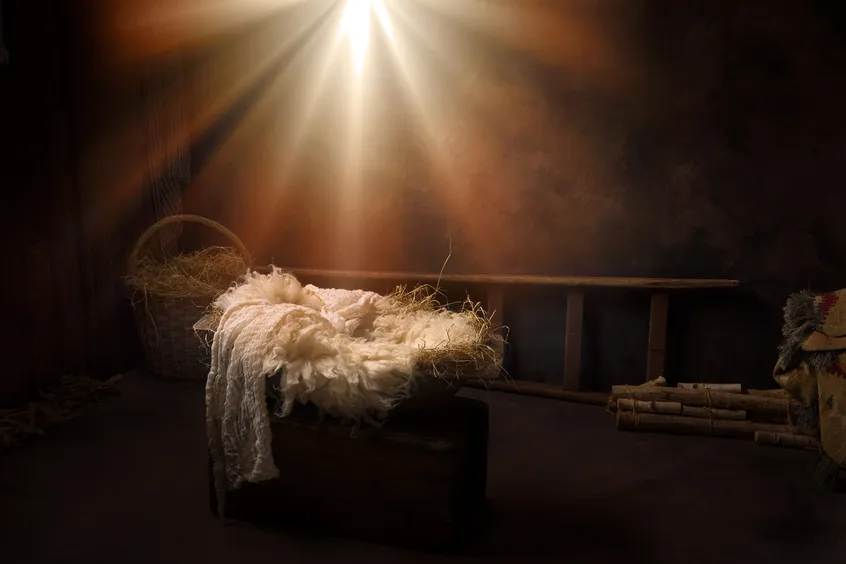
The manger upheld the long-expected Davidic king—the Son of David—who at last had come to live and heal and teach and die and rise and reign.

Share
< Previous article| Features| Next article >
Read more articles on:   Bible  /  Christmas  /  theology
Read more articles by Mitch Chase >>
Features
Have you noticed the endings of these Psalms?

Have you noticed the endings of these Psalms?

The book of Psalms has five smaller books. They’re not equal in length, but the ending of each book is …

Features
Do you feel like darkness is your 'closest friend'?

Do you feel like darkness is your 'closest friend'?

Near the end of Book Three in Psalms (which is from Pss. 73–89), things grow dark. In fact, when you …

New here?

Register and get three free articles each month!

Register

Looking for a job?

Browse all our current job adverts

Search