Did seven days of prayer save Britain?

John Williams  |  Features
Date posted:  9 Nov 2025
Share Add       
Did seven days of prayer save Britain?

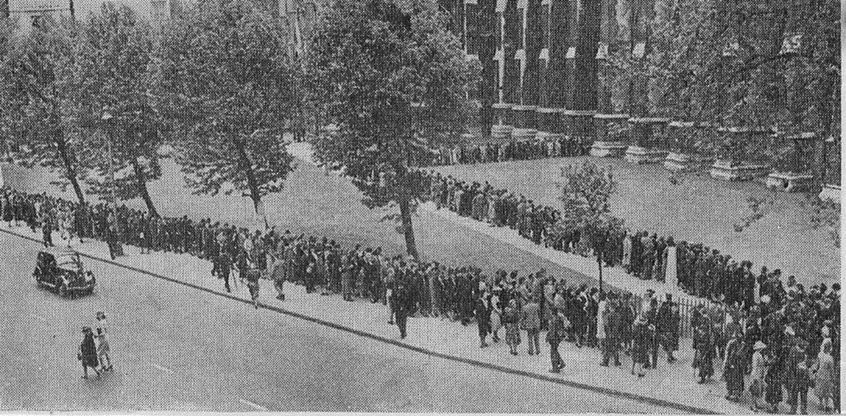
People outside Westminster Abbey queuing for prayer, May 1940

Seven national days of prayer were called for by the King at critical times throughout the Second World War. After each one, the natural chain of events which had been occurring suddenly changed and deliverance took place.

Looking back, clergyman Henry Albert Wilson wrote: “If ever a great nation was on the point of supreme and final disaster, and yet was saved and reinstated it was ourselves…it does not require an exceptionally religious mind to detect in all this the Hand of God.”

Similarly, Dr William Temple further declared: “We believe that He [God] Who led our fathers in ways so strange and has preserved our land in such a marvellous manner has a purpose for us…” (Part of that purpose was the eventual liberation of Europe).
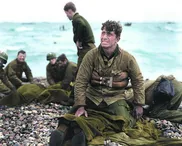
On every national day of prayer churches were filled with people pleading for divine intervention because no human help was available.

On 31 October 1942 Winston Churchill stated: “I have a feeling sometimes that some Guiding Hand has interfered. I have a feeling that we have a Guardian because we have a great Cause, and we shall have that Guardian so long as we serve that Cause faithfully. And what a Cause it is!”

Seven national days of prayer

  1. The first national day of prayer took place in May 1940. The entire British Army was trapped at Dunkirk and so George VI called for a national day of prayer to be held on 26 May. In a national broadcast he urged the people of Britain to turn back to God in a spirit of repentance and plead for divine help. Millions of people across the British Isles flocked into churches praying for deliverance and the photograph attached to this article shows the extraordinary scene outside Westminster Abbey as people queued for prayer. Two events immediately followed. Firstly, a storm arose over the Dunkirk region grounding the Luftwaffe which had been killing thousands on the beaches. And then secondly, a great calm descended on the Channel, the like of which hadn’t been seen for a generation. It was only because of this Channel calm coming at this precise moment and lasting the length of the evacuation, that tiny boats were able to sail across and rescue 335,000 soldiers. Hitler was furious. Because of this sudden Channel calm people referred to what happened as “The Miracle of Dunkirk”.
  2. The second and third national days of prayer were held during the Battle of Britain. Hitler now sought to destroy the RAF and its airfields prior to invasion. As events became critical, the King called for a day of prayer at the height of the battle on 11 August 1940. During the following week Spitfires and Hurricanes managed to destroy 180 Nazi bombers. This brought temporary relief, however on 30 August, 800 enemy aircraft filled the skies intending to destroy RAF airfields. By 6 September the situation was again dire and defeat in the air looked inevitable.
  3. … The King then called for another national day of prayer on 8 September. That week 185 enemy aircraft were shot down and Goering gave up his assault. On 15 September Churchill was able to declare victory in the air.
  4. The fourth national day of prayer was called for by the King on 23rd March 1941 during a period of heavy bombing in London. He was completely unaware that this was the actual date planned by Hitler for the invasion. German ships were blown off course and Hitler then changed his entire plans, switching instead to invading Russia.
  5. The fifth national day of prayer took place on 3 September 1942 when the British Eight Army had been driven back to the borders of Egypt by Rommel’s Afrika Korps. General Montgomery was appointed as the Eighth Army Commander and led British forces to victory at El Alamein. This battle was the turning point of the war.
  6. The sixth national day of prayer was held on 3 September 1943, the fourth anniversary of the declaration of war on Germany. Italy surrendered to the Allies within 24 hours and Mussolini was killed.
  7. The seventh day of prayer was in spring 1944 for all military personnel in preparation for the liberation of Europe. This was then followed by an additional call on D-Day itself not only for nationwide prayer, but for a worldwide prayer vigil so that evil could be defeated. The poor weather that had delayed the D-Day offensive by 24 hours had suddenly lifted on 6 June and allowed the invasion to go ahead with far fewer lives lost than were expected.

    As he reflected on events eight years later, General Eisenhower, the Supreme Commander of the Allied Forces responsible for D-Day said: “This day eight years ago, I made the most agonising decision of my life. I had to decide to postpone by at least 24 hours the most formidable array of fighting ships and of fighting men that was ever launched across the sea against a hostile shore. The consequences of that decision at that moment could not have been foreseen by anyone. If there were nothing else in my life to prove the existence of an almighty and merciful God, the events of the next 24 hours did it… The greatest break in a terrible outlay of weather occurred the next day and allowed that great invasion to proceed, with losses far below those we had anticipated…”

Almighty God responded to those heartfelt national days of prayer with deliverance and ultimately with victory over the forces of evil.

Immediately after The Miracle of Dunkirk, the German Army stood on the other side of the Channel with over two hundred divisions flushed with victory. Most of our weapons had been abandoned in France so all Britain had was less than one division of armed troops. No wonder people prayed for divine intervention.

If Western Europe becomes engulfed in conflict, let us remember that what God did before, He can obviously do again. There is hope and deliverance if we turn to Him in repentance and humility as did the previous wartime generation.

Share
< Previous article| Features| Next article >
Read more articles on:   war
Read more articles by John Williams >>
Features
Eighty years on: lessons from  D-Day for ‘broken Britain’ today

Eighty years on: lessons from D-Day for ‘broken Britain’ today

As this nation commemorates the 80th anniversary of D-Day on 6 June, let us remember that there would have been …

Subscribe

Enjoy our monthly paper and full online access for just £40/year

Find out more

Give a subscription

Our monthly newspaper is the perfect gift for those who love to think deeply

Give here