
This article has been published as part of a collaboration between Keswick Ministries and en, which features contributions from the 2026 Convention speakers. Keswick Convention takes place annually each summer, its programme centring on Bible teaching, worship and Christian fellowship.
For more articles from this year's collaboration, visit the Keswick section of en's In Depth page.
Feeling embattled and under attack as Christians is nothing new. Two thousand years ago Paul urged his Ephesian readers to “Be strong in the Lord and in his mighty power”, equipped with the armour God provided as they faced the battle against Satan and his evil spiritual forces. Satan has been at his tricks far longer than that. Ever since Eden he has been trying to get us to doubt God’s goodness and His word, to find satisfaction in anything other than God and ultimately destroy the relationship with Him we were created for.
Although we can be sure that because of Jesus the battle has been won, Satan’s rearguard action continues – and so does God’s protection. With God-given armour in place, faithful men and women throughout the centuries have been able to stand firm against the Devil’s schemes. That should encourage us as we seek to do the same.
I am a great fan of the heroes of the Reformation in the 16th century. Satan was doing a good job using the Church to confuse people about how they could enjoy a relationship with their heavenly Father. People were unprotected by the helmet of salvation as the gospel of grace was obscured by a load of man-made traditions and half-truths. The sword of the spirit was in its scabbard – useless and inaccessible, only available in Latin, which very few could understand.
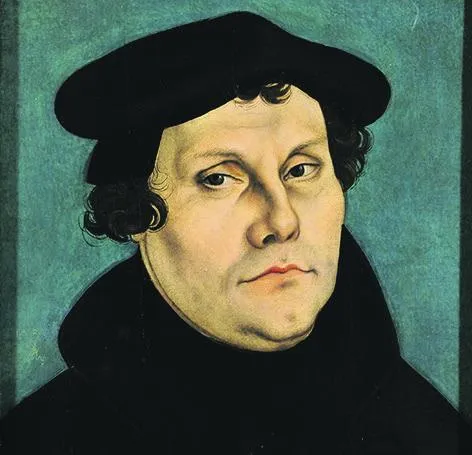
Along came Martin Luther. As he read the Bible he understood the gospel – that people could only be put right with God through his mercy and grace through the atoning death of Jesus, and not through the rituals and religiosity he had relied on before. Now, with the helmet of salvation firmly in place, confident of acceptance by the Lord despite his many failings, he courageously stood firm in the face of hostility from the Church and ruling authorities. Standing before the Emperor Charles V, the most powerful man in Europe, and asked to reject his belief in the gospel of grace, he is reported to have said: “Here I stand; I can do no other.” He stood firm, protected by the helmet of salvation. He spent the rest of his life, despite death threats, slander, personal tragedies and poor health, sharing the gospel in every way possible.
Luther also unsheathed the sword of the spirit by translating the Bible into contemporary and readable German. He was so confident in the gospel because it was clearly explained throughout Scripture. As he told Charles V: “My conscience is captive to the word of God.” As Luther’s ideas spread it was clear that the Bible needed to be accessible in all languages if people were to understand the gospel and stand firm for Christ.
In Eden, Satan twisted God’s words. People needed to be able to read the Bible if they were not to be led astray. Exactly 500 years ago the first New Testament in English, translated from the original Greek, was published. The translator, William Tyndale, suffered exile and persecution. He stood firm. Travelling from place to place to avoid arrest, once losing his manuscripts in a shipwreck, disappointed by colleagues and betrayed by a spy posing as a friend, Tyndale was eventually imprisoned and executed for heresy in Belgium in 1536 aged just 42.
At first his work was illegally smuggled into England, but just a few years later it became the basis of the Great Bible that Henry VIII ordered to be placed in every English church. Tyndale stood firm, unshakeable in his confidence in God’s Word, and we still benefit today.
A couple of centuries later the Bible was accessible, and the gospel clearly explained in the Book of Common Prayer that was used each Sunday in every Church of England parish. New religious groups had sprung up during and after the Civil War which emphasised the Bible and the gospel even more deliberately. After the restoration of Charles II these groups were repressed, and the Church of England became respectable and lukewarm, and even antagonistic towards the Bible and the gospel. For individuals and the church to stand firm, another piece of armour was needed. John Wesley, George Whitefield and others led the Evangelical revival in the 18th century armed with the helmet of salvation and the sword of the spirit – and with feet fitted with the readiness that comes with the gospel of peace. They were not afraid of the battle. They preached tirelessly, locked out of churches, pelted with rotten vegetables and travelling thousands of miles on poor roads in all weathers. They stood firm. Countless people came to faith from all backgrounds.
These are just a few examples of the many well-known individuals God has enabled to stand firm in the battle against “the rulers, against the authorities, against the powers of this dark world and against the spiritual forces of evil in the heavenly realms”. Today we face many challenges as individuals, as local churches, and as God’s people as a whole. If we are to stand firm in the battle, we need to make sure we are equipped with His armour and encouraged by faithful servants who have gone before.




Have we forgotten about Israel?
Freshly revived from another invigorating experience at Keswick – the Galilee of England as I coined it last year – …