
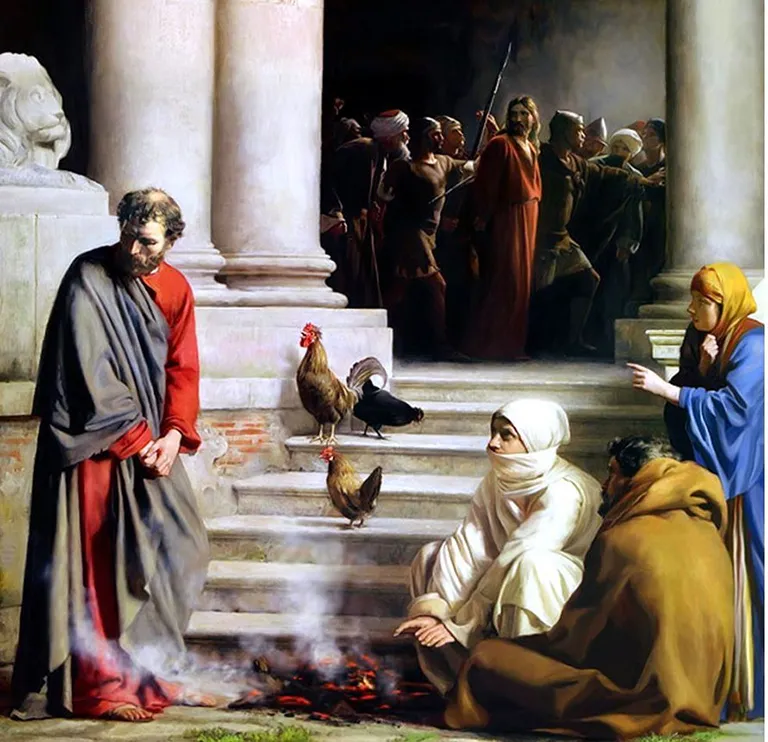
“And Peter had followed him at a distance right into the courtyard of the high priest” (Mark 14v54).
This describes the worst moment in dear Peter’s life, of which he was later so ashamed, and about which he needed the Lord’s forgiveness and reinstatement, which he graciously received (John 21). It was not that Peter had given up following Jesus, it was that at a crucial moment when he was under pressure he denied his master and Lord. Peter wanted to follow Jesus, but he did not at this time want the hassle and danger of doing so – it was all too much for him to cope with. Later Peter thankfully showed that he was more than willing to take up his cross and follow Jesus wherever that led.
In the same way, the believers addressed by the Book of Hebrews had to be challenged not to slip back to the “easier” path of their old covenant Judaism and miss out on the blessings of the new covenant “which was better by far”. Their new faith was calling them to suffer for their Lord, from which they were shrinking back. So the writer challenged them: “Therefore let us go to him outside the camp and bear the reproach he endured. For here we have no lasting city, but we seek the city that is to come” (Heb.13v13,14).




'An angular Messiah is our only hope'
Having devoured Jonathan Freedland’s The Escape Artist (2022) with fascination, I wasn’t going to miss reading his latest, The Traitors …