Bibliolatry? Us? Really?

Michael Reeves  |  Features  |  everyday theology
Date posted:  4 Jun 2025
Share Add       
Bibliolatry? Us? Really?

Source: iStock

The reason why evangelicals treat Scripture as their supreme authority is because it is the word of God. In other words, evangelicals believe in what is traditionally called the “inspiration” of Scripture.

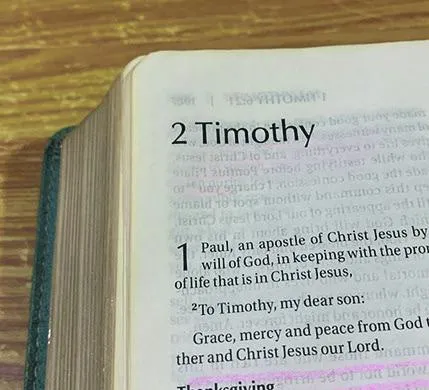
Today, the word “inspiration” can be a little misleading, as if Moses, Paul, and Luke simply felt enthused one day and started scribbling. That is not at all what is meant! By inspiration is meant what Paul teaches Timothy when he writes of how “from childhood you have been acquainted with the sacred writings … All Scripture is breathed out by God and profitable for teaching, for reproof, for correction, and for training in righteousness, that the man of God may be complete, equipped for every good work” (2 Tim. 3:15-17).

That is, all the “writings” of all of Scripture are “breathed out by God”. They are exhaled by God. It is not merely some parts of Scripture that are God-breathed; it is not merely the big ideas of Scripture: all of it, in every part and in every word, is God-breathed.


To capture this, theologians speak of the plenary (“full”) inspiration of Scripture to express the fact that the whole of Scripture is God-breathed, and of verbal inspiration to be clear that every word of the original is included.

"The root of the problem is...thinking that life is to be had in the Scriptures by themselves"

In order to read the word of God aright, evangelicals should be eager to recognise that Scripture presents itself as having dual authorship. Thus, Luke can write in the same passage interchangeably of “the Law of Moses” and “the Law of the Lord” (Luke 2:22-23). Occasionally, we see this means that God actually dictated His words, as at Sinai (see Ex. 24:4). More normally it means that “men spoke from God as they were carried along by the Holy Spirit” (2 Peter 1:21). That is, David, John, and Matthew themselves were writing, and writing in such a way that their own distinct personalities come through in the text. Yet they wrote “in the Holy Spirit” (Mark 12:36), “carried along” (2 Peter 1:21) and guided in every word they wrote by the Holy Spirit. They were not inventing or just speaking their own opinions; they were different-sounding instruments all played by the same divine musician.

Sometimes the charge is made that with such a high view of Scripture, evangelicals fall into bibliolatry, the worship of the Bible. Naturally, evangelicals tend to be quick to deny this, but there can actually be something to it. As Bernard Ramm wrote in Special Revelation and the Word of God, “The temptation of biblicism is that it can speak of the inspiration of the Scriptures apart from the Lord they enshrine.” That is, we can commit the sin of the Pharisees, diligently studying the Scriptures because we think that in them we have eternal life, yet failing to come to Christ, the One to whom they bear witness (John 5:39-40). Such biblicism, by definition, cannot be truly evangelical, for it ignores the evangel.

The root problem, though, is not the high view of Scripture, which Jesus Himself had; it is thinking that life is to be had in the Scriptures by themselves, as if mere understanding of them equals saving faith. The Scriptures do not point to themselves: they “are able to make you wise for salvation through faith in Christ Jesus” (2 Tim. 3:15). They are God the Father’s revelation of the Son through the Spirit. As J.I. Packer put it: “Holy Scripture should be thought of as God preaching – God preaching to me every time I read or hear any part of it – God the Father preaching God the Son in the power of God the Holy Ghost.”

Evangelicals therefore stand unflinchingly under Scripture, but that stand should not make us legalists, pedants, or bibliolaters. For, as it was for Jesus Himself, Scripture is not our end or objective: God is. The Spirit-breathed Scriptures bear witness to Christ, the living Word of the Father, that we may come to Him and have life.

Share
< Previous article| Features| Next article >
Read more articles on:   Bible  /  theology
Read more articles by Michael Reeves >>
Features
What is God’s holiness?

What is God’s holiness?

This is what it looks like to be in God’s presence: “In the year that King Uzziah died, I saw …

Features
Evangelicals & unity

Evangelicals & unity

Evangelicalism is not a slippery slope to theological fluffiness; it is a path of wisdom and proportion. For evangelicals do …

New here?

Register and get three free articles each month!

Register

Looking for a job?

Browse all our current job adverts

Search