In a study of the invasion of the Soviet Union by Nazi Germany in June of 1941, American historian John Lukacs noted that one of the most important reasons for remembering the past is the correction of misreadings of the historical record, since, as he says, ‘the pursuit of truth is often a struggle through a jungle of sentiments and twisted statements of “facts”.’
Consider, for instance, the history of religious freedom. It is often argued that religious freedom as a concept owes its origins to the18th-century Enlightenment and its rejection of the religious dogmatism of both Roman Catholicism and Protestantism.
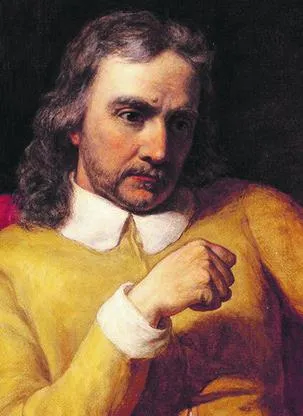
In point of fact, in the English-speaking world, the previous century was also critical in the development of the idea of religious toleration. It was in the matrix of certain circles of 17th-century English Puritanism, where, far from being the Taliban-like regime of popular imagination, the idea that religious coercion by the state is fundamentally wrong was birthed.