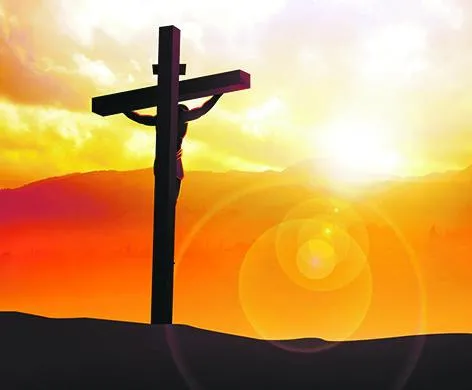
The cross: suffering, substitution, satisfaction

Conrad Mbewe  |  Features
Date posted:  1 Mar 2024
Share Add       
The cross: suffering, substitution, satisfaction

This Easter, this short book extract helps us focus once again on the message at the heart of the Christian faith – the cross.

When we think of the coming of the Lord Jesus Christ into this world to redeem us from death, we must see His work of redemption under three important categories.

Suffering

Jesus is God. He is the second person of the blessed, holy Trinity, through whom the whole of creation came into existence. In eternity, He entered into a covenant with His Father. Theologians refer to it as the Covenant of Redemption.

In that covenant, His task was to come to earth and suffer for the sins of His people. Thus, the Son of God came into this world ‘clothed in human nature’ – fully God and fully man – to fulfil this assignment. He was hunted like a wild animal from the crib to the cross. He knew suffering throughout His life. In Gethsemane, He fell on His knees and pleaded with the Father because He knew He was about to drink the full cup of God’s wrath. His soul was about to undergo immense and intense suffering. Hence, He prayed: ‘My Father, if it be possible, let this cup pass from me; nevertheless, not as I will, but as you will’ (Matt.26:39). He prayed until His sweat became like great drops of blood falling to the ground. God the Father sent an angel to strengthen Him for the last mile of the journey. He was finally captured, taken through a mock trial, and crucified. It is important to note that He freely handed himself over to His captors. He truly suffered.

Substitution

On the cross, Jesus did not only suffer physically. He experienced the wrath of God that His people ought to have experienced because of their sin. The Holy Spirit helped Him as he drank in our hell on our behalf, as our substitute. To the cry ‘My God, my God, why have you forsaken me?’ God’s answer would have been: ‘It is because you are standing in the place of those whom I have given to you. You must make full payment for their sin.’ As the apostle Paul explained to the Corinthians: ‘For our sake he made him to be sin who knew no sin, so that in him we might become the righteousness of God’ (2 Cor. 5:21). Jesus was a substitute. We deserved to die. There was absolutely nothing we could do to turn that around. We had messed up. The God of justice was to bring His sword of justice upon us, but Jesus intervened. He took our place, and the sword came upon Him. That is the only way you can explain Calvary.

Satisfaction

Jesus Christ rose from the dead, showing that God was satisfied with the payment that was made for our sin. I will explain this truth at greater length than the first two because it is the height of the good news. Faith needs to grasp this. It is in order to make this truth plain that the apostle Paul in Romans 3:25 uses a word that we do not often hear today. It is the word ‘propitiation’. He writes that Jesus is the one ‘whom God put forward as a propitiation by his blood, to be received by faith’.

To a Jew who was familiar with Greek, this word pointed to the mercy seat in the Temple where the high priest would go into the Holy of Holies once a year with the blood of a slain animal. He would pour the blood on the mercy seat. His message would be: ‘Yes, Lord, we deserved to die. You are a holy and just God. Sin deserves death. But because of your mercy, you have provided that another should take our place and die our death. Another has taken our place. Here is the evidence: the shed blood. Be appeased. Become propitious toward us. May your justice be satisfied.’

The apostle took that picture and brought its light to bear upon Calvary. He said that God set forth Jesus in exactly the same way that the high priest set forth the sacrifice of atonement. This time it is His own blood that is shed. Jesus is both the high priest and the sacrifice. Just as the animal would suffer as a substitute to satisfy the wrath of God, so also Jesus suffered as a substitute on behalf of His people to satisfy the wrath of God against their sin. Just as the high priest would come out of the Holy of Holies alive and announce the ‘Shalom’ (peace) to the people, so also Jesus rose from the dead and speaks peace to those who trust in Him.

This is the good news that we share with the world. When we look at the cross and see the mangled form of the Son of God as though He had been attacked by some ferocious beast in the jungles of Africa, we say: ‘There go I but for the grace of God’. When we hear him cry ‘It is finished’, we jump up and shout: ‘Hallelujah! Our sins have been fully paid for by another, the Lord Jesus Christ.’ Our death has died in the person of God’s own Son. He offered Himself as an atoning sacrifice. He suffered the wrath of God that ought to have sunk us deeper than the grave into the flames of hell. He has reconciled us to God. And in reconciling us to God, Jesus secured our justification, sanctification, and adoption, all the way to our glorification.

So, the author of the letter to the Hebrews could write: ‘In bringing many sons to glory, it was fitting that God, for whom and through whom everything exists, should make the author of their salvation perfect through suffering’ (Heb. 2:10, NIV 1984). It is important for us to see that Jesus did not only make it possible for us to be reconciled to God. He effected this reconciliation. Our death died on Calvary; it did not faint! Thus we can sing:

My sin – O the bliss of this glorious thought –
My sin, not in part, but the whole,
Is nailed to His Cross, and I bear it no more;
Praise the Lord, praise the Lord, O my soul!


This article was originally published in the March 2024 issue of Evangelicals Now.

Share
< Previous article| Features| Next article >
Read more articles on:   Easter  /  faith  /  theology

About en

Our vision, values and history

Read more

Give a subscription

Our monthly newspaper is the perfect gift for those who love to think deeply

Give here