
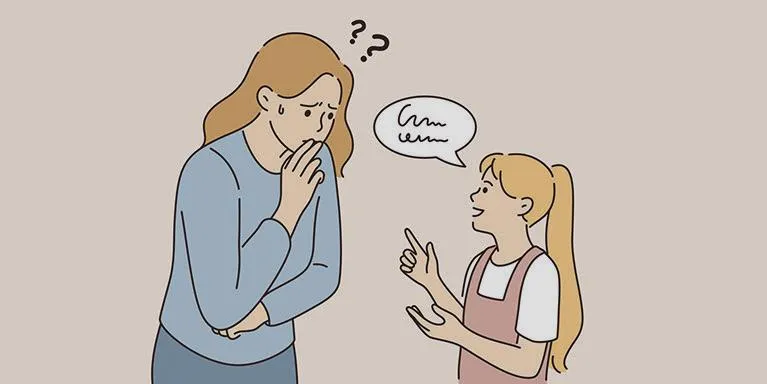
‘I didn’t mean to.’ It’s the sort of phrase that trips off the tongue with ease.
It describes well the randomness of life – the fact that sometimes things just pop out of nowhere. This morning, I didn’t mean to overbalance whilst sneezing and stand on my cat’s tail, but I did. Accidents do happen. And they will continue to do so until Jesus returns.
Spurious intent
But sometimes, in relationships, ‘I didn’t mean to’ is used with more spurious intent. When one spouse says to it to another, it shuts the conversation down. When a parent says it to a child, it drives the real problems underground. When colleagues lob it at each other, trust is eroded and effective teamwork disappears. That’s because, all too often, it’s a phrase designed to diminish the responsibility of the one causing hurt, minimise the pain of the one hurt and replace the deep and beautiful process of repentance with something far more superficial and trite. ‘I didn’t mean to’ is often shorthand for ‘it was only a mistake’; ‘you can’t be that cross with me’ or ‘we really should just move on’.
Inconsistency
Interestingly, most of us wouldn’t import that kind of thinking into other areas of life. If we bought a new jumper and then discovered a massive hole in it, we wouldn’t accept the shop assistant simply saying: ‘Sorry – I didn’t mean to sell you that.’ We might reasonably acknowledge it was an unintended error, but we’d still push for a replacement or full refund. ‘I didn’t mean to’ is not the relational equivalent of Monopoly’s get out of jail free. But, within families or teams, we’re often conditioned to hear those four words and respond in specific ways: instead of continuing to work issues through in pursuit of Christlikeness, we clam up and feel the need to just put up with whatever hurt was hurled our ways (whilst all the time stifling a rising scream that shrieks ‘you may not have meant to, but you did, and it caused great pain!)’
What do you mean?
Abusers usually mean to do whatever they do. ‘Like a maniac shooting flaming arrows of death is one who deceives their neighbour and says, “I was only joking!”’ (Prov. 26:18-19). And sometimes they demand gruelling repentance in the face of genuine mistakes.
But, in non-abusive relational strife, one simple way of avoiding the snare of ‘I didn’t mean it’ is by posing a simple question: ‘What do you mean by that?’ When spoken gently, it’s a wonderful prompt to dig beyond the dismissiveness of the words and see the heart that lies beneath. It encourages people to rephrase.
At worst, you might see the ugliness of a defensive heart that retorts: ‘It means you should just back off – it’s not important.’ At best, you’ll see the beauty of humility: ‘It means this mess is my fault. I’m acting in ways that I don’t want. And I desperately need help to change.’ Such people truly understand that ‘a broken and contrite heart … God, will not despise’ (Ps. 51:17). Given we’re all frail and fallible humans, much of the time the response will fall somewhere in between: ‘It means I know I messed up, but I’m tired.’
Fuel for follow-up
Whatever the rephrase, there’s fuel for follow-up. The angry heart is exposed more clearly and it’s more difficult (though not impossible) for the person to continue to duck their need to repent. The humble heart is one that is open to genuinely pursuing change and that is fertile ground indeed. Even the tired heart leaves a chink open for a hope-filled conversation at a later date.
The more practised we get at gently pushing back against ‘I didn’t mean it’ in both personal and pastoral settings, the more love will flow. We can instead encourage phrases that take full responsibility, embody genuine repentance and seek specific change. And, as we do, hurts will be healed, bitterness defused, and hope brought into many a limping heart.








Want spiritual resilience? Try this...
I live near a Christian retreat centre equipped with a labyrinth made of turf. A labyrinth is not a maze. …