
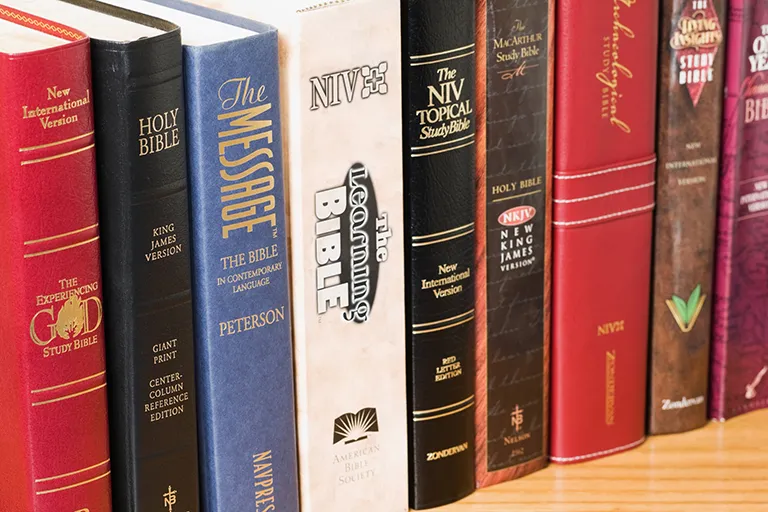
The diversity of Bible translations can be a cause of confusion. Among Christians there are problems. How do we know which translation to trust when their meaning is divergent? Attempts to memorise Scripture are more difficult when we no longer have a Bible in common.
For sceptics, multiple translations can be an obstacle. Does it suggest that we cannot be sure what the original manuscripts said? Have translations changed the meaning over time? Is there an industry trying to make money out of the gullible by constantly producing new versions and new editions?
These concerns are a good example of how a challenge to our faith can actually strengthen it.
First, there is the question of whether we can trust that a translation today reflects what was originally written. The vast number of manuscripts from the ancient world have allowed scholars to reconstruct what is considered to be the text as originally given. The result is increased confidence. For all the early manuscripts discovered since the publication of the Authorised King James version in 1611, the best modern translations have not substantially departed from it. New insights have served to confirm that the manuscript-copying tradition has been generally reliable over the centuries.
Secondly, we might also see value in the diversity of modern translations. Of course, some translations are inaccurate and others count only as a paraphrase. But there are numerous good translations. There is no perfect translation as we all know that words cannot be translated perfectly from one language into another. But consulting more than one translation can help us reflect on the nuance of the text.
Thirdly, translation itself is a scholarly work to which many evangelicals have devoted their lives. Paul Lawrence has recently published a magnificent book, Egg Whites or Turnips: Archaeology and Bible Translation, that demonstrates the many ways that our increasing knowledge of the ancient world is improving translation.
While there are some words which are simply unknown to us, many more have been clarified by discoveries in archaeology or new knowledge of other ancient languages. Brief and readable, Lawrence’s book allows us all to eavesdrop on the work of Bible translators and demonstrates that the community of scholars, aided by linguistic tools and archaeological discoveries, are able to provide reliable translations.
Far from being an embarrassment to our witness, a range of reliable English translations gives us confidence. We can see that there is robust scholarship informing our understanding of what was originally written and helpful ways of conveying its meaning to the contemporary world.






Does Jesus hate people because of their ancestry?
I have been involved in reaching out to Muslim people for over 35 years and, surprisingly often, I hear Christians …