The Government has finally published its long-promised Conversion Practices Bill. Ministers describe the draft legislation as "balanced and targeted" and insist that it is not intended to interfere with religious belief and expression. Yet a careful reading of the bill raises a different question: if existing laws already prohibit abuse, why is this legislation needed at all?
Is new legislation really necessary?
Before considering the detail of the bill, Parliament should ask the same question that should have been answered during the conversion therapy debates of 2021: What evidence demonstrates that new criminal offences are needed?
Five years ago, the Government was unable to establish that existing laws against assault, coercion, harassment and abuse were insufficient. Even the Equality and Human Rights Commission questioned whether there was a sufficient evidential basis for further legislation.
The present draft bill appears to proceed from the same assumptions. It offers no new evidence demonstrating that existing criminal laws are incapable of protecting vulnerable individuals or that the creation of new offences is justifiable.
The Government has repeatedly asserted that conversion practices cause harm. Few would dispute that coercion, violence, threats and degrading treatment are wrong. Such conduct is already prohibited by a wide range of criminal offences. Assault, coercive control, harassment, child cruelty, false imprisonment and various safeguarding provisions already exist to address genuinely abusive conduct.
What the Government has still failed to demonstrate is a significant body of cases involving lawful conduct that cannot presently be prosecuted under existing legislation. Despite years of consultation and political debate, the evidential basis for introducing entirely new criminal offences remains non-existent.
The definition is unacceptably broad
Yet the bill creates some of the broadest speech and conduct offences seen in recent years.
A conversion practice is defined as conduct intended to cause someone to have or not have, or to believe they have or do not have, a particular sexual orientation or transgender identity. The definition itself is extraordinarily broad. It potentially captures prayer, pastoral conversations, counselling, discipleship, parental guidance and ordinary Christian teaching.
The Government insists that only "abusive" practices will be criminalised. However, the legislation leaves the meaning of abuse largely to the courts. Psychological pressure, emotional pressure and controlling behaviour are all listed as relevant considerations. Such concepts are inherently subjective and highly dependent upon the feelings of the complainant.
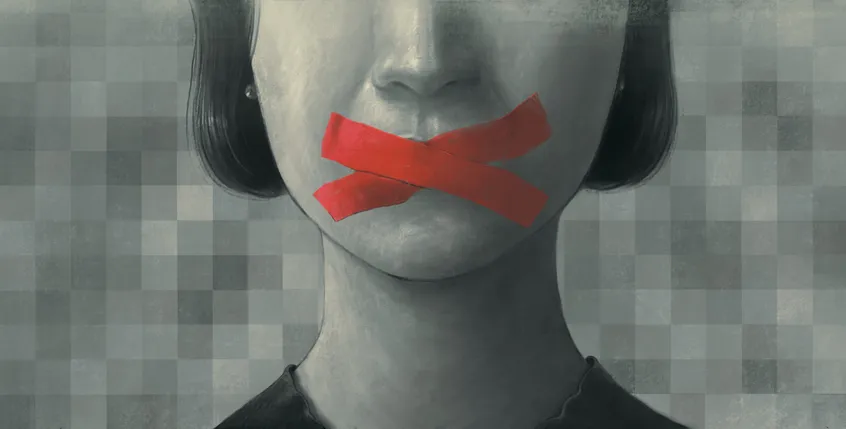
The danger is not simply wrongful convictions. The greater danger is the creation of a substantial chilling effect.
The chilling effect has already begun
The chilling effect is not merely theoretical. Long before any criminal legislation has been enacted in the United Kingdom, allegations of "conversion therapy" have already caused significant personal, professional and financial harm.
Christian counsellor Lesley Pilkington was subjected to an undercover operation by a journalist who falsely presented himself as a client seeking help for unwanted same-sex attraction. Following disciplinary proceedings and widespread media coverage, she lost her senior professional accreditation and suffered substantial damage to her reputation and practice.
Dr Mike Davidson and the Core Issues Trust have faced years of regulatory complaints, legal challenges, advertising restrictions and public campaigns because they advocate the right of individuals to seek support consistent with their religious beliefs and personal goals.
The organisation has also experienced the closure of banking facilities and financial services, illustrating how allegations of conversion practices can lead to significant economic and institutional exclusion even in the absence of criminal wrongdoing.
More recently, Matthew Grech in Malta became the first person prosecuted under a conversion practices law after publicly sharing his testimony of leaving homosexuality and embracing the Christian faith. Although ultimately acquitted in 2026, he endured a criminal prosecution that required seventeen court appearances over several years. He faced public scrutiny, legal expense and the possibility of imprisonment simply for discussing his personal experiences and religious convictions. The process itself became the punishment. And now his acquittal is under appeal.
With the addition of criminal sanctions, pastors, youth workers, parents and Christian counsellors may increasingly fear that certain conversations are simply too dangerous to have.
Churches may be concerned about prayer ministry.
Christian organisations may feel intimidated to withdraw support services.
Ministries that help individuals seeking to live in accordance with sexual purity as the Bible teaches may feel scared to continue their work.
No protections for Christian ministries
This is particularly concerning because the conduct in question is protected by the Human Rights Act.
The European Convention on Human Rights protects freedom of religion, freedom of expression and the right to manifest religious beliefs. Parents enjoy rights concerning the Christian and moral upbringing of their children. Churches possess important rights of autonomy in matters of doctrine and pastoral practice. And individuals seeking help for unwanted same-sex attraction or gender incongruency have a right to seek and obtain help in line with their Christian faith.
Yet the bill contains no religious exemption.
There is no protection for pastors. No protection for prayer ministry. No protection for consensual pastoral support. No protection for parents.
By contrast, the bill creates an exceptionally broad exemption for healthcare providers. Medical professionals are effectively excluded from the definition unless their conduct amounts to something approaching gross negligence. The result is that state-approved medical interventions receive substantial protection while religious and pastoral care does not.
No statute of limitations
The absence of any limitation period is equally troubling.
A pastor may pray with an adult who freely seeks spiritual help, or a Christian counsellor may provide talk therapy for someone who has come to them about unwanted same-sex attraction or gender confusion. The individual may describe the experience as positive and beneficial. Years later, perhaps after abandoning the Christian faith or changing their beliefs, the same individual may experience depression or emotional difficulties and come to attribute those difficulties to earlier pastoral support or counselling.
That accusation can then lead to criminal charges, or at the very least a criminal investigation, where the process itself can become the punishment. Police investigations, safeguarding referrals, legal costs, media scrutiny and reputational damage can devastate ministries and individuals.
The new protection orders create further concerns. Local authorities, police and family courts may seek orders restricting conduct before any criminal conviction occurs. Such orders may arise during existing family proceedings.
This creates obvious risks for parents who oppose a child's social transition or other lifestyle choices antithetical to Biblical belief.
Whether such cases could ultimately succeed is not the only question, although it speaks to the unacceptable vagueness of the bill.
The existence of the legal process itself may discourage parents from exercising perfectly lawful parental responsibilities.
A bill that causes far more harm than good
The bill therefore represents far more than a narrow prohibition on abusive practices. It risks becoming a mechanism through which lawful Christian teaching, prayer and pastoral ministry are increasingly marginalised, controlled and punished.
No reasonable person believes criminal abuse is acceptable. Christians have consistently condemned such conduct.
But neither should Christians accept legislation that is unnecessary, unsupported by evidence, drafted in excessively broad terms and capable of producing a profound chilling effect upon Christian life and the hope and freedom is brings.
Parliament now faces a choice. It can address genuine abuse through the extensive criminal laws that already exist, or it can create a new legal regime that places parents, pastors and Christian ministries under suspicion while offering little or no additional protection to the vulnerable.
Christians should engage with this debate now, because once the chilling effect begins, the damage to pastoral ministry, the manifestation of the Christian faith and witness will happen long before the first prosecution is ever brought.
Roger Kiska, Legal Counsel at Christian Concern and the Christian Legal Centre