I smile a lot. I’m known for it.
I wear bright clothes, wacky glasses and glam up my wheelchair. I also receive a lot of comments about being smiley and bright, and living my life ‘out there’. I love life!
My husband also smiles a lot and wears wacky glasses, but he doesn’t get comments about being smiley or living his life to the full.
There is a stark contrast between how people respond to myself and my hubby.
Disabled and smiling?
I really don’t mind being complemented on my smile and disposition, but it is odd that the hubby isn’t - and maybe my disability is the reason why.
I’ve heard many disabled people say that non-disabled people often can’t see how you can be smiling, content, living life…and have a disability. So it seems there is a notion that our full and happy lives end with the onset of disability.
I really don’t think it’s deliberate! It is the result of many years of people seeing disability as a tragedy and being surprised when they see someone like me looking happy, and getting on with life.
It may have been this assumption that gave rise to an odd comment I received when a gentleman approached me after I’d jointly led a seminar with a friend. I was expecting a deep and meaningful question about what to do when adoption is difficult, a subject totally disconnected from disability. Instead he made a statement and then walked away, leaving me both shocked and laughing out loud: “You disabled people put yourselves in these wheelchairs and then get fat because you don’t exercise. You need to stop using it before you get fat!”
Maybe he saw being "fat" and disabled as being just one step too far for me to cope with.
Disabled and serving?
I've also encountered attitudes like this when I’m serving at Christian festivals (Christians often manage a whole new level of weird when it comes to disability!). Christians have seemed confused about the idea of a disabled person serving in ministry - which is an extension of this notion that disabled people can’t be happy and have a meaningful life (no matter what size they are).
At one event, a delegate refused to open a door to let me into a venue because “the leadership team prayer meeting is in there”. On commenting that I was part of the leadership team, they repeated the same statement, making it clear that they couldn’t see how a disabled woman could be part of the leadership team.
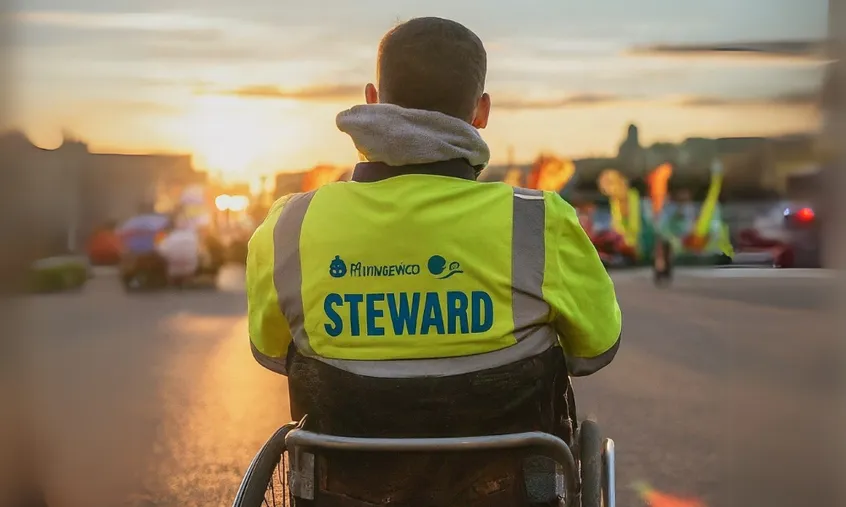
I’ve experienced the same thing at other conferences, with stewards not letting me into a venue to set up because “the speaker isn’t here yet”, leaving me to try and prove that I am the speaker.
At some denominational conferences, I’m seen as a bad advert for Christianity, because my disability and high pain levels make them feel uncomfortable with the dichotomy of faith, happiness and visible disability.
It both irks me and makes me laugh when I see the ways some people judge what disabled people can and can’t do.
Power in weakness
2 Corinthians 12:9 tells us “My grace is all you need. My power is strongest when you are weak.” So I am very happy to brag about how weak I am. Then Christ’s power can rest on me.
This is no different for disabled people, and maybe God’s power and grace can be seen more clearly in us because we have to lean into Him even more.
Maybe this is why I smile so much, and live my life to the full.
How to support a church friend facing disability
Last month, I wrote about supporting through the onset of disability; I wanted to continue that theme for a while. …