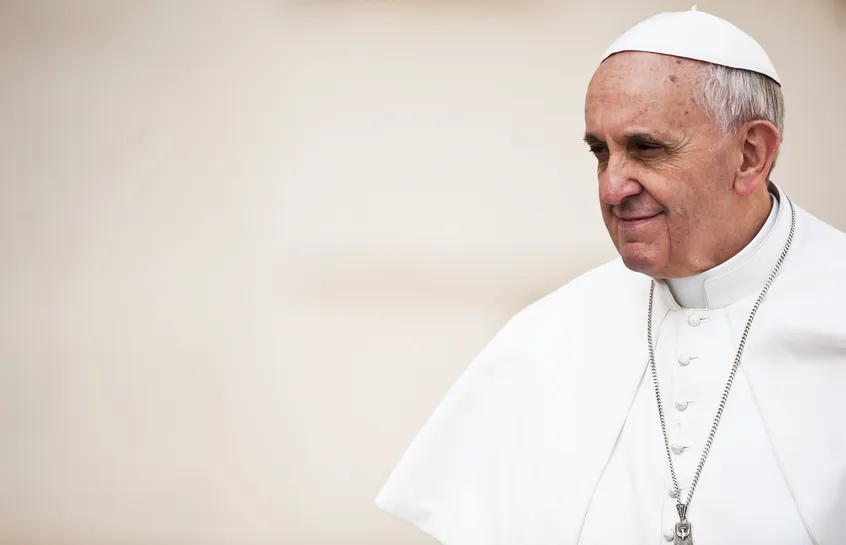
The recent death of Pope Francis has shone a spotlight upon the Roman Catholic Church, including the rituals surrounding the death, mourning and burial of its leader.
Some of these traditions are unique to the Pope’s office: the sealing of the papal quarters; the destruction of the papal ring; the lying in state; the attendance of worldwide leaders at the funeral; and so on.
However, there were other traditions on show in Rome which the Pope shares with ordinary members of the Roman church. The rosary beads included with the body in the coffin, for example; the requiem mass said at the funeral; the prayers for the dead on the lips of the mourners; and, everywhere you turn, three letters: RIP – may he Rest In Peace.[1]
If you share the Roman Catholic view of salvation, then it is understandable why a requiem mass and prayers for the dead (including the desire that the deceased may rest in peace) would seem desirable and even essential. For there is no assurance of salvation in the Roman Catholic religion. In fact, Cardinal Robert Bellarmine, a major figure in the Counter-Reformation and a strong advocate and apologist for the Council of Trent, once wrote: “The greatest of all [Protestant] heresies is assurance.”
Commenting on this, theologian Sinclair Ferguson writes: “If final justification is dependent on something we have to complete it is not possible to enjoy assurance of salvation.”[2] In other words, if we are not justified by faith alone, in Christ alone, by grace alone, then we will always have to look to something else – be it good works, baptism, rosary beads, requiem masses or prayers for the dead – to help us ‘get over the line’ when we die. In such a situation, as many ‘RIPs’ as possible are welcome because our salvation is far from being assured.
But those who know their Bible know better. Those who know the gospel of grace know better. Those who know the sufficiency of Christ know better.[3] Christians know that "since we have been justified through faith, we have peace with God" (Romans 5:1). If we have faith in the Lord Jesus Christ, who was handed over for our sins and raised to life for our justification (Romans 4:25), then we have peace with God. And all the RIPs in the world will not make one iota of difference to that eternal peace. Of that we can be assured!
Of course, the reverse is also true. The sobering truth is that for those who die outside of Christ, all the RIPs in the world will not make one iota of difference to their eternal torment. Of that, too, we can be assured. Not least because Jesus says so, in the parable of the rich man and Lazarus (Luke 16:19–31).
So let us stop saying or posting ‘RIP’ when someone dies, however well-meaning our intention. It does not add anything to a believer’s peace; nor does it mitigate the unbeliever’s pain. Rather, may the Holy Spirit and the gospel of grace help us to lead others to ‘RIC’ – ‘Rest in Christ’ - while they are alive, so they may repent and believe and be saved. So that in Christ they too will be able to draw near to God with sincere hearts in the full assurance of faith.
[1] ‘Rest in peace’ is a translation of the Latin Requiescat in pace, meaning May he/she rest in peace. The ‘may’ is significant, reflecting the subjunctive mood of the Latin word used. The subjunctive mood expresses a wish, a desire, an uncertainty. Contrast that with what the early Christians wrote on their gravestones: Dormit in pace meaning He/She sleeps in peace. This is a statement of fact, because the Latin word is in the indicative mood. There is no doubt or uncertainty here: because of their faith in Christ, they have fallen asleep in Christ and are already at peace. Theologically speaking, there’s a world of difference between the subjunctive and the indicative. Thank God for the indicatives of the gospel!
[2] https://learn.ligonier.org/articles/greatest-all-protestant-heresies#user-content-fnref-1
[3] The book of Hebrews is a powerful testimony to the sufficiency of Christ. Among other things, it tells us it is Christ’s blood which gives us confidence to enter the most holy place and to draw near to God with the full assurance of faith: Hebrews 10:19–22.