A leading evangelical in Rome, Leonardo De Chirico, offers his personal reflections on the direction of the Roman Catholic Church globally under Francis over the last 12 years.
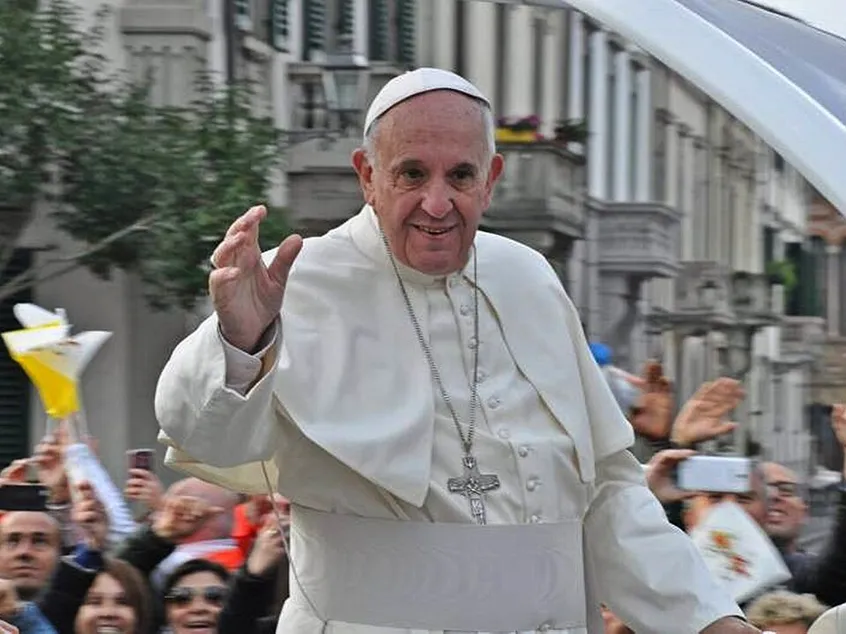
On March 13th, 2013, Jorge Mario Bergoglio became Pope Francis, marking a significant transition in the Roman Catholic Church. He died earlier today, Easter Monday 2025.
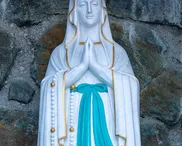
What he has stood for in his papacy – for example his affirming attitudes towards all, his silence over some aspects of traditional doctrine and his ambiguous language, his thoroughgoing Marianism, and his lack of clarity on several key issues – has caused many to puzzle.
Some acclaimed him as the “great reformer”,[1] while others argued that he was bringing about a “revolution of tenderness and love”.[2] Yet there were those too who found it difficult to square his words and actions with the established patterns of traditional Roman Catholicism.
Three angles
Now that his papacy is over, there are at least three angles we could take to evaluate his tenure.
- From the global point of view, he was elected to redirect the attention of the Roman Catholic church from the secularising West (where Roman Catholicism has been in decline) to the Global South (where in some places like Africa it has potential to grow). His more than fifty international journeys witnessed to his attention given to African and Asian countries. The appointments of cardinals were also made following a similar criterion. Under Francis the centre of gravity shifted towards the Global South.
- From the doctrinal viewpoint, his three encyclicals (e.g. Laudato si and All Brothers) and his apostolic exhortations (the most important ones being The Joy of the Gospel on mission and Amor Laetitia on the family) indicated a shift of the Catholic magisterium towards becoming more “catholic” (i.e. inclusive, Global South, absorbing, focused on social issues) and less “Roman” (i.e. centered on Catholic distinctives). Francis lowered the traditional Roman Catholic identity markers (sacraments, hierarchy) for all people (e.g. whether they are practicing, not practicing, believing, not believing, people in ‘disordered’ lifestyles) to be included and to feel they “belong” to the church. When Francis talked about “mission” he had in mind this sense of inclusion, regardless of gospel criteria. Under Francis the Roman Catholic Church became more “catholic” than ever in its long history. But as a matter of fact, despite his inclusiveness, Catholic churches are empty, and numbers are declining in the West.
- Organisationally speaking, he launched the “synodal” process whereby he wanted his church to be less centralised and have more participation from the peripheries. While Francis seemed committed to synodality on the one hand, his style of leadership appeared to be centralising and unpredictable, on the other.
Every Pope has had his internal enemies. John Paul II was not liked by some progressive circles. Benedict XVI was criticized every time he spoke. Francis received pushback from cardinals, theologians, and important sectors of Roman Catholicism, especially in the USA but also in Australia (e.g. the late cardinal Pell) and Germany (e.g. cardinal Müller). They were concerned with the erosion of Roman Catholic identity based on traditional doctrines and practices being replaced with an “all brothers” kind of mindset where "almost anything goes," it was felt by some. Some alleged mismanagement by Francis in financial and leadership decisions also created an atmosphere of distrust in parts of the Vatican.
Pope Francis and Evangelicals
When he was elected in 2013, Francis was presented as very close to the “evangelical” ethos. Spontaneous prayer, experiential language, the frequent use of Bible texts in his homilies, and a certain fervour in spirituality seemed to make him a different Pope. Many evangelicals were impressed, only to discover sometime later that Francis was also very Marian, tendentially universalist, a Jesuit who before becoming Pope had published strongly-phrased comments against Protestant Reformers Luther “the heretic” and Calvin “the schismatic”.
His approach to ecumenism was shaped as “walking together, praying together and working together” rather than in theological discussions seeking doctrinal agreement. His was a “spiritual ecumenism.” He used the same approach with Liberal Protestants, Charismatics of various stripes, and Eastern Orthodox. His desire for unity reached out beyond Christian circles.
His Document on human fraternity (2019) signed with Muslim leaders epitomized his insistence on the whole of humanity made by “brothers and sisters” who are called to walk, work and pray together regardless of faith in Christ. Evangelicals should be aware that when Francis spoke of “unity” he did not have in mind unity in the gospel, but unity of the whole of mankind.
Francis re-defined what it means to be “brothers and sisters”. He has extended “fraternity” to all those who live “under the sun”, i.e. “the one human family”…. Muslims, Buddhists, agnostics, atheists, Protestants … are “all brothers”.
That was his interpretation of what Vatican II meant with the Church being “the sacrament of unity between God and mankind” (Lumen Gentium 1). The re-definition of what it means to be brothers and sisters is an attempt to blur what the Bible expects us to distinguish. Our common humanity takes over the spiritual connotation of being “in Christ” as the basis for the shared fraternity. Francis pushed this unbiblical approach in his ecumenical endeavours and inter-faith initiatives.
What’s next?
Now, Francis’s pontificate is over. Whoever the next Pope is, unless there is a surprise that stems from the extraordinary providence of God, he will remain within the logic of Roman Catholicism, which moves along the lines of ecclesiastical politics but whose agenda does not include a way towards a reformation according to the gospel.
True Reformation requires abandoning all that Rome has added to the evangelical faith (Marian dogmas, sacraments and practices that are not taught in Scripture, imperial and hierarchical structures, spurious if not really pagan devotions, etc.) to return to the Biblical faith that is grounded in Scripture alone and centred on Christ alone. Unfortunately, there is nothing that indicates any movement towards an evangelical reformation of the Roman Catholic Church, but only another page in the long history of Roman Catholicism.
Roman Catholicism will be stretched and go through a stress test but will be able to handle both Francis’ catholicity and his critics’ insistence on the Roman component. The synthesis will be expanded, but the gospel will not be allowed to change Rome. This is the reason why the Reformation is not over.
[1] Austen Ivereigh, The Great Reformer. Francis and the Making of a Radical Pope (New York, NY: Picador, 2015).
[2] Walter Kasper, Pope Francis' Revolution of Tenderness and Love: Theological and Pastoral Perspectives (New York, NY: Paulist Press, 2015).