
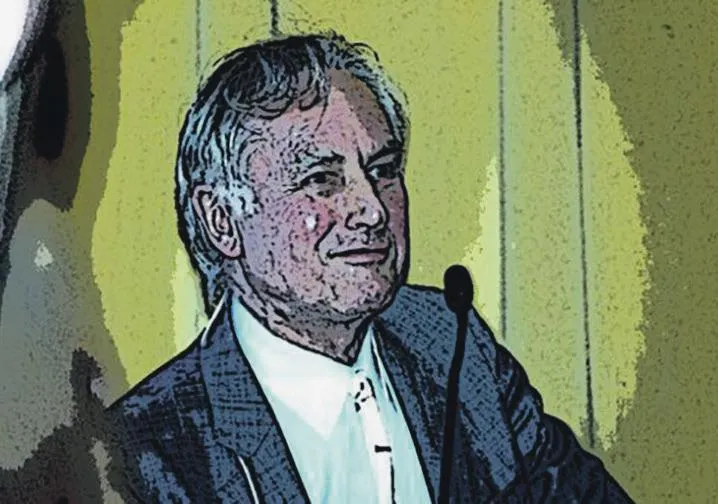
I recently read that Richard Dawkins underwent an experiment in 2003 where magnetic fields were applied to his head.
It was meant to stimulate the temporal lobes and create a religious experience. It failed on Dawkins; apparently his temporal lobe sensitivity is much lower than average. On others, however, the same treatment had triggered a sense of an invisible presence or out-of-body experiences.
What does this mean for religion? The discussion of such experiments usually follows similar lines. Could it be that the reason an atheist (such as Dawkins) doesn’t believe is simply because he or she is incapable of religious experience? Or, alternatively, that the only reason people do believe is because their brains are out of whack?
I can’t speak for other religions. However, when it comes to Biblical Christianity, there seem to be some problematic assumptions in the way such experiments are often discussed.
1. That having an experience of something such as an invisible presence, or an out-of-body experience, is what it means to be religious.
There may be some people for whom this is the case. However, it is quite possible for people to have experiences of that kind and not be at all religious; rather, dismiss them as hallucination. There are other people who never have such experiences, and yet for other reasons are convinced it is right to believe in God and/or follow some particular religion.
Which leads us to the second assumption:
2. Being Christian is the same as being religious.
There are mystical experiences that are reported from religions all over the world. They can be entered through certain meditation techniques or other practices. Whether or not they are genuinely spiritual is open to debate; but even if they are, being a Christian – in redeemed relationship with the living God – is a different thing. We participate in the divine through faith in God’s promises (2 Peter 1:4-8) – through knowing Christ, through hearing and obeying His word. That is why evangelicals have always focused on the word, for that is how we (genuinely, supernaturally) come to relationship with God.
God can create strange experiences if he wants to. Paul was caught up to heaven in some kind of mystical experience. Visions can genuinely happen. It is not, however, how God normally communicates; and even when He does, the test of any experience is what he has already told us in His word. That is how we know if any particular ‘religious’ experience is true, and of God, or false – which could mean that it comes from some other spiritual factor; or could mean it’s simply a stimulation of the temporal lobe that has nothing supernatural about it.
In other words, an experiment that can induce an experience to do with the temporal lobe, whatever it says about the experiences that people are capable of, doesn’t necessarily say anything much about religion, especially if that religion is Christianity.
As a matter of personal preference, I would quite like my life to be mystical. I like the idea of mystical experience. But that’s just my taste. It’s neither here nor there when it comes to what I believe. I believe because I trust God’s promises; I have seen their fulfilment and have come to know his character. I hear His word, and it makes sense of the world, and is reliable. Belief in the New Testament is a matter of understanding and accepting, not mystical experience. Yes, having that belief brings an emotionally fulfilling life, and I do experience a sense of God’s presence; but it is not my personal sense of transcendence that brought me to God.
How sad if it were. How sad if my salvation rested purely on the type of brain that I have, and what it’s capable of experiencing. Praise God that we are saved by His grace, through His word, and that He can save anyone. Of any brain.
Kirsten Birkett formerly lectured at Oak Hill Theological College and now lives in Carlisle. Her latest book is Living Without Fear: Using the Psalms to Stop your Fear and Anxiety.






Our culture must not be defined by our technology
Essex university has announced it is cutting positions equivalent to about 150 full-time roles, potentially affecting over 500 staff, BBC …