From the Garden of Eden to 21st-century Wordle

Rachel Jones  |  Comment
Date posted:  1 Apr 2022
Share Add       
From the Garden of Eden to 21st-century Wordle

Today was a good day. Why? Wordle in three.

Yes, I’ve joined the bandwagon. A little late – as always.

For several weeks, I’d seen the great and the good among Christians on Twitter posting these curious grids of green, yellow and grey boxes. ‘Wordle in six. Today was a tough one.’ ‘Wordle in two. Lucked out on my first guess.’ I knew not what any of it meant. My inner contrarian decided it was probably not worth the hype.

Chasing down the bandwagon!

Eventually, the Wordle chat reached the hallowed halls of the Jones family WhatsApp group. Then my housemate came home late from helping at a youth group because the leaders had been discussing ‘that day’s Wordle’ afterwards. Unbeknownst to me, Wordles had been wordled under my own roof. It was the final straw. I promptly chased down the bandwagon and hopped on the back. Now I’m wordling like a pro.

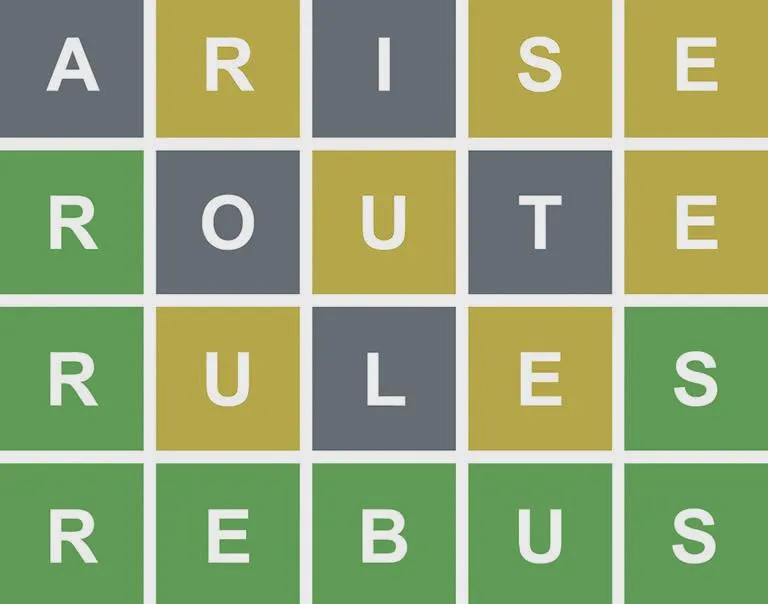
If the whole thing has passed you by, here’s what you need to know: Wordle is a free online word game in which players have six attempts in which to guess a five-letter word. In each attempt, players are shown which of the letters they’ve used are correct (green), which are wrong (grey), and which are the right letters in the wrong position (yellow). So, by a series of deductions – blending logic, vocabulary and chance – you solve the puzzle.

Wordle is the brainchild of Welsh-born software engineer Josh Wardle, and appeared in its current form in October 2021. By February 2022 the game had grown so popular and difficult to run that Wardle announced his decision to sell it to The New York Times. Cue an outcry of fears that the game would be put behind a paywall – and a tide of publicity that can only have increased the game’s popularity.

Simple and stimulating

So, what’s the appeal? Well, it’s gently intellectually stimulating. And it’s gloriously simple: no app to download or accounts to create. And, perhaps most appealing of all: it’s limited. There’s one puzzle per day (the same puzzle for everyone around the world) and once you’ve solved it, you have to wait until the next day for the next puzzle. Unlike most mobile games, which aim to have you playing as long as possible, Wordle prides itself on not. If Candy Crush Saga is the sugary alcopop of mobile gaming – all spinning colours and sparkly sounds – Wordle is more like a cask-aged Scotch: designed to be savoured (if you will forgive my terribly snobbish cultural references). Which means you’re much less likely to surface from your screen with a Wordle hangover – that square-eyed, slightly guilty feeling of having been sucked into your phone for far longer than you should have been.

Creatures meant for limits

Of course, the one-a-day format makes pragmatic sense: ‘Always leave them wanting more’ is an adage for a reason. But it illustrates something important about human nature. We think that total freedom and unfettered access to something we like will make us feel good – and, boy, does the 21st century give us plenty of opportunities to test the hypothesis. But actually, we creatures enjoy things best within limits – such is the pattern of Scripture. And since we aren’t the best at moderating our own appetites, it can be helpful to have those limits imposed on us from outside.

But there’s another secret to the Wordle magic too. Following their purchase of Wordle, James Knight of the New York Times Company said on Radio 4’s Today programme: ‘It’s a game that brought us all together and that’s what’s just so special about it. It’s one word a day and it’s the same word for everybody and we’re all trying to figure it out together.’

With limits, in community. From the Garden of Eden to the 21st-century: this is how humans were designed to thrive.

Share
< Previous article| Comment| Next article >
Read more articles on:   culture
Read more articles by Rachel Jones >>
Comment
What stand-up comedy showed me about teaching the Bible

What stand-up comedy showed me about teaching the Bible

Three weeks, more than 2,000 shows and 2.6 million tickets sold last year. August is the month of the Edinburgh …

Comment
Why student loans and all money is ‘hevel’

Why student loans and all money is ‘hevel’

There’s a row gathering over student loans, and I can’t help but feel somewhat personally culpable.Back in 2013 as …

Need to advertise?

We can help you reach Christians across the country

Find out more

About en

Our vision, values and history

Read more