
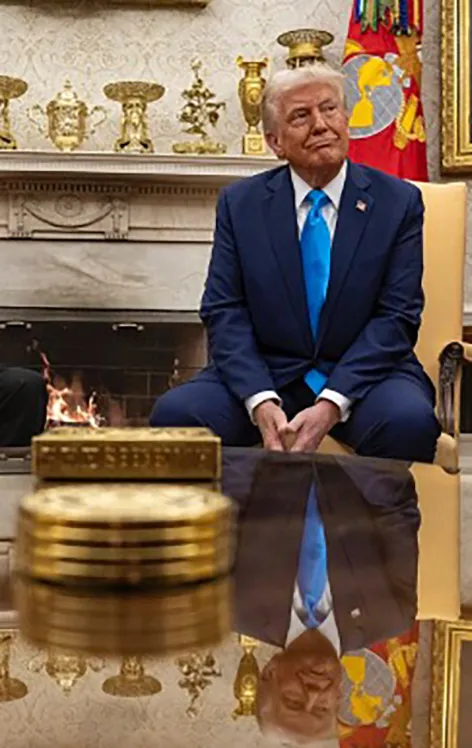
The term “the imperial presidency” gained popularity in the USA in the early 1970s as a consequence of a book of that title by the historian Arthur Schlesinger.
Schlesinger charted what he saw as the abuse of power by successive presidents, most especially by Johnson (1963–69) and Nixon (1969–74). The presidency, claimed Schlesinger, had come to resemble more an imperial court than the office envisaged by the Founding Fathers back in the 1780s.
As we approach the end of Trump’s first year back in office, there are, I think, three concerns about the state of American democracy and the power of the presidency. First, there is the ineffectiveness and/or unwillingness of Congress (their equivalent of our Parliament) to use their constitutional powers to operate as a check on the President. With the Republicans in control of both houses, Congress has pretty much given President Trump everything he’s asked for. With the possible exception of their demanding the release of the Epstein files, congressional Republicans have raised barely a murmur as Trump has taken control of foreign, trade and economic policy into the Oval Office.





Reflecting on Marjorie Taylor Greene's change
One of the most ardent of President Trump’s supporters in Congress for the past five years has been the Republican …