
Following last month’s article, ‘Is your church at risk of having its bank account shut down?’, Evangelicals Now was contacted by the Naval and Military Bible Society (NMBS) who shared their recent struggle of having their bank account unexpectedly closed by Barclays.
The NMBS is the oldest Bible society in the world, having provided Bibles to Service and Merchant Navy personnel since 1779. Recently, the Barclay's 'Know your Customer' (KYC) team had asked why their turnover had increased sharply and they were told, by telephone, that it was because of significant extra demand for Bibles for the Ukrainian Armed Forces. Despite reassurances that 'a note would be placed on the account', Barclays swiftly moved to close both accounts.
The impact on the small charity was enormous. Most routine activity had to cease; Bibles and printed material could not be purchased; grants and donations could not be received and staff wages could not be paid. NMBS’s Director had to use his personal account to provide emergency banking facilities.
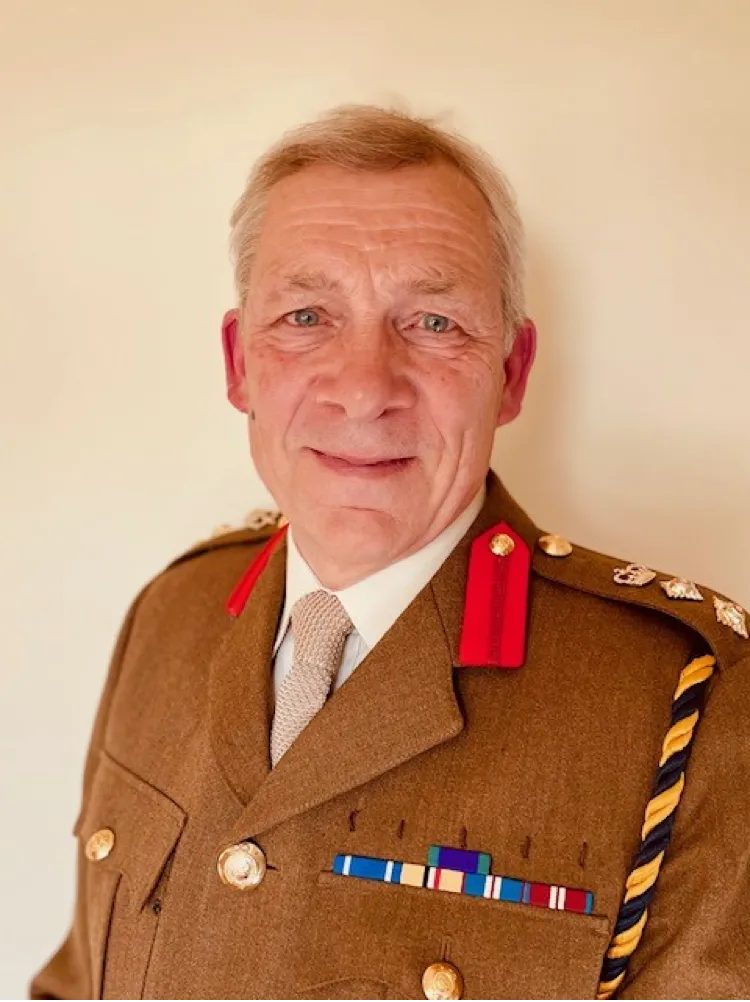
Evangelicals Now interviewed NMBS’s Deputy Chair of Trustees, Colonel John Lewis, about the broader implications of Barclays’ actions:
en: How effectively did Barclays communicate why they were closing the accounts?
John: Communication was poor (perhaps deliberately so) on all levels. At no point were we told that failure to provide information would result in the closure of accounts without warning. Written responses to questions appear not to have been noted and at least one telephone conversation with Barclays’ Business Team was not communicated internally to its KYC team. Following the closures, Barclays was most inflexible, insisting that it was not just suspension but a permanent decision - unless successfully appealed.
en: What evidence do you have that your Christian ethos and practice was a factor in the closures?
John: It is hard to say. Subsequently, we discovered that a wide variety of charities including Churches, community choirs and even a bowling club received similar treatment. Perhaps lack of empathy was a factor, as our increased turnover primarily resulted from some large grants to fund the Bibles to Ukraine. Perhaps this perfectly reasonable explanation was not well understood or sympathised with. There does appear to have been a concerted attempt by Barclays to rid itself of small charity accounts that were perceived to be more trouble than they were worth and, in their eyes, were difficult to monitor. Several of the charities whose accounts have been closed appear to be Christian charities, or churches, but we have no evidence to suggest specific anti-Christian bias.
en: Do you have any sympathy with Barclays’ broader KYC and possible money laundering issues?
John: It is hard to have much sympathy with the KYC team, which seemed to do anything but ‘get to know’ its customer. The most superficial examination of our accounts would have shown why turnover had increased and that there was no cause for concern over money laundering. The explanations given should have been quite sufficient and further evidence could have been given if necessary. To arbitrarily close the accounts of an active charity in this way, without warning, is quite unacceptable and has been the subject of a Charities Commission advisory letter to all the major banks. Barclays appears to have been the main offender.
en: How would you advise other Christian organisations to avoid what happened to you?
John: Be aware of the anti-money laundering requirements of the major banks and ensure that their queries are answered fully, preferably in writing. Ensure you get proof that they fully record and note telephone conversations/explanations. It is probably best to have a deposit/reserves account with a different (and more charity-sympathetic) institution such as Kingdom Bank, paying better interest rates and giving more banking diversity. Have a continuity plan for any suspension of banking services and build that into the charity’s financial policies.
On the recommendation of military colleagues, NMBS opened an account with Holts Military Banking in Farnham, which is subsidiary of Royal Bank of Scotland but offers a more personalised service for those in military service or charities supporting the military. The transfer process was very straightforward. Holts appears to understand the needs of smaller charities rather better, particularly those supporting the Armed Forces.





How a campfire helped bridge cultural divides
His ice cream was using the cone to do a very good impression of a waterfall. The sweat on his …