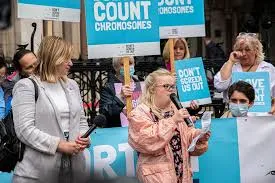
Heidi Crowter – who has just been named by the BBC as one of its ‘100 Women of 2022’ – is taking her case for discrimination to the Supreme Court.
Appeal judges had rejected her appeal against a decision that the Abortion Act 1967 does not unlawfully discriminate against the disabled. The Court of Appeal ruled that a ‘perception’ that it discriminates against the living who are disabled is not enough.
Heidi, a married Christian woman who has Down’s syndrome, sued the government for discrimination, along with a mother whose son also has Down’s. In an emotional response to the latest ruling in November, Heidi said: ‘I am very upset not to win again, but I will keep on fighting because we have already informed and changed hearts and minds and changed people’s opinions about the law.’