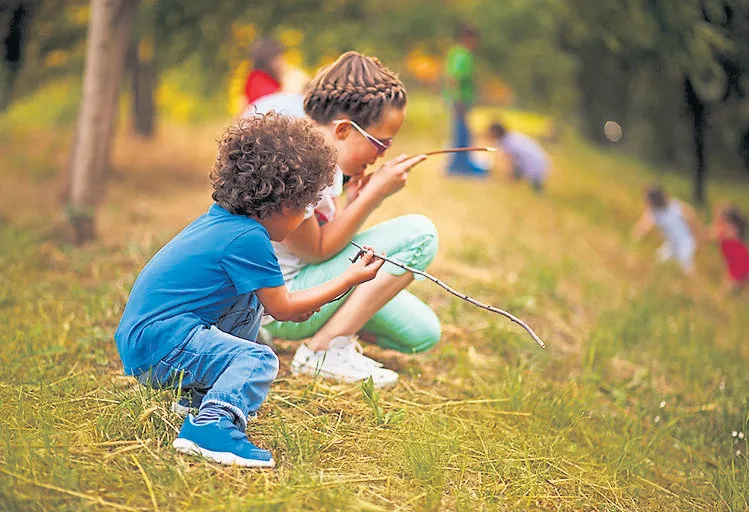
The Government is consulting on new plans for a home education register,1 but this isn’t about home education; it is about the right of any parent to teach their child anything.
If this proposal of registering every child becomes law, it opens the door for a less benevolent government to tell parents how and what can be said at home on other matters. As suspicion of faith increases, it would only be a small step to see Bible teaching brought into the Government’s sights.
Casey Review
This register was first suggested in the Casey Review (see en February 2017). It had a prejudicial attitude to religion throughout. Mainstream views on sexual ethics were referred to as ‘regressive’, and Christians were seen as part of the problem for a lack of integration in society. It claimed, erroneously, that non-Anglican places of worship needed to be registered with the Government. This proposed register comes from a ‘muscular liberal’ attitude to religion that is suspicious of Christianity.
Government as parent
The assumption in the consultation is that a child’s development, as defined by the Government, could be damaged by parents teaching children. Evangelical Christians are mentioned in one of the impact documents to be read alongside the consultation survey, as an increasing number home educate.2
It can be argued that having to register a child interferes with the right to a private and family life (Article 8 of the Human Rights Act).3 The assumption being made by the questions in the consultation is that children who are not at school are at an increased risk of either harm or a poor education.
Huge growth
Home education has grown by over 40% in the past three years4 and many see three major reasons for this: poor SEN provision in schools; unwanted off-rolling of children with behaviour or health difficulties; and liberal sex education. With schools facing dramatic cuts to their budgets, SEN provision has faced drops in funding. The North East of the UK reported a 22% drop since 2015. (One south London school has had several teachers take a voluntary pay cut to fund teaching assistants who support children with additional needs.) Off-rolling came to light as a national problem in 2018. This is when children are taken off the school role, but not at the parent’s request. They are those who are either likely to cause a school’s league table position to fall due to poor exam results, or who are showing challenging behaviour or have an additional need such as school phobia. In these circumstances the parent is then expected to provide alternative educational provision for the child.
en has written extensively about the growth in liberal sex education teaching and attitudes to marriage and the family which contributes to parents choosing to home educate.
State sanctions
Questions 39 and 40 in the consultation survey discuss the sanctions that should be placed on a parent if they don’t agree to put their child on a state register. It appears that a totalitarian response to a dictatorial idea of registering all citizens is being suggested for the UK.
The equalities log2 makes assumptions that children who are home schooled run a risk of being excluded from society. Many teachers would say that the underfunding of schools is achieving this aim and some home schoolers are trying to stop that happening to their child.
The survey1 takes around one hour to complete, or less if one doesn’t expand on the tick boxes provided.
Footnotes
1. https:// consult.education.gov.uk/school-frameworks/children-not-in-school/
2. These documents can be found on the bottom of the link above.
3. www.equalityhumanrights.com/en/human-rights-act/article-8-respect-your-private-and-family-life
4. www.theguardian.com/education/2018/nov/03/get-to-be-free-rise-in-home-schooling