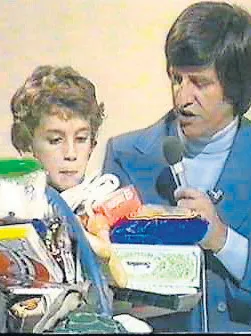
‘It’s Friday, it’s five o’clock… it’s Crackerjack!’ are words with which many generations of English children are familiar. Words which inevitably heralded the start of 30 minutes of comedy, confusion and games involving cabbages, which ended with the distribution of the much-prized propelling pencils.
There is a similar sense of inevitability, if not pleasure, about the Church of England’s calendar: it’s February, it’s General Synod… it’s time to talk about sexuality. Again.
Talking for decades
The Church of England has been talking about sexuality for decades. The Board of Social Responsibility published a report entitled ‘Homosexual Relations: A Contribution to Discussion’ back in 1979, and since then we’ve had at least four more reports and several debates on the floor of General Synod. The last report, known as the Pilling Report, was published in 2013 and it recommended a period of ‘facilitated conversations’.

Two years on and at a cost of £300,000 those conversations came to an end at the last General Synod meeting. Since then, we have entered a period of ‘episcopal discernment’. The bishops have met together at least four times since July and the ‘Bishops Reflection Group on Sexuality’, which they appointed to assist them, has met even more frequently.
Consultation paper
After all that, the bishops have decided that they need to consult with General Synod again. As I write, the College of Bishops has yet to release its Consultation Paper, which we are told will be the basis of both group work and a short ‘take note’ debate. In other words, there will be more discussion but, on the face of it, for the moment there will be no decision. Yet, no decision is, in effect, a decision to carry on with the confused and contradictory position that currently exists in the Church of England – a situation that satisfies no-one.
In his New Year message, Nicholas Okoh, the Archbishop of Nigeria, said about these matters that ‘at the heart of the struggle is the challenge to the Word of God’. We must recognise that at its heart, this is not a 40year old debate about sexuality but a much more ancient one – one that began with a serpent saying: ‘Did God really say?’
Role of a bishop
The Church of England is very clear that the role of a bishop is ‘to teach and to uphold sound and wholesome doctrine, and to banish and drive away all erroneous and strange opinions; and, himself an example of righteous and godly living, it is his duty to set forward and maintain quietness, love, and peace among all men’. No one has ever said that this is an easy task, but neither is it a task that can be put to one side.
All churches need leadership and we need leadership now.
‘Power is a powerful drug and the detox process is hard’
One of the most insightful speeches at the Church of England's General Synod in July came from The Revd Lindsay …