A 'church plant mentality' can be problematic

John Newton Webb
Date posted: 8 Aug 2025
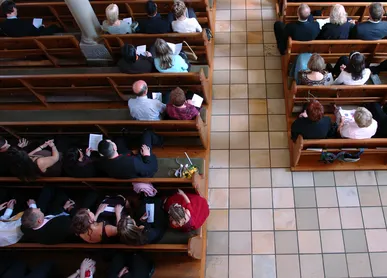
"The reason that we’re so active in evangelism is because we’re a church plant.” “I suppose we do Sunday services this way because we’re a church plant.” I heard many of these sorts of sentiments expressed when I came to pastor Izumi Church, Japan (which started in 2009) in 2016.
Talking to the believers who thought like this, I discovered a mistaken ecclesiology and a large set of unbiblical assumptions about the difference between having a missionary leader and local pastor. Working through these issues led me to reassess the church and church plant distinction.

Five images to help us share the gospel

Robin Ham
Date posted: 8 Aug 2025
Communicating the good news of Jesus in the West in 2025 is challenging. Christianity is often portrayed as irrelevant, out-of-touch, even unjust and toxic. And like it or not, that’s got to shape how we communicate the Christian faith.
In light of this, I’ve been exploring some different imagery for "connecting and confronting" with the good news of Jesus in our cultural moment. In part, it flows from the "rubber hitting the road" in everyday conversations. In part, it flows from working on a Mission & Apologetics module I've taught.

The false religion of climate alarmism

Paul Mills
Date posted: 4 Aug 2025
“Watch out for false prophets... By their fruit you will recognise them…every good tree bears good fruit, but a bad tree bears bad fruit.” (Matthew 7:15-17, NIV)
Climate alarmism [1] is often spoken of in religious terms. [2] The connection naturally springs to mind when considering the priestesses of Gaia at "climate" demonstrations, or the cult-like statements of protestors justifying their latest acts of cultural iconoclasm or infrastructure sabotage. Claire Coutinho, the former UK Energy Secretary, noted that the achievement of net zero carbon emissions has become “a religion” for such protest groups. [3] This way of thinking would appear to have become a sub-sect of full-blown Nature worship, or is certainly adjacent to it. Commentators often note that alarmist thinking has filled the religious vacuum in Western societies as adherence to Christianity has waned.
the ENd word
Lead on Good Shepherd

Jon Barrett
Date posted: 3 Aug 2025
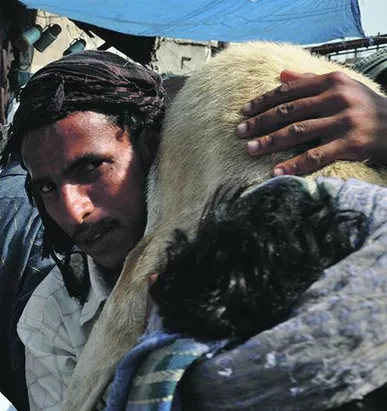
As a kid growing up in a Christian family I was always familiar with the 23rd Psalm, although for some while my young mind was confused about who “Shirley Goodness” was, or why she’d want to follow me all the days of my life.
I had a bit of a gift as a youngster for mishearing things, also spending time pondering what a “foggle” was after first hearing the song Bright Eyes – it wasn’t until I was in my 20s that I realised Art Garfunkle actually sang “there’s a fog along the horizon!”

everyday theology
Why a band of brothers is better than a ‘great man’

Michael Reeves
Date posted: 30 Jul 2025
“Two are better than one, because they have a good reward for their toil. For if they fall, one will lift up his fellow... And though a man might prevail against one who is alone, two will withstand him – a threefold cord is not quickly broken” (Ecc. 4v9-10, 12).
One of the greatest practical problems I see across the church is the isolation of so many church leaders. There are many contributing factors, but surely one of them is the idea that spiritual growth occurs only or mainly through the purposeful, influential actions of elevated individuals. We might call this the “great man” theory.

everyday theology
Mistakes in the Bible?
Michael Reeves
Date posted: 7 Jul 2025
We can submit to Scripture with confidence because of our Lord. Jesus was consistently clear that what Scripture says, God says.
For example, conversing with the Pharisees, he said: “Have you not read that he who created them from the beginning made them male and female, and said, ‘Therefore a man shall leave his father and his mother and hold fast to his wife, and the two shall become one flesh’?” (Matt. 19:4–6)

When shame closes doors, love opens them

Jason Roach
Date posted: 5 Jul 2025
For years, Eleanor slipped into our church services late and left early. She always sat in the back row, always turned down invitations to coffee and her attendance was sporadic at best. When she did come, she kept her head down, rarely making eye contact - many assumed she was just shy or private.
What none of us knew was that Eleanor was carrying a burden of profound shame. Her flat had gradually become overwhelmed with possessions: piles of magazines, bags of clothes, stacks of boxes - until there were only narrow pathways between mountains of items. The situation had deteriorated to the point where it posed genuine health risks, but her shame kept her locked in silence. She felt that if people saw how she lived, they would judge her and think something was wrong with her.
everyday evangelism
The shameless audacity – of two men called John!

Gavin Matthews
Date posted: 5 Jul 2025
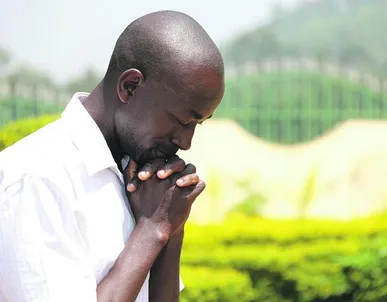
John always prayed for his unbelieving son – regardless of what people thought. His prayers involved tears, and his voice would tremble as he implored God to intervene. Yet sometimes I could detect something of an unspoken “tut” in the prayer meeting.
For some people such persistence in prayer showed a lack of trust in the Lord, while for others such demonstrations of emotion were unseemly, and certainly slightly awkward for us British!

Is our apologetics ‘frightfully early 2000s, darling’?
Jon Barrett
Date posted: 27 May 2025
Controversial opinion: much of our evangelism and apologetics fails to scratch where non-believers are itching, because it seeks to answer questions they’re not asking.
Or, perhaps more accurately, we remain methodologically committed to answering questions they once were, but are now no longer, asking. With the exception of that old chestnut of theodicy (the ‘why suffering’ question) much of our apologetics output still seems to be looking to undercut the objections born out of the Enlightenment or the era of scientism, and I’m less than convinced that those once-pressing issues now represent the focus of the emerging generation’s attention and curiosity.

a Jewish Christian perspective
How odd of God...

Joseph Steinberg
Date posted: 2 May 2025
British journalist W.N. Ewer wrote: “How odd of God to choose the Jews” and in response are the words: “But not as odd as those who choose a Jewish God and hate the Jew.”
Christian antisemitism is confounding. It is a terrible self-harm on the part of the church. In Genesis 12 the Lord chose Abraham and cut a covenant with him (Gen. 15) so that “through your offspring all the nations on earth shall be blessed.” (Gen. 22:18) What does God’s intended blessing to the nations via the Jewish people look like? It looks like the days of the early church!

Ten questions with: Israel Oluwole Olofinjana

en staff
Date posted: 9 Jun 2025
Israel Oluwole Olofinjana is director of One People Commission, part of the Evangelical Alliance.
He is a Baptist minister and has led two multi-ethnic Baptist churches and an independent charismatic church. He is the founding director of Centre for Missionaries from the Majority World, a mission network initiative that provides cross-cultural training to reverse missionaries in Britain. He is a consultant to the executive team of Lausanne Europe, advising them on matters related to diaspora ministries in Europe.

the ENd word
From fed up to fed
Jon Barrett
Date posted: 9 Jun 2025
There was a time when I got a bit fed up with the 23rd psalm.
Admittedly, it’s not a great way to feel about a piece of Scripture, but I’d come to associate the psalm almost entirely with funerals of unbelievers. While an Anglican minister, before moving to the Fellowship of Independent Evangelical Churches (FIEC), I conducted many such funerals, and the default hymn choice for the generation of non-churchgoers I was burying was Abide With Me and The Lord’s my Shepherd, the latter always sung to the tune of Crimond.
everyday theology
Bibliolatry? Us? Really?
Michael Reeves
Date posted: 4 Jun 2025
The reason why evangelicals treat Scripture as their supreme authority is because it is the word of God. In other words, evangelicals believe in what is traditionally called the “inspiration” of Scripture.
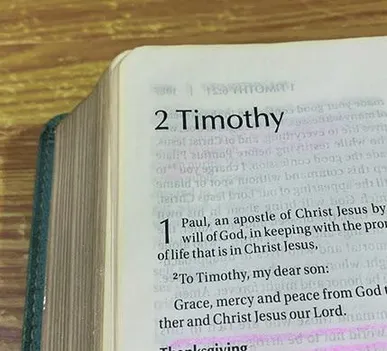
Today, the word “inspiration” can be a little misleading, as if Moses, Paul, and Luke simply felt enthused one day and started scribbling. That is not at all what is meant! By inspiration is meant what Paul teaches Timothy when he writes of how “from childhood you have been acquainted with the sacred writings … All Scripture is breathed out by God and profitable for teaching, for reproof, for correction, and for training in righteousness, that the man of God may be complete, equipped for every good work” (2 Tim. 3:15-17).

evangelicals & catholics
Mission impossible?

Leonardo de Chirico
Date posted: 1 Apr 2024
Evangelicals have known for centuries that Rome is a ‘mission field’.
It is no coincidence that as soon as the breach of Porta Pia opened in 1870 (when Rome was liberated from Papal power and the Pontifical State ended), Bibles and Christian tracts were immediately smuggled in to further the evangelisation of the city. Rome was a mission field because it prevented the free circulation of God’s word in the vernacular language and suppressed any attempts to bring about a Biblical reformation.

Is this the biggest threat to evangelicalism today?

Russell Moore
Date posted: 23 May 2025
Any organisation— business, ministry, school, whatever —typically asks what the biggest threats are to its mission. The assumption behind that exercise is that the most dangerous obstacles are those that one never sees coming.
Consider for a moment that the biggest threat to evangelical Christianity might not be any of those about which we argue and strategise — not secularisation or sexuality debates or political captivity, or institutional collapse or perpetual scandals or fragmentation and polarisation.

The faith of Pol Pot's chief executioner

Julia Cameron
Date posted: 13 Apr 2025
Next week sees the 50th anniversary of the fall of its capital Phnom Penh on 17th April 1975, setting the stage for one of the most barbaric regimes in modern history.
By mid-afternoon on that fateful day the whole population of this elegant city was being forced into the countryside by Cambodian rebel leader Pol Pot and his Khmer Rouge army. Sidney Schanberg of the New York Times captured the brutality of those hours as patients in hospital, some still with saline drips attached to their arms, were pulled from their beds and thrust into the melée. There was no mercy.

everyday theology
To a better understanding of ‘Scripture trumps all’
Michael Reeves
Date posted: 6 May 2025
Again and again since the close of the New Testament, the church has reasserted the essential evangelical principle of the supremacy of Scripture alone. Why so? Quite simply, because that is what Jesus taught about how we can know the truth.
Mark 7:1-13 depicts Jesus’s controversy with the Pharisees over Scripture and its authority. A dispute had arisen over handwashing. The Pharisees’ concern was a religious one, that they might be “defiled” (v.2) and they therefore insisted on a ceremonial handwashing according “to the tradition of the elders” (v.3). Their objection to Jesus was that His disciples did not walk according to this tradition (v.5). To this, Jesus replied: “You leave the commandment of God and hold to the tradition of men” (v.8).

Pakistan’s little-known Christian story

Mike Wakely
Date posted: 5 Feb 2025
In a small town in western Punjab, now in northern Pakistan, there lived a Hindu from a caste of farmers. His name was Nattu Lal. He heard the gospel, put his faith in Christ and was baptised in November 1872.
Nattu was the son of the head man in his village. His family was wealthy, but Nattu wasted his money and proved himself to be a poor Christian witness. But he did one thing that was of immense importance. He brought a poor man called Ditt to faith in Jesus.

the ENd word
How questions about the resurrection are changing in 2025
Jon Barrett
Date posted: 7 Apr 2025
Alistair Begg recently said that preaching is often “less about telling them something new, but more about reminding ourselves what we mustn’t forget”.
He’s right. As a preacher I’m well aware that, to borrow a line from Oscar Wilde, “I have nothing original in me but original sin.” That’s not to say that I steal other preacher’s sermons (I don’t), but is an admission that I’m very unlikely to spot something brand new in a text that’s never been spotted before by anyone else. The truth has already been “once revealed to the saints” and my job is to bring out the meaning of what God has previously made known in the pages of Scripture.
safeguarding briefing
Safeguarding – it’s time for a critical conversation

Jules Loveland
Date posted: 28 Feb 2025
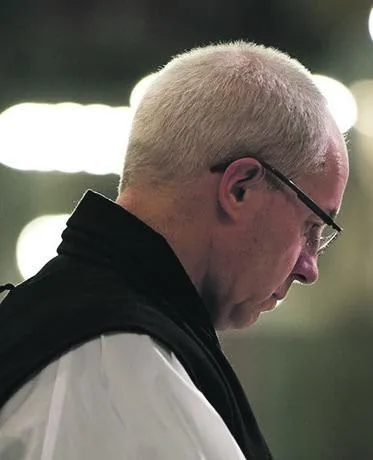
The news of Archbishop Justin Welby’s resignation at the end of last year sent ripples across the wider church. The news broke in the week leading up to Safeguarding Sunday where thousands of UK churches had already planned to shine a spotlight on the very issues that led to his resignation.
For some, the resignation was welcome news, for others it has raised concerns. But perhaps we can all agree that the safeguarding issues that have come to light are devastating, and we pray for all victims and survivors seeking healing and justice.

Creation care: It is a gospel issue, although not a salvation one
Chris Wright & Dave Bookless
Date posted: 25 Feb 2025
We appreciate the article ‘Is creation care a gospel issue?’ by John Samuel and Richard Buggs in the January issue of en, and share their concern that the phraseology of the Cape Town Commitment might be mistakenly interpreted as ‘adding works to grace,’ and thereby ‘undermining’ the message of the gospel itself.
That is certainly no intention of ours, or indeed of the Lausanne Cape Town Commitment, which elsewhere in Part 1.8 defines the gospel of grace very strongly in terms ‘trusting in Christ alone … on the work of Christ and the promise of God.’

everyday theology
What is the most urgent need of the church today?
Michael Reeves
Date posted: 27 Mar 2025
What is the most urgent need of the church today? Better leadership? Better training? Healthier giving? Orthodoxy? Moral integrity? Each of these are undoubtedly needs, but underneath them all lies something even more vital: gospel integrity.
In Luke 12, when thousands had gathered together to hear Jesus, He began to say to His disciples first: “Beware of the leaven of the Pharisees, which is hypocrisy” (v1). That might have been unsurprising had He been warning the people as a whole, but He said it to his disciples first, to those who had already left all and followed Him.

a Jewish Christian perspective
To the Jew first
Joseph Steinberg
Date posted: 31 Jan 2025
As a leader in Christian mission to Jewish people, I often hear people quote Romans 1:16 where Paul writes, ‘For I am not ashamed of the gospel because it is the power of God for salvation to everyone who believes, to the Jew first and also to the Gentile.’
But recently I was asked to speak from Paul’s corresponding words a few verses later in 2:9 where he writes: ‘There will be trouble and distress for every human being who does evil: first for the Jew, then for the Gentile.’