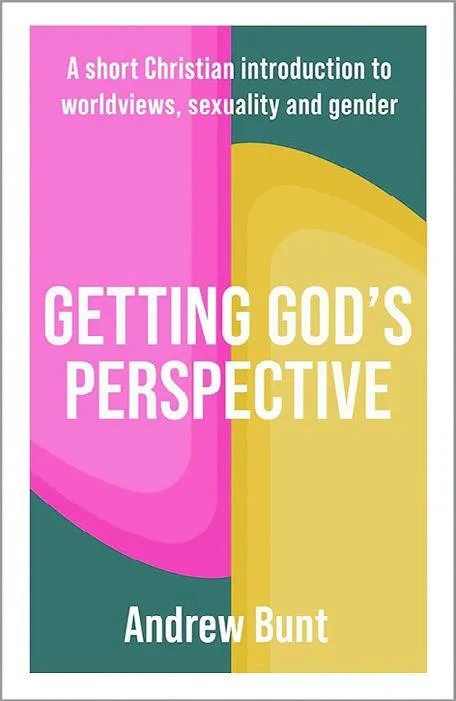
GETTING GOD’S PERSPECTIVE: A short Christian introduction to worldviews, sexuality and gender
By Andrew Bunt
IVP. 128 pages. £9.99
ISBN 978 1 789 745 924
How should we steward our sexuality? If you understand a topic properly, you will explain it clearly. If you know what you are talking about, you will argue a case succinctly. If you are clear about what you want to say, you will make yourself heard.
Andrew Bunt’s short Christian introduction to worldviews, sexuality and gender is a tightly woven, accessible, convincing “must read” if you have ever struggled to defend a Biblical worldview on sex and/or gender in the face of an aggressor, whether Christian or not. This is a hot, sensitive, difficult subject and Bunt’s treatment of it is brilliantly written, Biblically faithful, pastorally sensitive and solidly structured.
We have a good God, from whom we originate, whose authority gives us surprising freedom and a given identity in the face of questionable progress in society as we head towards a certain future. We are both sexual and gendered beings loved by our Creator, sovereign ruler and loving Saviour and need no longer be enslaved by our desires and feelings.
This book is important reading for anyone and everyone who has the courage to investigate (or remind themselves) of the Christian worldview which has been diluted and rejected in recent decades.
First, Bunt divides worldviews into two. The Christian and the secular. With a view to informing, challenging, encouraging and equipping his readers, he sets about tackling seven key questions which are “fundamental in worldviews”. Is there a God who is involved in the world? Where in the world do I come from? Who is in charge? How can I find true freedom? Who am I really? Is progress really progress? What lies ahead?
Each of these questions is considered first from a secular and then a Christian perspective. Bunt then outlines the necessary consequences of each of these viewpoints, wrapping up with incisive and personally challenging questions for reflection whatever your starting point.
The second section looks at worldviews in action. Part Two is introduced with a movingly honest account of the author’s own position acknowledging that “to many people, the traditional Christian perspective on sexuality just doesn’t make sense. This includes a growing number of Christians. Maybe it includes you.”
Having considered worldviews from both secular and Christian perspectives, Bunt now puts the specific concerns of sexuality and gender to scrutiny under the same lens, comprehensively debunking an inadequate and shifting contemporary ethic built on the pursuit of happiness and the avoidance of harm.
Bunt’s final chapter, calls us to “Get[ting] God’s Perspective” and gently exhorts readers, whether investigating the Christian position on these issues or already holding onto it, to “be aware and to be deliberate: aware that we are easily formed by the world around us, and deliberate about cultivating ways of living that help us get God’s perspective rather than the world’s”.
The two main sections of the book are helpfully summarised at the end and the group study guides that follow revisit the questions posed at the beginning of each chapter. Endnotes are thorough and reveal wide research, and the book is a helpful addition to his other titles which include Finding Your Best Identity, People Not Pronouns and Who Do You Think You Are?