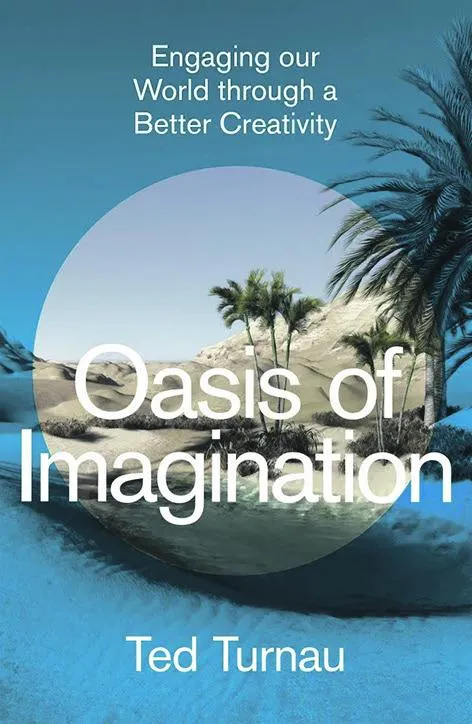
OASIS OF THE IMAGINATION: Engaging Our World Through a Better Creativity
By Ted Turnau
IVP. 464 pages. £34.99
ISBN 978 1 789 744 750
If you are a Christian artist – a “creative” – this is essential reading. If, like me, you are not an artist you will learn a great deal from this book about art, artists, and creative Christian cultural engagement.
It calls for and gives examples of quality Christian art that resonates with people today in a way that parables did in Scripture. It also provides a critique of some forms of Christian art and creativity. He argues we do not need to be constantly warring with culture or retreating into our subculture, rather we should engage with imaginative creations that draw in rather than drive away.
The book is in five parts with a total of 17 chapters. Part 1 – The Case for Oases. Part 2 – Framing a Mystery: What is the Imagination? Part 3 – Sharpening Our Focus: Considering Christian Imagination and Art. Part 4 – The Christian Imagination Done Right: Exploring Subversive Cultural Resonance. Part 5 – Reforming, Refreshing and Sustaining the Imaginative Life of the Christian Community for the Common Good.
Before we note the central purpose and thrust of the volume, let me point out two chapters that will be stimulating and profitable to any reader. Chapter 5: A Biblical Theology of the Imagination (p.97). This is not what you might imagine! The writer appreciates that thinking about the imagination can make Christians nervous – “imagination innovates”. But guidelines and guardrails are noted. Through the lens of a creator God, being made in His image and having the gift of creativity, a helpful, quite exciting, Biblical perspective is laid out. And there is more, through the lenses of the Fall, redemption, and the new creation – we learn of the damage done to the imagination and its dark results but also of salvation by grace as a “work of art”. “…explore and employ your imagination because it is rooted in the core realities of the Christian faith … We reshape the world in faithful obedience to, or in rebellion against, our God. There is obviously more to the Christian faith than the imagination, but it is never less than that” (p.131). The book also explores some philosophical and neurological aspects of the human imagination.
Worship
Chapter 15: Worship as a Resource for Shaping Imagination. This is a brief but immensely helpful study on worship, from Romans 12v1. In relation to the overall purpose of the book Turnau captures the matter well: “Worship is the place where our wandering imaginations need to go to be re-centred, recalibrated, and reorientated towards reality. The Christian imagination needs times of private and corporate worship to counter-balance the tug of the world. Engaging the post-Christian world with integrity and creativity begins with worship” (p.365). For me, both these chapters simply sparkled.
This leads us nicely to the heart and purpose of the book. In the author’s own words: “How are we to relate and contribute to a culture estranged from Christ? How do we invite in those who have grown accustomed to the desert? Culture is a conversation. This book is about how creative culture making can help the Christian church enter and contribute to this conversation in ways that build bridges, ways that heal rifts, even in a world that might no longer welcome Christian commitments. Christian cultural creativity done well creates oases for the imagination. Oases are open, porous spaces that invite the stranger in; spaces that refresh the soul, provoke conversation, challenge assumptions, and lead the imagination to a new place. The landscape today is littered with false oases – spiritual paths that lead to shallow, toxic pools to nowhere” (pp.2-3).
In addition to the Biblical considerations I have already cited (and there are plenty more, plus a helpful Scripture index) there are powerful examples of what the author means, drawn from literature, music, photography, film, and video games. Chapter 11 on the art of Ruth Naomi Floyd (singer and photographer) will help readers get a real grasp of the book. I heard her sing a few years ago and it was compelling, powerful, and memorable. In chapter 13 the author’s reflections on The Lord of the Rings are superb.
On a tightrope
Sometimes in Part 4 I felt as though I was on a tightrope, my balance being tested – e.g. for me rap and film – but the author gives you various balancing poles to help you walk the rope and then return safely, go away and think about it. The vital doctrine of Common Grace is helpfully discussed at various points in the book and provides an important backdrop. Readers will draw different lines, but be challenged and educated. It is a highly informed (with a 37-page bibliography), indeed highly imaginatively written and thoroughly thought-provoking book. The concluding chapter is a lively defence of and appeal for the church to understand, appreciate and help artists/creatives fulfil their calling to create oases in this wilderness of the post-Christian West. It is well worth reading and one that could deepen appreciation, widen perspectives, and open vistas. A deeply significant book for any thoughtful Christian and of real value to church leaders – who will come to a better understanding of the “creatives” in their congregations.