
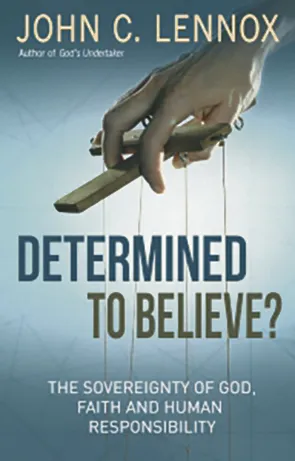
DETERMINED TO BELIEVE?
The Sovereignty of God, Freedom, Faith and
Human Responsibility
By John C. Lennox
Monarch. 368 pages. £12.99
ISBN 978 0 857 218 728
John Lennox is an influential and admired thinker across Christian denominations.
His work in the realms of science, apolo-getics, and theology is informed, thorough, and stimulating. In this latest work he tackles one of the thorniest theological debates – the relationship between God’s sovereignty and human responsibility.
He begins by exploring the concepts of freedom and determinism, and the ways in which they have been understood by various streams of Christian tradition. He devotes significant space to careful examination of the biblical terminology, and then tackles significant Bible passages such as sections of John’s Gospel, Romans 9-11, and the passages that speak of warning and assurance.
Labels and systems
Lennox confesses to a nervousness of labels and systems imposed upon the text, and seeks to elucidate from Scripture answers to these difficult questions. Ultimately he rejects theological determinism as he understands it (whether his philosophical construction accurately reflects the understanding of those with whom he disagrees is a significant question).
He also rejects ‘compatibilism’ (the position of Carson and others) as it entails holding onto, in his view, the sort of determinism he rejects. He is also critical of the ‘TULIP’ acronym and some of its proponents or explanations. At one point he cites (apparently approvingly) William Lane Craig’s articulation of ‘middle knowledge.’ At the end of the book he reiterates his commitment to divine sovereignty, but maintains his rejection of sovereignty as determinism.
Mixed feelings
Having read the book I’m left in a slightly strange situation. I find myself wanting to cautiously recommend the book, whilst not being personally persuaded of the thesis for various reasons. Responsible theological endeavour necessitates engaging with those with whom you may disagree. And this is a fair example of a particular position on a difficult issue.
My own feeling is that Lennox deals too cursorily (almost dismissively) with the classical doctrines of atemporality, immutability, and impassibility, and their relevance to the debate. There is also a lack of discussion regarding language – Calvin’s ‘accommodation’ and Aquinas’ ‘analogical predication’ for example – and their relevance. I also found his exegesis of Romans 9-11, at points, straining hard against the plain reading. His material on the warning passages also seemed unaware of recent work on ‘speech-act theory’ and its implications for hermeneutics.
To Lennox’s credit he is in most parts careful, thorough and courteous, and as such, whatever your current view, this book does make a contribution and is worthy of engagement and consideration.







My secret weapon for preparing a sermon
I wonder what your favourite resources are in preparing a talk? Perhaps it’s a particular commentary series; or maybe a …