The challenge of diversity

Debbie Dickson  |  Features  |  faith and life
Date posted:  15 Apr 2026
Share Add       
The challenge of diversity

Image: iStock

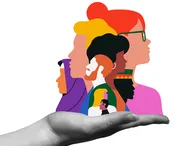
One of the joys of arriving for our Sunday morning service is seeing who is on the welcome team. It is, I think, a feeling which reflects the growing cultural and ethnic diversity in our churches; for sure, there will be a mix, but where might the welcomers be from? Hong Kong? The UK? Nigeria? Iran? India?

Firstly, this growing diversity means we have the potential to reach a wider variety of people unfamiliar with the church or the Christian faith. This is reflected in my own experience when, a few years back, some Hong Kong Christians invited a neighbour – who was not a Christian – to a Chinese New Year party organised by my church. Though not a believer, he was an excellent calligrapher and kindly made decorations for the party – red banners of Bible verses in Chinese characters. Many others have found a warm welcome which has been instrumental in their wanting to know about Christ.

Yet the growing diversity in our churches leads us to a second question. Could we be doing more to encourage not only cross-cultural outreach but also deeper communion between believers from an expanding range of cultures and ethnicities? The apostle Paul pointed out to the church in Ephesus that Jews and Gentiles were "no longer foreigners and strangers, but fellow citizens with God’s people and also members of His household… being built together to become a dwelling in which God lives by His Spirit" (Ephesians 2v19–22). As we are being built together, maybe God wants to do some moulding, some chiselling of all of us, so that we can please and glorify Him even more. Or, using another metaphor, are Christians from other nations like the missing pieces in the jigsaw puzzle who can help us and our churches to become more complete and grow a deeper knowledge and love of God?
Recently I was talking with some Christian brothers and sisters, all from the same East Asian country. We discussed their experience of church life in the UK. Appreciation was voiced, a few questions were raised and, very subtly, one or two gentle suggestions were made. So far, so good. Then I asked whether there were any differences in how small groups work between the two countries. One brother said "everything’s different"! The others burst out laughing. A friendly conversation ensued, covering a variety of things. But my reason for mentioning this is what happened next: I asked "have you talked to the small group leaders about this?" The reply was "No, we just adapt to the environment"; "it’s the golden rule"; "to adapt, to blend in"; "not to highlight ourselves".

I should have expected that. Whilst people obviously vary, I have spent enough time with East Asians, from Confucian group-oriented cultures, to know two things. One is that, unlike more individualistic, outspoken Brits, they will be careful not to shame either themselves or those who have kindly welcomed them in, by saying anything apparently critical. The second is that the UK and its churches are generally egalitarian compared with more hierarchical cultures. Where a British church minister, or small group leader, might expect someone to come directly to them with a question, suggestion or even criticism, this is not the case everywhere. Other means are used to find out feelings and opinions: carefully worded enquiries, observation of body language and behaviour. There is also value in having a sort of trusted go-between or cultural interpreter. On reflection, I think that may be the role I was being expected to fulfil in the course of that conversation with my East Asian friends!

These experiences, reflections, and questions come about because Christ is making one new humanity (Ephesians 2v15), and He is increasingly doing this in churches throughout the UK. In his book Dynamic Diversity: The New Humanity Church for Today and Tomorrow, Bruce Milne wrote about what it means for us to be part of "new-humanity" congregations. It means that we need the perspectives, experience and contributions of brothers and sisters who may have arrived more recently from other countries. It means not just expecting people to assimilate and become "like us", but listening, consulting, and even changing! All of us can – and should – be part of this and this might just mean beginning a conversation with someone and asking them how they are feeling and what they think. This may take a little time, but if it means more may experience true belonging, be able to really contribute, and welcome others in, wouldn’t that be worth it?

As Paul wrote: "There is neither Jew nor Gentile, neither slave nor free, nor is there male and female, for you are all one in Christ Jesus." Galatians 3v28.

Share
< Previous article| Features| Next article >
Read more articles on:   diversity
Read more articles by Debbie Dickson >>
Features
How well do we know our different cultures?

How well do we know our different cultures?

The articles in this series are about “engaging with culture”. Recently I have been pondering “just which culture should I …

Subscribe

Enjoy our monthly paper and full online access for just £40/year

Find out more

New here?

Register and get three free articles each month!

Register