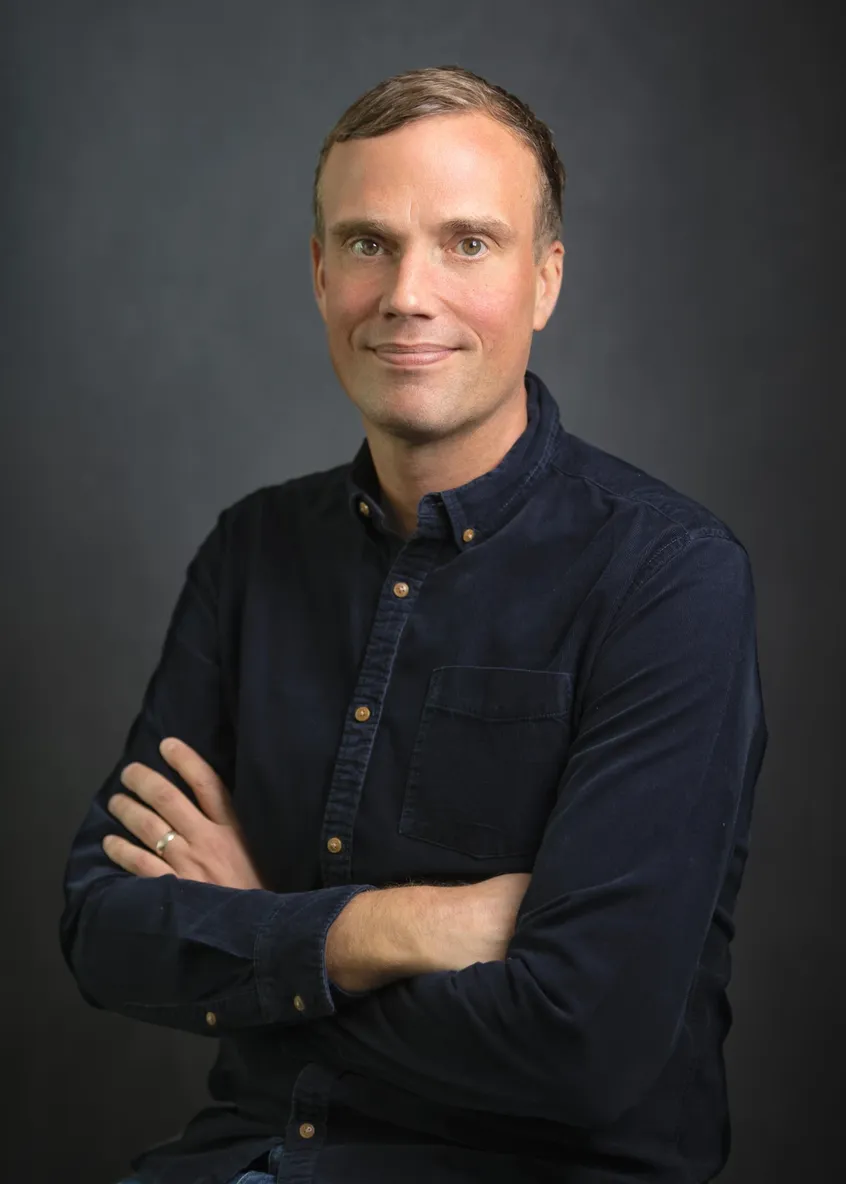
As the Evangelical Alliance (EA) marks 180 years since it was established, en journalist Lydia Houghton interviews its CEO, Gavin Calver, about the "quiet revival", The Gospel Coalition UK, and his hopes for the future of the EA.
LH: I’m glad we’re chatting today, because I saw an article yesterday and I thought, “I’ll ask Gavin what he thinks about this…” Lots of us have seen articles about the “quiet revival” or the “quiet awakening,” and the one I saw last night was written with a lot of scepticism; so I just wanted to ask you, are you sceptical, or are you embracing the reports we’re hearing? Do you have any particular thoughts on the “quiet revival”?
Gavin: I'm certainly not sceptical. I think if you're sceptical about the [Bible Society’s] Quiet Revival report, then just don't believe any statistics you ever hear anywhere – because the rigour given to it, who did it, the integrity of the research – it might say what people aren't seeing themselves, but if you don't believe that, what will you believe, in one sense?

But what I would also say is myself and a colleague of mine, Phil Knox, we travel the country; we’re the two – dare I say – probably the most prolific preachers from the EA. On a Sunday afternoon, we text each other from some random service station to see how it went, and about a couple of years ago, we noticed that – whatever the metrics are – things were getting more positive: we were seeing more people become Christians; we were seeing more interest; we were actually seeing more people join the EA, as well.
We were just seeing all kinds of things, which led to us writing a book called Good News People. Just as the book was coming out, the secular media started reporting on what they were seeing. And about a month after we went to print, the Quiet Revival report came out.
And so what's been quite helpful to us is we would have just been called two optimists writing about a changing temperature, but actually a lot of these stats are showing it. I'm going to churches at different levels of the charismatic spectrum as well, and most weeks encountering someone often who's had a dream that's led them to church or something like that. What was happening in the East is happening in the West.
We do a lot supporting churches where they're not seeing it, but we also join in with churches where they really are seeing it. And so, I'm certainly not cynical, but I'm also not gullible. But I think the people that are trying to deconstruct it… that's interesting.
But I just, to be honest – as I go around the nation – we're not sure if it's a blip or [if it’s] long term. We're certainly not in a revival. If anything, it's not a quiet revival, it’s a loud awakening. The level of interest is there.
But in Narnia terms: Winter has gone, spring is here, but we long for summer. We're not at summer yet. So, let's not overestimate where we are but [recognise that] we're not where we were. I think of the 27 years I've been travelling the country preaching the gospel, the last 12 months or so is the only time when the wind's been in my back, and the tide – I've been running with it as opposed to swimming against it.
LH: Changing direction, now, I wanted to ask about The Gospel Coalition-UK (TGC-UK) and the EA. In your role as CEO of the EA, how do you envisage TGC-UK and EA cooperating?
Gavin: I think that's a really interesting question. I mean, we have 3,000 church members, over 500 organisation members and 28,000 individual members [in the EA]. I'm not sure that the Gospel Coalition-UK will immediately become a member of EA, but it could do. I'm not sure that we are doing things that are that different, but they are complementary.
[All] I can base it on is what I know of the Gospel Coalition in other places, because we don't actually know the form [TGC-UK] is going to take; there's speculation, “Will it be this, will it be this?” But take the Gospel Coalition US: if it's like that here, there'll be conferences that will really serve Christians in reaching people, there'll be articles that will really help people – if it's a membership organisation, then that is a different conversation, I guess, but it's not really been that anywhere else – and I'm a gospel person, so anything that's going to strengthen the muscles of Christians to reach the lost sounds like a good idea to me.
But when it comes to an umbrella body for the UK's evangelicals – us “good news people in a bad news world” – that already exists, so I'm not sure that's what [TGC-UK] is going to be becoming; but I look on with interest.
LH: Have there been discussions about, maybe, the leadership teams, the Councils, meeting together? That kind of “partnership”?
Gavin: I mean, Graham Nichols – who's the sort of, “instigator” – we've met on a few occasions about all kinds of things, including this.
I think you’d have to ask “why?” Lots of people have councils. Our council – which includes some people who may be on [TGC-UK’s] council – is there to represent the whole of the evangelical population of the UK. We're always open to all kinds of things. But, probably, the 520-odd organisations that are members of EA – of which many may have councils – we probably need to meet with their councils first because they’re already part of the EA! So [to answer the question], not as such. But Graham and I meet, and I would meet with anyone.
One of the things I say quite often is that the only thing the Evangelical Alliance does liberally is make friends. And we want to make friends. So, if there are friends to be made – and we do that in politics, we do that in church – if we need to make friends, let's make friends. And I think at the moment it's a time for building bridges, not walls.
There’s a lot of work to be done in the years ahead. And frankly, though the season's changing and we're encouraged by the UK landscape, there's more work to be done. So, let's make sure we're doing that as much as we possibly can, together.
LH: You’ve shared a bit of this already, but what are your hopes or aspirations for what the EA will achieve – or what God will achieve through the EA – this year?
Gavin: I mean, we are here – hence the title of the book and the podcast I’ve done with Phil – we are “good news people.” There is very little hope around and there is very little good news around in our culture at the moment. I think the role of evangelicals is to face the same things other people are facing but face them with Jesus and therefore face [them] with a more hopeful disposition, a different outlook, not mirroring the world but bringing a different perspective to the world.
I also think for us as the EA, we need to keep speaking up. We're speaking up on the hard issues. I mean, I'd love your readers to know our personal membership has doubled in the last few years, from 14,000 to 28,500, and we are wanting to see that grow more because, actually, the individual membership is the access to the corridors of power.
So when you talk about other things – gospel coalitions and other things – they're not meeting with the government and Whitehall and [the] House of Lords and all of these to speak on these key issues. One of the hopes for the Evangelical Alliance this year is that we can represent even more widely.
My Sunday mornings are fun. You never really know where you are until the first worship song: that tells you if it's a “hands in the air” kind of day or a “hands in the pockets” kind of day. Will I be translated that day? What time will I be home? Who knows! It depends where you are. Our statement of faith is largely unchanged in 180 years. There's not an ounce of liberalism in the EA, we're absolutely clear, but we want to serve as broad a range of evangelicals as we possibly can. Therefore, we need more churches to stand with us, more individuals to stand with us, and more organisations. I think the EA's done well at helping those who might be slightly more Reformed realise that, actually, we are gospel people and if you perceived us as losing our way in the past I don't think they perceive us as that now.
And so, let’s gather as one. I say to anyone: Love your place, love your space – we won't get in your way locally, but be connected to the national story. Otherwise, in a few years’ time, we'll turn around and say "how come this, this, and this happened?" Well, that's because we didn't have a national umbrella speaking in and speaking out.
Let us take bullets for Christians and churches. Let us stand on the key issues. And I’ve said since I took over EA six and a half years ago: we will be brave, and kind. Those two things are not mutually exclusive – we will be outrageously brave, but we will treat people as human beings and be kind with it.
So, I want to see a brave and kind EA making the most of the gospel moment, speaking up on the key issues, and representing as widely as possible – because evangelicalism in this nation is far bigger, far more exciting, far more dynamic, and far more diverse than most people realise, and my great joy is encountering it in all of its breadth and dynamism.
Dear TGC-UK... sincerely, a critical friend
Reports suggest that plans for a TGC-UK (The Gospel Coalition-UK) are moving forward at pace.I’ve appreciated much …