
How many times a week do you think you hear some variation of “a very warm welcome to you”? And what perception do you have of how to welcome people on the autistic spectrum?
I am confident that at almost any church service or event you will be verbally welcomed at least once, perhaps even several times... There might for example be an “official” welcome from someone at the door, one from the leader of the service, and any number of informal welcomes amongst the congregation.
Putting all this effort into welcoming makes sense. As Christians we are told to “Welcome one another as Christ has welcomed you” (Romans 15v7). It’s a key element of gospel culture, and one that we wanted to reflect on and consider in our autism peer group.
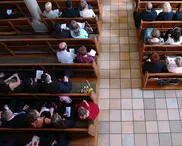
Christ's radical welcome
As we approached the topic, the challenges associated with this command in relation to people with autism arose quickly... How do we welcome anybody when:
- small talk is daunting
- large groups are overwhelming
- and initiating social interaction is a mystery?
Added to that is the reality of any tiredness and fatigue we face as people on the autistic spectrum from navigating a world filled with constant sensory input and social and emotional demands.
Partly because of these challenges, an all too common experience for many autistic people, across all support levels, is that of feeling left out, isolated and different from those around us.
How wonderful then, to receive Christ’s welcome: one that saves us, makes us right with God and brings us into His family (Galatians 4v4-7). Our Maker Who knows every part of us and calls us His children.
Christ's "is a welcome that anyone who has ever felt hurt through exclusion will crave deeply."
This radical welcome is not simply a polite handshake and scripted conversation but so much deeper, loving and inclusive.
It leaves no space for making anyone feel on the edge or unsure of whether they belong. It’s a welcome that anyone who has ever felt hurt through exclusion will crave deeply.
'Can we find a quieter space?'
As we discussed Christ's incredible welcome, we realised that there was in fact much we could do for others, as well as ways we could be welcomed ourselves.
Finding large groups overwhelming doesn’t mean we can’t show a welcome at church. We thought of ways we could have conversations with individuals, perhaps in a quieter space, or going on a walk at a different time in the week.
Church is not only the gathering on a Sunday, so our welcome needn’t be constrained to a post-service coffee slot.
We considered times when communication is easier and when it is more challenging for us; it is often easier if we are doing something purposeful, an activity or a practical job. We thought about serving refreshments - you have a clear structure to your interactions with people.
To be welcoming “one another” we would need our brothers and sisters to also be welcoming us. To know that if we ask to chat in a quieter space or smaller group, for example, that it is an important sensory and social accommodation. We need them to bend towards us as we work out ways we can show love that don't leave us feeling overloaded, overwhelmed and overlooked ourselves.
Chatting whilst colouring
A hugely encouraging example of this in action was when one friend from the group stepped out of her comfort zone and signed up to help with a craft activity at our church summer garden party.
She had chosen a practical and structured way that provided opportunity to spend time welcoming both church family and visitors of all ages, helping them enjoy themselves and feel part of the day.
Afterwards she shared with us that it felt so much easier to chat whilst colouring, and that the experience had inspired her to think of how she could use colouring to facilitate future conversations after services.
As she spoke I was struck by the joy and blessing it had been both to her and our congregation as they had welcomed one another, creating a space that everyone belonged.
'Autistic Barbie': Representative, or insensitive?
Mattel has created an "Autistic Barbie."The doll was launched on 11 January, but is already receiving very polarised reviews.