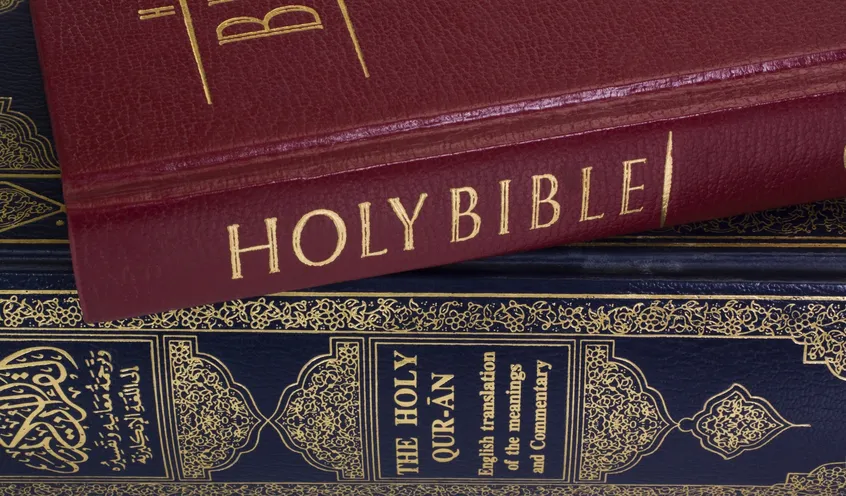
My previous articles looked at what the Bible and the Qur’an tell us, firstly about the character of God and his ways of working in the world (en May 2025, online version here), and then their respective diagnoses of what I called the world problematique, or what is the human predicament that Christianity – and Islam – purport to address (en October 2025, online version here).
The first article showed how the Bible’s rich revelatory structure provides the context for its presentation of a God who is actively involved within the warp and woof of human history. In contrast, the Qur’an’s limited historical timeframe and absence of any intergenerational connections, allows no scope for tracing God’s involvement in history.
I showed also how the theme of covenant as used in the two books sheds light on the character of the respective deities. In the Bible, God makes covenants in which he commits himself irrevocably to his chosen people, who respond in grateful obedience. In the Qur’an, God takes covenants from people as expressions of their duty to him.