Evangelicals have known for centuries that Rome is a ‘mission field’.
It is no coincidence that as soon as the breach of Porta Pia opened in 1870 (when Rome was liberated from Papal power and the Pontifical State ended), Bibles and Christian tracts were immediately smuggled in to further the evangelisation of the city. Rome was a mission field because it prevented the free circulation of God’s word in the vernacular language and suppressed any attempts to bring about a Biblical reformation.
Since 1870, much water has passed under the bridges of the River Tiber. Today, even the Roman Catholic Pope says Rome is a ‘mission field’. Meeting with the Roman Catholic clergy on 13 January, Francis said just that: the heart of Roman Catholicism, the seat of the papacy, the centre of Roman Catholicism, the city that Popes have claimed their own, is a ‘mission field’.
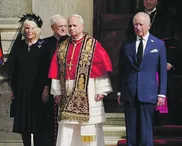
What does that mean? The challenges of secularisation, disengagement and abandonment of religious practice are putting increasing pressure on the Roman Catholic Church right here in the eternal city. Accustomed to imposing its primacy on consciences for centuries, now that its authority structure and the social imposition of customs no longer work automatically, even Roman Catholicism in Rome is in a crisis of numbers and participation. Masses (with exceptions) are semi-deserted, and parishes (with exceptions) are perhaps attended for the services they offer to the young or the poor, but certainly are no longer known to be places of spirituality (e.g. prayer, catechesis). Much of the Roman population is not ‘active’ in Catholic practices.
Rome is still religious in its ‘hardware’ but less and less so in its ‘software’. Everything in Rome speaks of the established and pervasive presence of the Roman Catholic Church (palaces, institutions, churches, the Vatican). Still, it is beginning to perceive itself as a presence needing self-defence and promotion.
When Francis says Rome is a ‘mission field,’ one must also see the other side of the coin. On 4 January, he met with the Mayor of Rome, Roberto Gualtieri, and the President of the Lazio Region, Francesco Rocca – something that does not happen for any other faith community. The city’s two highest political and administrative authorities are not generally received ‘in audience’ by religious leaders in their offices. However, the Pope does it frequently, and they go to him with deferential attitudes. He is a top political figure.
Four days later on 8 January, the president of the Italian Catholic Bishops’ Conference, Cardinal Matteo Zuppi, signed the hiring of 6,500 new religion teachers (chosen by Roman Catholic bishops and paid for by Italian taxpayers) with the Italian government. This, too, is not a practice of a ‘mission field’, but of a country enslaved to a religious denomination.
And then, on Sunday evening, 14 January, Pope Francis was interviewed live on prime-time TV: an hour-long, almost-kneeling interview by anchorman Fabio Fazio on the ‘Che tempo fa’ show. It was on this programme that, after defending the blessing of same-sex and irregular couples, when asked about the reality of hell, the Pope said: ‘I like to think hell is empty; I hope it is.’ Again, this is not an opportunity that other religious leaders are given, but it does not signal the fact that Italy is a ‘mission field’. Rome is rather an ‘occupied’ field by one religion only. Evidently, the Pope feels the ground shaking under his feet and clings to the political-economicinstitutional-media privileges of the past.
For evangelicals, Rome was and is a mission field in need of evangelisation by people and churches who witness the Biblical gospel. With neither the promise of political favour nor the prospect of social status, the gospel is the message of salvation in Jesus Christ alone by faith alone according to the Bible alone. This is the evangelical mission to the city of Rome. The Pope’s is something else.
Why do I feel vulnerable when I evangelise?
What do you think the greatest fear in the Western World is? Death? Poverty? Climate Change? For decades, the number …