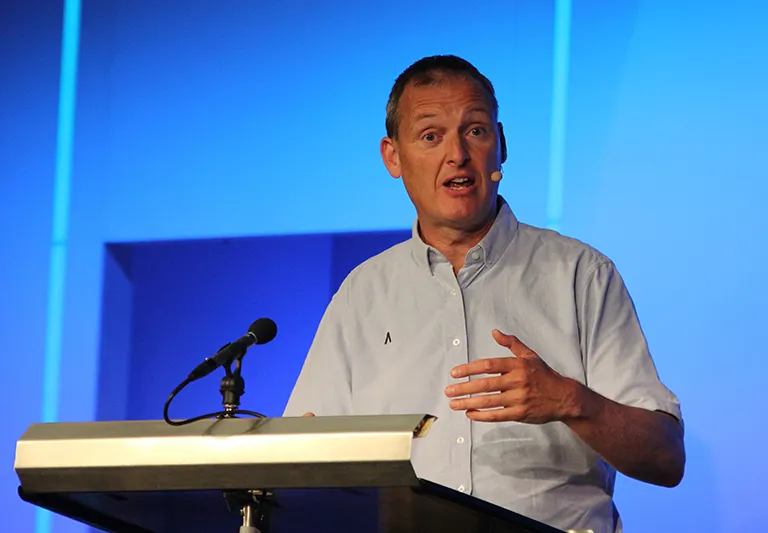
As final preparations for this summer’s Keswick Convention were being made, en spoke to its Ministry Director, the Revd Dr James Robson.
With the much-awaited Keswick Convention of 2022 almost upon us, James joined us on Zoom, from a light-filled room full of books. With all that is happening at Keswick, including the Derwent Project, there was certainly no shortage of things to be grateful to God for…
en: Planning for the Convention must be almost there now – quite an enterprise when you anticipate around 15,000 people attending each summer?
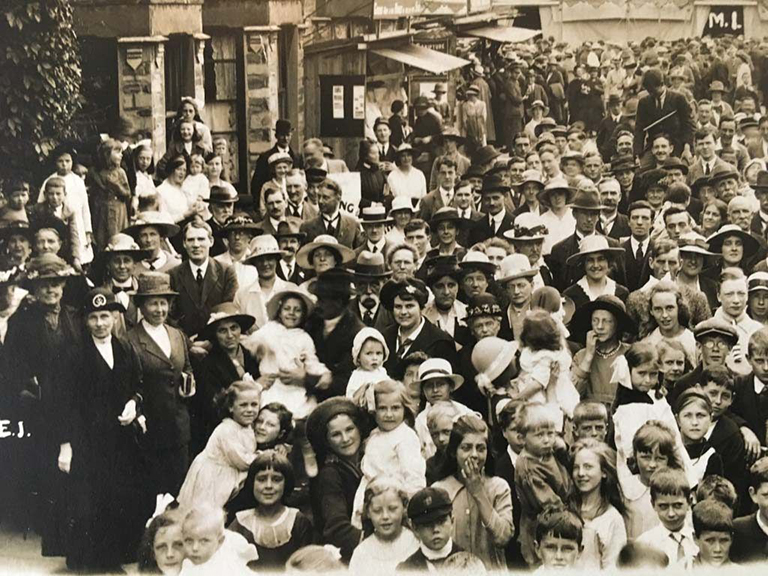
JR: Yes, we hope for between 12,000 and 15,000 people. One of the unique things about the Convention is that it’s open to anyone, and it is not ticketed. This means people can just come, which is part of our vision to be all one in Christ Jesus. We want to be accessible and welcoming to anybody who can drop in. This means we don’t know the numbers exactly. We do know that in 2019 we had 2,200 children and young people in addition to 650 volunteers – 3,000 or so people before any adult attendees.
Trusting the Lord and cracking on
en: That unusual approach might make balancing the finances hard, especially in the midst of the cost of living crisis? How are things this summer?
JR: Historically, the books have always balanced at the end of the year, for our 147 years. We trust the Lord’s provision and that He will provide through the generosity of His people. We say to people, this is the need, and some give more and some aren’t able to give as much, or give at all. We pray that the Lord provides for the work. His provision has been extraordinary to see. Our dependence on Him is right at the heart of it. During Covid in 2020, obviously we had to cancel and have an online event. In 2021, in God’s kindness, we managed to run a three-week event. And the Lord provided extraordinarily for that. We had reduced numbers, but again the Lord provided for His people and for the events, which was absolutely amazing and incredibly humbling. And though this year will be a stretch from a financial point of view, we are doing the same thing, we’re praying, we’re trusting the Lord provides, we are cracking on, but we don’t know who will turn up or what they might be able to give. It will be a stretch for many people, and we are really conscious of that.
en: That must be such an encouragement, to see the Lord provide when you intentionally don’t operate a standard ticketing system? What difference do you think it makes?
JR: It’s a huge encouragement. And it enables people from all backgrounds to be able to join us. One of our previous speakers told me Keswick is the most socially diverse, classic evangelical event he’s been to, because lots of people come from all over the country. ‘Keswicks’ are people of all backgrounds; we do have some very high-powered people with larger incomes who attend, but it’s a very mixed event. We want to be more diverse in other ways, more ethnically diverse and that’s a challenge, but we are seeing that moving in a good direction too.
What we try and stand for is respect for everybody. At Keswick the speakers are not greater than the signers, and are not greater than the volunteers who clean the toilets. We’re all one in Christ Jesus, that’s the slogan that runs through everything. When I took on the role in 2016, I spoke to the lady who does our signing, and asked why she liked Keswick – she said this is her favourite event because everyone’s all the same, and speakers stop and talk to her, people on the speaker team don’t just sweep past you. I’ve just been writing the eulogy for Peter Maiden’s Thanksgiving Service. Peter was the Chair here for years. Everyone I spoke to about him has said that what characterised Peter was a deep authenticity. He apparently used to be found hoovering the creche in the evenings. There is that feeling that everyone’s all in it together. There’s a great photograph in 2005 with him cleaning the toilets, with a mop. It was just a great, unexpected picture. We want to create a sense of Christ-like listening, and the welcome to be for everybody.
en: Tell me more about the inclusion at Keswick, and the ministry to those with learning disabilities?
JR: Our Count Everyone In programme is for those with learning disabilities; that’s been going as long as I’ve known. We encourage our adults with learning disabilities to come on the main platform and lead us in singing a song. For two years now we have had all the tents signing in Makaton [a sign language] during Week 2. It’s been really thrilling to see that and to be working on inclusion with those with special and additional needs. There’s always more that can be done, but this is very much in the mix and we are delighted with Matt Holden, who’s overseeing our kids and youth programme, who’s also working in this area.
en: When some churches are struggling to get young people involved, it doesn’t look like that’s an issue at Keswick – what’s your secret?
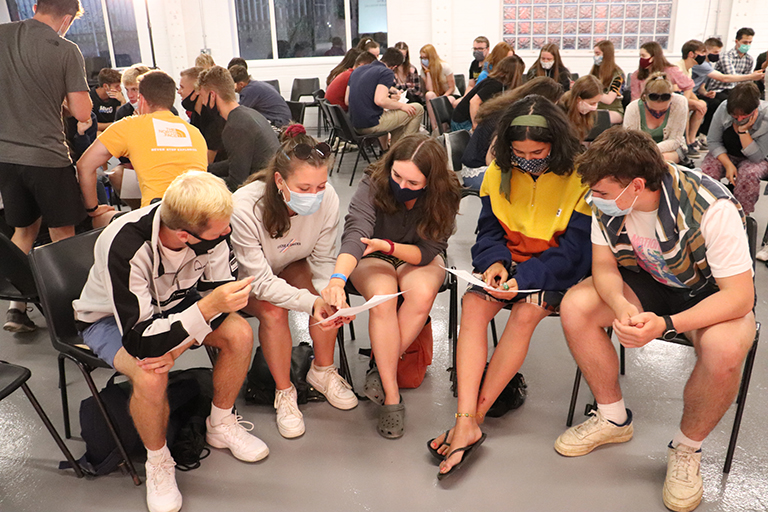
JR: It’s not easy to know, but maybe it is attractive precisely because this is a place where there are so many kids who come. There’s a sense in which people come because people come, and we are providing a vehicle by which something happens. There are many who have come through the kids and youth programme who are now on team, and are now volunteering in different kinds of ways. I think Keswick combines the Bible being opened and loving the Scriptures and teaching of Christ, and it’s helping young people to be disciples of Jesus and be real about the world. We have a fantastic group of leaders who are godly and faithful and love the Lord, and the Lord has given them great gifts.
We have a slightly unusual model, as lots of Christian youth work is about sending kids away to something, and my kids have done that, and they’ve loved it. But what we do at Keswick is very intergenerational. We try and have the kids and youth programmes aligned with the adult teaching programmes, and then people are encouraged to talk about it together at home. We’re there to resource the parents to be disciple makers, and for them to help their kids to grow up and learn about the Lord, rather than trusting it to someone elsewhere. And that makes for a great mix.
en: Sounds quite prophetic! Are some denominations increasingly aspiring to this intergenerational and household focus?
JR: One of our values at Keswick is humility, and part of that humility is our dependence on the Lord in prayer and on His word, but we also want to be a learning culture, not a blame culture. We look for best practice everywhere and anywhere, and try to develop that, and to grow and encourage one another in that.
en: How do you choose the speakers for the Convention?
JR: People send through recommendations, and we have a little team that helps pull speakers together – trustees and some others as well. We try to have a wide pool of people to help with that, so that we don’t become narrowed in different kinds of ways. To be able to speak on the main platform of Keswick is not easy, but we don’t want only big names, we want people who are going to teach the Bible engagingly in faith, and point to Christ and be generous-spirited. We try to make sure that we have a variety of voices, because that’s important. The church is a global church, and we need to hear those different voices because that’s how we know that we’re not confusing and conflating our culture, our blinkers, with what God says. That is not comfortable, and not easy.
Gratitude amid brokenness
en: Why the theme of Gratitude for this year’s Convention?
JR: In 1991, we first had a theme for the convention, and in 2019, we had the theme of Longing, and this is part of Keswick’s history, that sense of longing for more of the Lord, and longing to be Christ-like. And that’s a Biblical emphasis. But the trustees and I felt that there’s a danger if you only focus on longing that you end up being discontented and ungrateful. The initial idea was to have 2019 on Longing and 2020 as Grateful. And then Covid struck. We felt that what was needed at that point was a theme of Hope. So we shifted the theme of Grateful to 2022. The Lord’s providence and kindness is amazing, but it remains a real challenge for us to be grateful when there’s so much in the world that’s so broken. The Lord has an amazing sense of timing. The person who was writing our theme book on radical gratitude for 2020 was Peter Maiden, who I mentioned earlier. Peter was diagnosed with cancer as he was writing the book, so there’s a deep sense of authenticity in it, especially his final chapter. His editor for the book commented ‘little did we know that Covid-19 would make the subject of Peter’s book painfully and poignantly relevant, with its themes of contentment and gratitude, resisting ‘entitlement thinking’ and recalibrating our hearts. The message came very much into its own. Peter’s genuine submission to Christ in the face of a cancer diagnosis challenged us all. Yet he was realistic, Biblical enough to insist on building a significant lament section into the book. I miss him. He was a wonderful man of God, we all watched him live and die, a good and faithful servant. And we just have that sense of being so grateful.
en: There is a lot to be grateful for – tell me about the pencil factory and the Derwent project? How’s the project going?
JR: We are making progress, we will have something ready by the Convention. It is down to the wire. The Lord amazingly did it last year. We’ll actually be using it as a reception for [the late] Peter [Maiden’s] thanksgiving service which is very fitting because it was part of his vision years and years ago. We will be able to move onto one single site for the Convention for the first time. To really be united, to be all together in one place.
Keswick and community
en: When you do any building project, like the pencil factory, sometimes the neighbours don’t like it very much. How are the relationships with the local community?
JR: We’re very glad and grateful to be part of the community in Keswick. There have been low points, but we’ve worked really hard with the local community to try and make win-win situations. We’ve got a regular town liaison forum, four times a year, where we meet representatives from the town council and tourism, and others. There’s always a complicated relationship with tourists situated in any tourist town, or for those living in Glastonbury or Wimbledon, for example. The town becomes known for the events. One of the things we’re trying to do with the pencil factory, is to make the premises available to community groups to use and to rent. We came to the rescue of a local open-air archery event that was due to be held when the weather was terrible, offering them the use of our big packing hall for it, which was great. We try to be good neighbours and work closely with local people.
Training, resources and fellowship
en: What are you praying for the wider Keswick ministries at the moment? More than the Convention alone…
JR: There are three main strands. One is to develop teaching and training events at other times of year. We ran a leadership workshop a few weeks ago, and it was amazing to meet those who were attending. We had one of the top 20 UK paediatric palliative care consultants, a young entrepreneur who produces 3D printing of prosthetic limbs. We have had another lady who’s in RAF nursing, training military on the evacuation of casualties, and then someone who runs a community finance project, trying to help the poorest of the poor. Alongside them we have someone running a European mission agency, and a church planter and a pastor. To have people learning together, growing together, and hearing the testimonies from that experience is wonderful. We want events like that through the year that serve the church, where people can come and be inspired, equipped and refreshed. I’m praying that the Lord would bless them and that people would be encouraged and built up through them.
Our next area is resources, printed and digital. We have the Bible study guide that comes with the Convention, there’s the theme book, then devotions too. I’m praying again, that the Lord would use those and people would be encouraged by them. Similarly with our digital resources, we are live-streaming events, for free, and we have a talk archive on the website and on YouTube, where you can access resources on different topics. We want to make those easily available for people. We are covering topics that local churches might find it difficult to get speakers for. I’m praying for people to use them, and for there to be an impact on hearts and lives.
And the third and final strand is the Keswick fellowship. When the Convention started in 1875, there was a movement that spread around the UK and around the world. There are now more than 30 events in the UK that trace their origins to Keswick. Word Alive was originally a partnership with UCCF and Keswick. Some of them are over 100 years old, like Lowestoft Living Word which was the site of last revival on English soil in 1920/21. There is a new event starting up in the Cairngorms. We want to help others do that, including those around the world. We certainly don’t want to be in any sense colonial – it’s about fellowship and partnership. We want to say: ‘Let’s encourage each other in our ministries’, and there are around 60 or 70 events in around 15 countries around the world. My prayer for that is very much to encourage others to keep going.
Speaking and listening
en: How do you maintain your personal evangelism to non-Christians when you spend so much time immersed in the Christian world?
JR: My real outlet is playing golf. I played university golf before I was a Christian, and through golf I meet with guys who have zero connection with the church, who are absolutely stunned to discover I’m a Christian who takes Jesus and the Bible seriously. I look to witness for Christ in that setting.
en: In a previous interview you described being ‘passionate about listening to Scripture and sitting under it’. What does it mean for you to sit under Scripture.
JR: For me, there’s the how, and the what, and the why. The how is my daily devotions - I read Psalm 98 in Hebrew this morning, and then 2 Corinthians 11 in Greek. I find the Biblical languages just so special, because they mean I have to slow down and read the words so carefully. I have lots of former students around the country who want us to keep the Hebrew workshops at Keswick going because they find it helpful too, that requirement to really slow down when we turn to the Bible.
I’m obviously a member of a church congregation, so while I sometimes preach elsewhere, I do make sure I sit under Scripture and am a listener, and a hearer. The danger is that you become a dissector! I want to be first and foremost a listener to God’s word, so I take notes on the sermons and try and pray through them on Sunday morning, on Monday morning, and so on after that.
This can feel like a bit of an isolated role, so I also have regular support group of two prayer partners I meet up with and we read different books together too. We all need the word, God’s word because His word teaches, reviews, corrects, and trains in righteousness.
I think having worked on an Old Testament PhD, I do find it is too easy to bypass parts of the Bible in the Old Testament. It can be easy to think I know what a passage means or just to impose my grid on things, without feeling the pea under the mattress – the awkward bit of the passage that needs some further attention.
When you think for example, about Philippians 4, ‘do not be anxious about anything’, it can be easy for us to think it sounds very glib and trite. Then you see it again when Paul also writes to the Corinthians, where he is clear that whatever is meant by ‘don’t be anxious’ it doesn’t mean we don’t have difficulties and then wrestle and struggle with those things. I want reality and authenticity. I think that’s why I wrote Honey from the Rock: Deuteronomy for the People of God. I wanted to try and wrestle with those questions and to hear the voice in Deuteronomy, rather than [simply] what the New Testament says about it, to view this voice on its own terms.
en: What have you been learning about yourself and about Keswick over these last few challenging couple of years?
JR: I think that just keeping the main thing as the main thing, and keeping going. Keep looking and keeping trusting. And that can be hard, and God does not promise things will be easy. But there is joy in that. But there’s also challenge and we all need His daily bread.
I’m also really encouraged by the people I see each year going back home from Keswick, encouraged to get stuck in, and to serve, and to live for Christ, to make a difference where the Lord has placed them. I want Keswick to have that ‘for you’ culture. That’s what I think we all need to have, to be for one another in our walk with the Lord, rather than against.
That’s what’s really becoming so clear to me as I write Peter Maiden’s eulogy. I am reflecting on all the wonderful things he did, but actually who he was, that was far more significant. One of the things we have for our leadership workshop is a little slate that we give to attendees, from Keswick, which says on it ‘Lead from the inside out’, i.e., apart from Christ, you can do nothing. Leadership is about who you are, that’s what’s most important.