
I must admit, I like a good steak (medium rare, please), especially on a special occasion.
Food is a central part of our lives, and for Christians, sharing it together can be an important act of hospitality (Rom. 12: 13). Yet the simple act of eating raises all kinds of ethical and environmental issues. It’s worth asking ourselves where our food comes from.
No, I don’t mean Tesco (other supermarkets are available). Of course, everything ultimately comes from the hand of our heavenly Father who sustains all life on earth; Jesus taught us to rely on Him for our daily bread and not to be anxious about what we eat and drink (Matt. 6:11 and 25).
Yet the way we get our food is often exploitative. I use that word in a pejorative sense because although God indeed gives us the harvest of the land and seas to use, he also requires us to be good stewards, which means not exploiting it to the point of damage or destruction.
Extinction
This was brought home to me vividly by watching Sir David Attenborough’s recent film, Extinction: The Facts. It is a sobering assessment of the scale of the loss of nature in recent decades, both globally and in the UK – a theme I have touched on before. One million plant, animal and insect species are threatened with extinction this century.
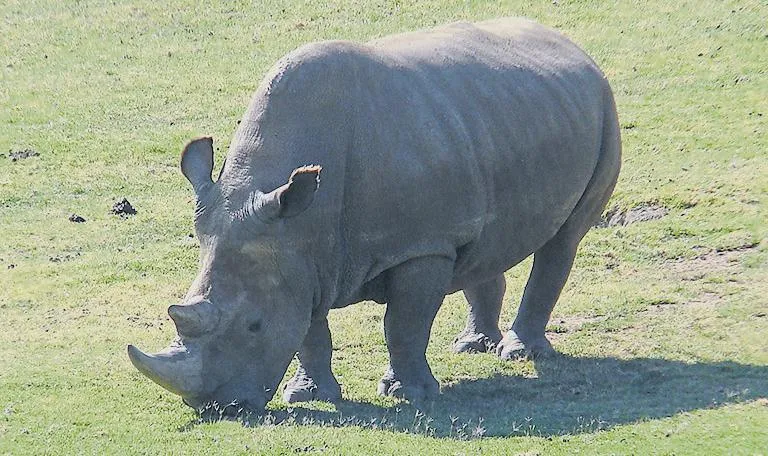
Commentary from leading world experts was illustrated by breathtaking wildlife footage, but also by harrowing scenes of habitat destruction. Perhaps the most poignant picture was a Kenyan ranger caring for the last two northern white rhinos in the world (both female), another species which will most likely become extinct in my lifetime, pushed to the brink by habitat loss and hunting.
Although the issues may seem far away, we’re all complicit in this. I doubt if you’ve recently used pangolin scales for your health, but our food choices may be driving planetary damage. As the film showed, there are 200million cattle in Brazil, where the expansion of ranching is destroying the Amazon rainforest, and the expansion of soy farming (an important animal feedstock and exported in significant quantities to the UK) is destroying natural habitat on a vast scale in the Cerrado savanna. Farming doesn’t have to be this way.
Pain and sadness
How do you feel when God’s world is abused? Depressed, tearful, angry are some of the reactions I’ve heard from people who watched the Attenborough film. Mourning or anger seem appropriate responses. Weep for the destruction of God’s world. Feel anger at the sin which lies behind it. As Simon Stuart of the Christian conservation organisation A Rocha International has said: ‘The pain and sadness we feel over the decline and disappearance of some remarkable species mirrors God’s pain which arises from His own deep love and care for all that He has made.’
Hope and choice
We have a choice, though, between despair and hope. Attenborough gave us a glimpse of hope at the end of the film in the story of how the fortunes of the mountain gorilla were turned around. Christians have a stronger hope, not just in the promise of a new creation, but in a powerful God who sustains and cares for all life.
We don’t have to be vegetarians, but why not save red meat for special occasions? It’s good for the health of creation. Don’t be anxious, but be wise about how we live, even as we thank God for the food we eat.







I'm a Christian, and I'm Green - here's why
en does not support any one particular party. However, we are interested in evangelicals within each of our political …