‘I couldn’t possibly throw it away – I want it, I need it, you don’t know what it means…’
Her tone was urgent, face flushed and eyes wide with fear. It was as if we had threatened to deprive her of life itself. But the object in question? A copy of the Radio Times – 19 months out of date. Up until that conversation, we had assumed she was just messy, but with one impassioned monologue she had shown us the depths of her heart. She was a hoarder and she was in deep.
A compulsion
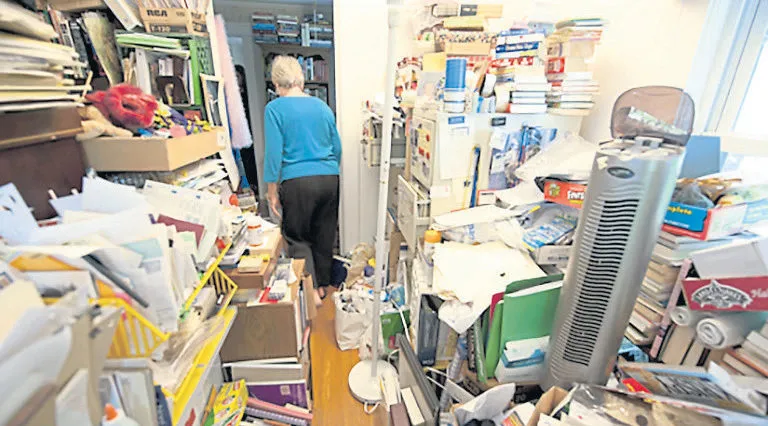
Hoarding is not a commonly discussed topic in pastoral care. It’s not simply collecting – 30% of us collect items, be that stamps, coins, sporting memorabilia or action figurines. It’s a compulsion to pursue items and then hold on to them, whatever the cost. For some, the outward signs are minimal – for others, homes become virtually uninhabitable as every surface is covered with items that frequently look disposable but feel essential to the one who holds them dear. Whilst most hoarders gain their objects legally, some will turn to stealing to keep their behaviour alive.
Hoarding can have its roots in many different places, but often it’s a desire for security or comfort that’s driving what’s going on. Many who hoard have had difficult lives – some have lost people through traumatic bereavements, others lost control of their bodies through abuse; still others may have lost their homes through debt, war or natural disaster. For most, there will have been a time when, subconsciously at least, they have resolved to avoid further loss, so everything – or specific categories of things – is retained. Their items provide them with a mock security (I have everything I need) or false comfort (I have everything I want) and, as such, makes life feel a little less harsh. In reality, though, hoarding simply masks the pain and often interferes with the need we all have for deep and meaningful relationships.
Underlying issues
It can be tempting to view the surface problem and simply offer to help ‘tidy up’. Such practical help may eventually have its place, but the thought of someone else rifling through their stuff may well induce panic and leave strugglers feeling misunderstood and less likely to engage in the process of change.
Far better to begin with prayerful discernment of the underlying issues. What tough stuff have they been through (listening well can provide insight into their pain)? What false beliefs are they holding about the world (‘everyone is against me’), God (‘he doesn’t care or provide for me’) or themselves (‘I’m worthless – I have no purpose’)? And how do they think their precious objects will assist?
Helping them see the damage caused by their hoarding can be a useful next step. Gentleness and humility will be needed here. All of us have out-of-control desires; most of us have attachments to things that go beyond what is wise. Sharing together how our lives would change if we all put our trust wholeheartedly in God rather than things can be a transformational conversation to have.
God is our rock
Exploring the metaphors the Bible uses for God can be a helpful reminder of where true security and comfort can be found. Whether it’s the rock, refuge and redeemer spoken of in the Psalms, the shepherd of John 10 or Revelation’s sovereign king, building a picture of God as someone who loves to protect and provide is a beautiful thing.
The goal in pastoral care is not to manufacture a tidy house, but as hearts begin to seek comfort and security in the Lord, it’s good gradually to address hoarding behaviour too. Recycle where possible (that has purpose, not just loss) and together clear items in bite-sized steps. When the person who hoards looks at empty space, they may experience anxiety – placing a Bible verse there, reminding them that Christ is providing them far more security than the missing items can be a useful idea. And help them thank God for the ‘gains’ they are making – gaining space for hospitality, gaining trust in the living Lord can be two such joys. Change is rarely fast but, as the Spirit works, gradually hoarding can be replaced by hope.