Crossroads in culture wars

Richard Cunningham  |  Features
Date posted:  1 May 2018
Share Add       
Crossroads in culture wars

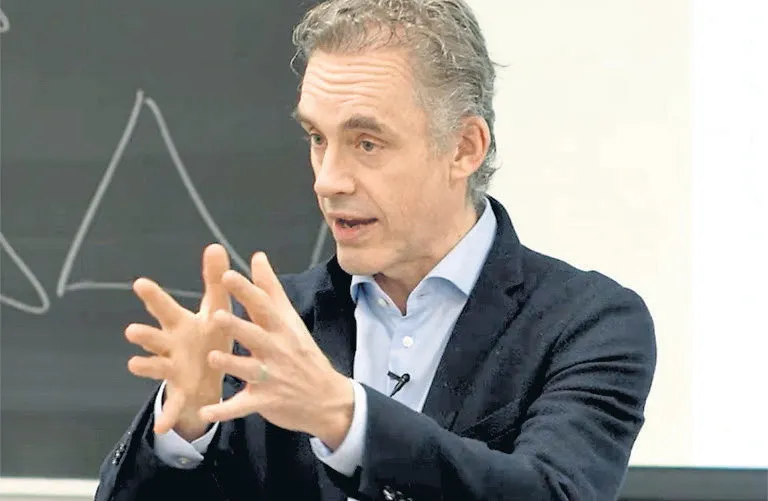
Jordan Peterson | photo: Wikipedia

Richard Cunningham of UCCF follows up last month’s article on the current attack on free speech

We find ourselves at an interesting and important moment: the culture wars which normally seem confined to the university campus are spilling out onto the fabric of wider society.

Jordan Peterson – icon of the culture wars?

Jordan Peterson, the Canadian academic, has opposed the amendment of Bill C-16 (Canadian Human Rights) which he believes constitutes a compelling of speech regarding preferred gender pronouns: this has come straight out of university identity politics.

On this side of the Atlantic, the Joint Committee for Human Rights (JCHR) have just posted their conclusions on free speech in the university enquiry. While there were relatively few cases of outright ‘no-platforming’ or banning of speakers, the committee did conclude that free speech on campus had been hampered by intolerant attitudes and unacceptable behaviour, red tape and a lack of clear guidance.

As part of his oral submission to the JCHR, the new Universities Minister, Sam Gyimah, stressed his concern about all the student events and debates that have not occurred due to self-censorship. And although we can never measure what didn’t happen, as Harriet Harman (Chair of JCHR) rightly pointed out, the published report reflects this concern of a chilling of ideas deemed unsafe or unacceptable.

John Gray – culture wars and the end of liberalism?

In the latest edition of The Times Literary Supplement, John Gray comments on the curtailing of practices of toleration on campuses. Once considered intrinsic to freedom, they are now being deconstructed and dismissed as structures of repression – the consensus view among university teachers. And among the student body, nervousness around offending minority groups breeds the instinct to self-censor, to keep one’s head down for fear of falling victim to the confected outrage of social media platforms.

‘When students from China study in Western countries one of the lessons they learn is that the enforcement of intellectual orthodoxy does not require an authoritarian government. In institutions that proclaim their commitment to critical inquiry, censorship is most effective when it is self-imposed. A defining feature of tyranny, the policing of opinion is now established practice in societies that believe themselves to be freer than they have ever been.’

As part of my own submission to the Joint Committee, I highlighted the case of the Abertay Student Union (SU) which introduced ‘emotional risk assessments’ in December 2016. These have been used in an invasive and heavy-handed way for the past year, resulting in the SU telling the CU what they can and can’t do and say. All the CU’s activity (including weekly meetings), must be approved in advance by the SU, who also have threatened to check all the CU’s internal and external email correspondence.

In practice this means that one or two people in the SU office are able to make basic operations nearly impossible for what is a small CU, and regularly reject titles for events because they are ‘too provocative’. The CU’s preferred lunchbar titles, ‘Where was God in the Manchester terrorist attacks?’ and ‘How could God allow Hurricane Gregory?’ were not permitted on the grounds of emotional risk to students.

That is clearly an extreme and sinister example (which needs to be quickly dealt with by Abertay University authorities) and is not typical behaviour of most SUs. Nevertheless, this virtue-signalling illustrates where the moral high ground is perceived to be. Those who constrain the freedoms of potential aggressors to protect potential (and even often imagined) victims from harm are agents of social justice.

While debating Jordan Peterson about the use of preferred gender pronouns, trans Professor A.W. Peet claimed Bill C-16 is simply about ‘kindness’. Peterson countered that ‘truth is being sacrificed in the name of kindness – which is not in the long run a kind thing’.

Mark Lilla – A new vision to end the culture wars?

The campus culture wars should not be seen as a dispute for the ivory tower. They are harbingers of wider social change, and could all but destroy our chances of creating a civil and shared public space.

There seems to be no shared vision of humanity inclusive enough for everyone to meet around and talk. Neither are attempts to work towards one welcomed: Mark Lilla’s The Once and Future Liberal has been widely attacked on exactly these grounds. His claim – that fostering a common identity which spans across ethnicities (rather than splintering over them) can produce a more enduring liberal politics – has already been attacked as a defence of white supremacy. His critics consider him motivated by fear of the new intersectionality, which (it seems to me) is merely privileging those who can prove they are the most marginalised.

What is at stake here is not just the integrity and reputation of our universities, but also the foundations of Western liberal thought and all the good that goes with that. The national and religious traditions which have supported freedom and toleration in the past are being attacked and eradicated at an alarming rate.

‘Insignificant in itself and often comically absurd, the current spate of campus frenzies may come to be remembered for the part it played in the undoing of what is still described as the liberal West.’

Jesus Christ – bringing grace and truth to culture wars

Our university CUs have a profound and unique opportunity to begin to speak into this impasse and model a better way. For starters, CUs can combine truth and kindness. Rather than using their freedom of speech merely to offend minority groups such as LGBT (even though their biblical convictions on these issues are automatically written off as intrinsically offensive), they can begin to articulate a better vision of human flourishing.

The gospel declares that our inherent worth and dignity is not contingent on our cultural identity (race, sex, gender, religion) but is conferred on us by a personal God in whose image we are made. This same God entered our human race as the one who came ‘full of grace and truth’, the one whose ‘truth will set us free’. Free from being slaves to an identity focussed on perceived or actual gender, or an identity based on our sexuality or ethnicity. Free to find our shared humanity and intrinsic worth in Christ.

This is an important moment and our CUs are uniquely positioned to respond boldly, creatively and intelligently. This will not occur easily. There are major obstacles to be overcome, calling for prayerful and ongoing generous support, along with the advocacy of the churches you represent.

Share
< Previous article| Features| Next article >
Read more articles by Richard Cunningham >>
Features
Uncover for Passion for Life 2014

Uncover for Passion for Life 2014

Pod Bhogal talks to Richard Cunningham about reaching students and resourcing churches Pod Bhogal, UCCF’s Head of Communications, talks …

Oxford Mission

From Aberdeen to Plymouth, tens of thousands of students have been given the opportunity to hear the gospel and respond …

Subscribe

Enjoy our monthly paper and full online access for just £40/year

Find out more

Looking for a job?

Browse all our current job adverts

Search