Joy of Christian freedom

Michael Haykin  |  Features  |  history
Date posted:  1 Mar 2018
Share Add       
Joy of Christian freedom

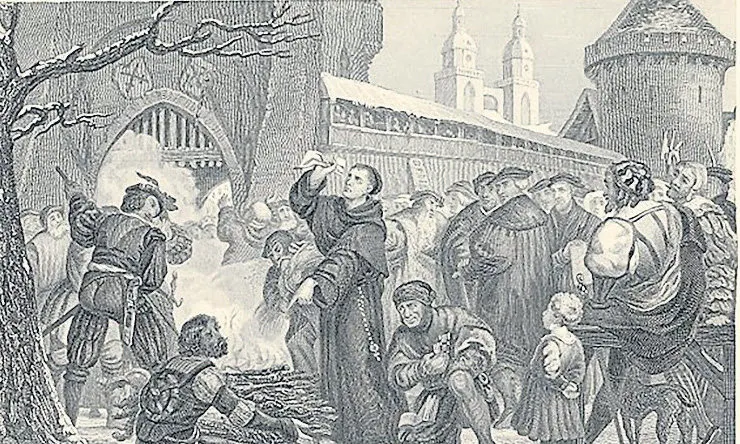
Luther burning the Papal Bull in front of the Elster Gate at Wittenberg in December 1520

It is without doubt one of the most important treatises in the history of the church.

I refer to Martin Luther’s The Freedom of a Christian (1520), sometimes called Christian Liberty. It is a powerful, yet succinct and polemic-free, statement of Luther’s position on how a person is saved and what that entails.

After the Leipzig Disputation of 1519, which we looked at last month, Luther realised that his quarrel with the medieval practice of indulgences was but the tip of the iceberg. His debate with Johann Eck had convinced him that neither the Pope nor general councils were infallible. The basis of authority in the life of the church had to be sola Scriptura, and thus an extensive reformation of the church was a necessity.
Share
< Previous article| Features| Next article >
Read more articles by Michael Haykin >>
Features
The run-up to Nicaea: Athanasius versus Arius

The run-up to Nicaea: Athanasius versus Arius

Among the three or four most significant theological controversies in the history of the church is the fourth-century struggle with …

Features
Before the creed of Nicaea

Before the creed of Nicaea

This year is the 1,700th anniversary of one of the great turning-points in church history, the Council of Nicaea (325), …

Need to advertise?

We can help you reach Christians across the country

Find out more

About en

Our vision, values and history

Read more