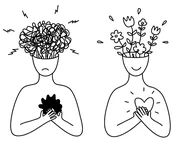
For many in the West, the mirror is a place of fear.
The reflection we see staring back at us never seems to match up with cultural ideals or withstand the comparisons we make. The pressure to be thin, toned, handsome and young comes from within and without, and each time we find ourselves deviating from what we have come to believe is best, there is a renewed suspicion we’re not good enough, that maybe we ought to try to make ourselves better through a new outfit, a new regime or even the surgeon’s knife.
Adonis or a donut?!
Of course, there is nothing wrong with being fit and healthy – it’s good to eat sensibly, exercise regularly – and there’s nothing wrong with enjoying creativity through the colour and texture of clothes. But, all too often, how we treat our bodies tips over from being a good thing into a ‘god thing’, an idol that whispers lies about how life should really be.
We buy into the fallacies that we have to be thin and pretty to be loved, sporty to be popular, trendy to be taken seriously at work and we think that young is better than old. We can start to hate our bodies or become obsessed with fixing them and, in the process, waste hours of our God-given time and money. The pressure is on – even in some churches – to turn up looking good, no matter how much life is falling apart.
It’s harder still for those who have been bullied or abused – the verbal and non-verbal assaults on our bodies are difficult to ignore. When someone repeatedly accuses us of being ‘disgusting’ it’s easy to assume they’re right, it’s easy to respond by trying to hide, work or diet the pain away. But the Bible offers us a radically counter-cultural word: to those whose hair is glossy and whose muscles are well-defined, to those with spare tyres and more grey hairs than can be counted – God says we are fearfully and wonderfully made (Psalm 139). He isn’t wrong.
The body’s higher purpose
The Bible offers far more than comfort though. God’s Word reminds us that we are embodied souls and as such these bodies of ours have a far higher purpose than to look good; they are made in the image of God (Genesis 1.26-28), little signposts designed to show an unbelieving world a glimpse of what our Father is like. They are a temple of the Holy Spirit (1 Corinthians 3.16), designed for righteousness (Romans 6.13) and Kingdom work (Matthew 6.28-33). He has given us bodies not so we can compare ourselves with others, conform to some cultural ideal and camouflage the bits that bring us shame, but so we can celebrate his goodness and holiness – and commit to his purposes. We may never win a beauty or sporting contest, but God in his sovereignty has given us exactly the body we need to honour and serve him here.
How do we move from our culture-bound views to Jesus’s liberating view? By going through the process of change set out in Ephesians 4: together choosing to put off our old view of ourselves, dwelling deeply on the transformational truths of the gospel and choosing to live a whole new way. As we look at adverts, we can remember the distortions of airbrushing and we can remind each other that the subliminal messaging that the latest product will bring happiness is a lie. We can speak Ephesians 1 to each other, reminding ourselves that our true identity is in our risen Saviour. We can repent of idolatrous attitudes towards our bodies, dwell ever more deeply on the beauty of Jesus and in the process become increasingly self-forgetful. We can commit to being worshipping communities where we really share our lives deeply, not put on facades. We can have honest conversations with our families about how we use our money (few of us actually know how much gets spent on hair, clothes and the gym) and we can commit ourselves to being the rolemodels the younger generation need, people who neither hate nor obsess over their bodies, but with them contentedly seek first the Kingdom of God.