Alison Hill on challenging the sacred-secular divide in politics
Amazing Grace, the film which documents William Wilberforce’s efforts and eventual success in abolishing the slave trade in Britain, celebrates its tenth anniversary this year.
It has long been one of my favourite films, telling the inspiring story of how one man’s faith resulted in the overturning of one of the greatest evils of his day. One of my favourite scenes from this film – which struck me the first time I saw it – is the one where Wilberforce, faced with deciding what to do with his life and torn between devoting it to God in the study of theology or pursuing what was already a promising political career, was challenged by his new friends in the London Abolition Committee: ‘We understand you’re having problems choosing whether to do the work of God or the work of a political activist. We humbly suggest that you can do both.’
Doing God’s work?
Why are these words so striking? Surely pursuing justice with the abolition of the slave trade should naturally be as much a part of the work of God as becoming a church minister? Maybe it was the inclusion of the phrase ‘political activist’, with all of the negative connotations that usually come with politics. But maybe it was also revealing a more pervasive assumption that I had already picked up at an early age – that ‘doing God’s work’ must mean doing something overtly Christian or within the church.
This phenomenon, often known as the sacred-secular divide, is one that can be found both inside and outside the church. We can often be overawed by those we view as ‘super-Christians’ because they preach sermons, lead worship or have moved abroad to become missionaries, and feel that we are doing far less for God in our ordinary, more mundane lives. Often we fail to make the connection between our faith which seems so real on a Sunday and what we get up to for the rest of the week.
Private / public
Likewise, those outside of the church can be very wary whenever anyone tries to bring matters of faith into ‘secular’ society. Very soon after he was elected leader of the Liberal Democrats, Tim Farron MP, an evangelical Christian, faced scrutiny with regards to his faith and was questioned at length on Radio 4’s Today Programme about the fact that he prayed about big decisions.1 In the Conservative Christian Fellowship’s Wilberforce Address last December, Stephen Crabb MP, also a Christian, talked about how hard it is for politicians to mention their faith and remarked that ‘it is easier for a politician to admit to smoking weed or watching porn, than it is to admit that they might take prayer seriously in their daily life.’2 More recently, a former senior civil servant has spoken about how there is ‘a sort of squeezing out of Christianity from many aspects of the public sector’, with many civil servants reluctant to admit to their faith for the fear that it might make them appear biased.3 Many outside the church have been keen to reinforce the idea that matters of faith should remain firmly within the religious sphere of life.
All life is God’s
However, if we look to the Bible, we can see that this view of the world is fundamentally flawed. In Psalm 24, the Psalmist tells us that ‘the earth is the Lord’s and everything in it’, highlighting how God is supreme over, and is thus interested in, all of creation. This idea is expanded further in Colossians 1, where Paul writes that Christ has redeemed all things: ‘For God was pleased to have all his fullness dwell in him, and through him to reconcile to himself all things, whether things on earth or things in heaven, by making peace through his blood, shed on the cross’ (Colossians 1.19-20). ‘All things’ means all of creation, not just the bits that are covered by the religious sphere of life. Indeed, at the end of the Bible we can see that it is God’s plan to renew and restore all of creation (Revelation 21.5). While full renewal will not take place until Jesus comes again, this does not mean that we should refrain from engaging with all aspects of creation and trying to reflect the restoration that will one day come.
As far as God is concerned, the world does not divide up neatly into the ‘sacred’ and the ‘secular’: all areas of life are of concern to him, and all areas of life can be used by him.
Christians must get involved
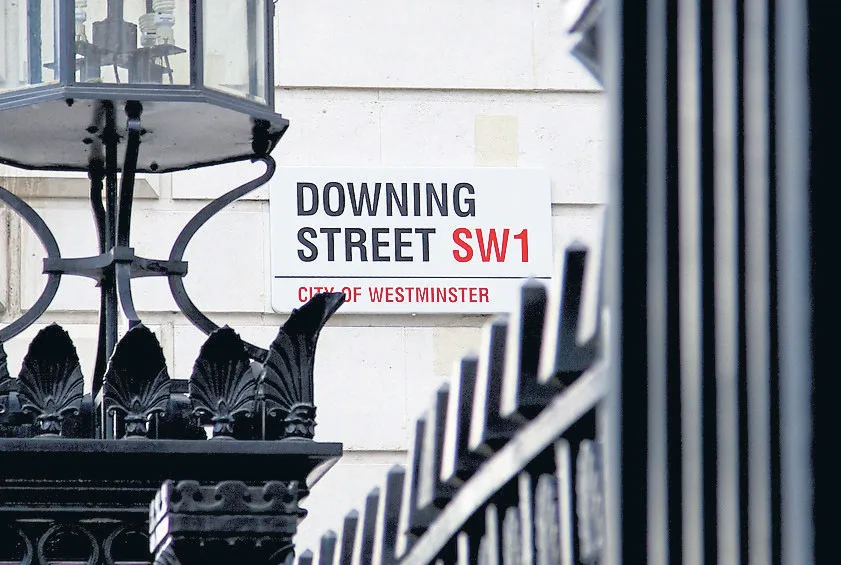
This means that it is important for Christians to get involved in all areas of life, and to see them as a way of serving God. In order to be salt and light in the world, as Jesus commands (Matthew 5.13-17), we need to be in different spheres of society, seeking to make a difference. This includes politics: in the Colossians passage referred to above, Paul explicitly states that thrones, powers, rulers and authorities were created in and for Christ (Colossians 1.16). Too often, Christians have shied away from getting involved in politics, following the world’s view that politics and religion do not mix.
In contrast, the Bible is full of people who have sought to serve God in politics and have been used by him as a result. Thus we see: Joseph becoming Pharaoh’s right-hand man and saving the Egyptian people and his own family from famine (Genesis 41); Daniel being an excellent governor in the Babylonian court and leading Nebuchadnezzar to acknowledge God’s rule (Daniel 2.47); Obadiah saving 100 of the Lord’s prophets from Jezebel while serving in the court of King Ahab (1 Kings 18); and Esther using her position as Xerxes’s queen to save the Jewish people from genocide (Esther 7-8). The presence of each of these figures within the political system meant that they were able to gain influence and be used by God.
Be engaged
We too can follow in their footsteps and seek to serve God in the realm of politics and there are many ways we can go about this. One easy way to get more engaged is to keep up-to-date with what is happening in the world of politics by reading a newspaper or watching the news and praying for what is happening and for our politicians to make wise decisions (1 Timothy 2.1-2). However, it is important not just to leave it there – we ourselves can be a part of the change that we want to see.
Consider writing to your MP about issues which concern you, or get more involved with your local community to find out what the problems that need addressing are and campaign to address them. You could also join a political party, so that you are able to shape politics from within the system – party members often have a say in party policy and help to select candidates and there are many ways to get involved practically behind the scenes. Too often we as Christians have had grand ideas about what society should be like, without ever actually getting stuck in and helping to bring that change about.
It is important not to confine ‘God’s work’ to the religious sphere of life, but instead recognise that we can be used by God in whatever sphere of society he has placed us in. Just as it was for William Wilberforce, the work of God can be the same as the work of a political activist. We may not achieve anything as significant as the abolition of the slave trade, but we can know that God is still at work through us in whatever we hope to achieve in our political involvement.
Those who show up
If you want to think through some of these things more, a great place to start is the Christians in Politics website (www.chris-tiansinpolitics.org.uk) which is full of resources to help you take things further. For further reading, Those Who Show Up by Andy Flannagan lays out the case for Christians getting involved in politics and is full of inspiring stories of ordinary Christians who have done just that.
Alison Hill has recently completed an internship with Christians in Politics.
FOOTNOTES
1. www.bbc.co.uk/programmes/p02x9qbh
2. www.christian-conservatives.org.uk/news/wilber force-address-2015-full
3. www.telegraph.co.uk/news/politics/12079366/ The-silencing-of-Christians-in-the-public-sector.html