Africa is turning the tables

Features
Date posted:  1 Jul 2015
Share Add       
Africa is turning the tables

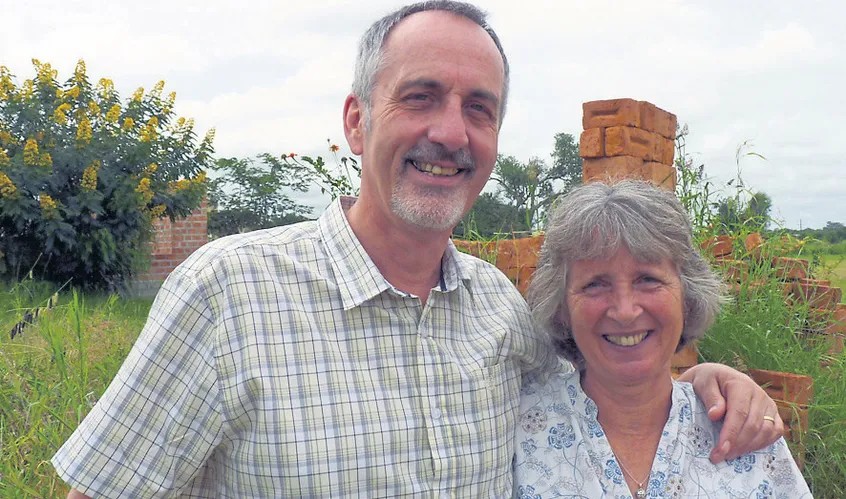
David and Liz Power

Those reached by Western missionaries are now becoming missionaries themselves

Over the last several years Operation Mobilisation has been developing an exciting new Missions training centre in Zambia.

This project was featured in an en article three years ago. In April en visited the site again and spoke with David Power. David and his wife Liz have been with OM in Zambia from early 2014 having left pastoral ministry in the UK to serve the Lord in Africa.

en: For those who don’t know you, what is your experience of serving the UK church?
DP: We had the privilege of serving two churches over the years of our ministry in the UK. I was Pastor of Needingworth Baptist Church in Cambridgeshire (Grace Baptist) from 1983-1990 and then moved to Longmeadow Evangelical Church in Stevenage (FIEC) from 1991-2013. Both churches were a real joy and blessing to serve, and we saw the Lord bless wonderfully in both situations while we were with them in both spiritual and numerical growth

en: How did you become interested in Africa and how did the Lord you lead you and your wife Liz to serve him in Zambia?
DP: Even before taking on the pastorate of Needingworth we had both felt the Lord calling us to overseas mission. What we didn’t realise was that, rather than going, it would be in a sending role for the next 30 years or so. Both churches were already very mission-aware and supportive, and we were privileged to encourage that on all sorts of levels.

Our interest in Africa in particular grew out of a number of visits we made to those we supported over the years. Early in 2012 we became convicted that the time had come for us to move on from the long-term leadership at Longmeadow and share some of our experience with those in Africa who have had far less opportunity to access training. As we waited on the Lord for specific guidance I took a year to study with the Masters programme at All Nations Christian College in Ware. During that study break, through various contacts (not least our son-in-law who is Zambian) we found ourselves planning to come to Zambia. Initially we expected to do so independently, but then we met up with the leadership of OM Zambia, based in the town of Kabwe and the Lord led us to join them.

en: What is your role with OM Zambia?
DP: Having done their introductory Discipleship Course in February 2014 we joined the training team here. Our responsibility as a team is the discipleship and training of potential missionaries from all around the world, but most particularly from Zambia itself.

A year or so ago we were also asked to form a member care team with one of the Zambian couples on the base here. We seek to provide pastoral care and support to OM missionaries based here in Kabwe as well as those Zambians already serving at the various centres around Zambia and the rest of the world. The number fluctuates as people move around, but at present is around 125 folk.

en: You came to Zambia to serve and teach. What has the Lord taught you since you arrived in this wonderful country?
DP: We have been really humbled by the prayerfulness and often extreme sacrificial commitment of our Zambian colleagues. The reality of raising support for their calling and ministries is immense here, as the Zambian church is still mainly in the mind-frame that mission is about ‘the west to the rest’, rather than being Christ’s mandate for all His followers wherever they are. The task of mobilising the church in Zambia is therefore a major one.

More personally, we continue to be challenged by (but really enjoy!) the cultural differences between Zambia / Africa and what we take for granted as the norm in the West.

en: What has been your single biggest encouragement so far?
DP: Probably the sense that we have made real and lasting friendships with a number of our brothers and sisters here. We feel accepted and are humbled by the willingness they show to receive from the different experiences we have to share with them.

en: The potential for African churches to be a power-house for cross-cultural mission has long been recognised. Do you see any signs of strategic developments in this direction?
D
P: I would say that, as far as Zambia is concerned, the most noticeable issue is the high number of Zambians feeling called to cross-cultural missions. It is a real privilege to be involved with OM as they are at the forefront of serving the church by training and equipping these potential cross-cultural missionaries.

Development is not only in dealing with the new missionaries, however, but also in seeking to teach, mobilise and inspire the church as a whole to grasp God’s heart for reaching every people, nation and language with the gospel of Jesus Christ.

en: The material poverty of many African churches is an obvious potential hindrance to cross-cultural mission. What idea does OM have regarding the development of sustainable mission?
DP: This is a major discussion point in the field here. It is accepted that western models of support do not fit and are unrealistic for the African scene. So alongside local church mobilisation there is an ongoing programme of training for tent-making ministries, for equipping individuals to be self-supporting, and in the area of what a healthy partnership looks like with western and other funders.

A particular initiative which is being pioneered here in Kabwe is the concept of raising funds for building flats for commercial rent, the proceeds of which then go to the ongoing support of African missionaries. This model results in sustainable support on the ground, without a continual financial dependence on the specific supporters.

en: How do you think UK churches and church leaders can effectively partner with churches and Christian missionary organisations in Zambia to further God’s kingdom?
DP: The number one need is as always in true Kingdom work: prayer. Please remember us in your prayers and ask for newsletters and information to inform your praying. In addition to prayer, it is obviously still a fact that compared with our global South brethren the Western church is very rich in resources (both straightforward money, but also books, mission experience and expertise etc.), so there continues to be a need for investment in the work of the Kingdom in our countries – though, as your question suggests, this should be seen much more in the sense of partnership than one-way support.

We should never ignore that we have so much to learn and receive from our African brethren and it is still so important to beware the patronising approach which has sadly so often marked our relationship. I would also encourage any potential partnership to consider looking at the sort of sustainable models being patterned by OM Zambia – you can see more on our website or by contacting us directly about how this might look in practise.

Share
< Previous article| Features| Next article >

Need to advertise?

We can help you reach Christians across the country

Find out more

About en

Our vision, values and history

Read more