‘Who do you trust? How do you know?’
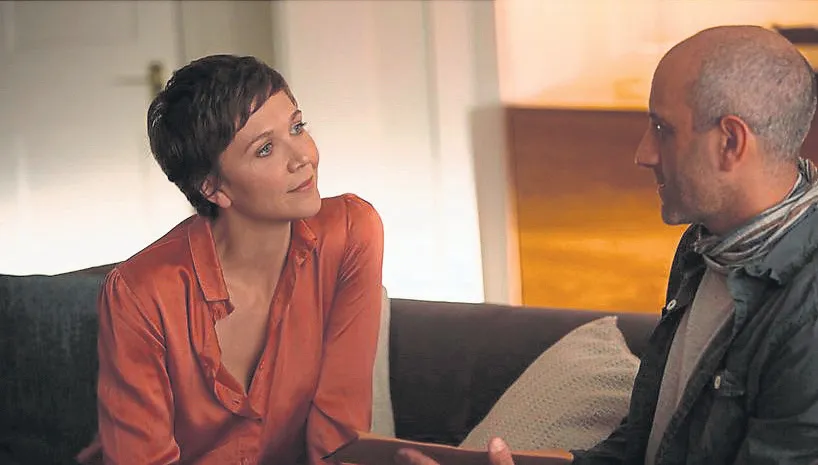
For the last few months the nation has been gripped by the BBC’s latest drama offering, The Honourable Woman. The plot focuses on the Middle East, but it is also the story of the personal struggles of the enthralling central character, Nessa Stein (Maggie Gyllenhaal).
Writer and director of the series, Hugo Blick, explains: ‘The series centres around a woman who is deeply conflicted about past events, events that have haunted her; it is the reason why she is constantly battling a consuming internal conflict. This internal struggle for reconciliation with her past and her search for personal equilibrium is manifested in her political activities – to try to reconcile a conflict that has equally haunted a region of the world, countless lives, and political agendas for many years’. The conflict to which he refers is the same one that has dominated headlines recently: that between Israel and Palestine. The real-life backdrop to the story is part of its power.
Hooked?
What is it about this programme that has got so many of us all hooked?
The show’s plot is both emotionally charged and violent. Rebecca Nicholson of The Guardian claims, ‘The Honourable Woman, which has been attracting around 2.5 million viewers, could be cited as a perfect example of what many regard as a golden age of television, which is currently outshining film. It is both a political drama and a spy thriller, cinematic in its ambition, and it tells a complex story from many perspectives, covering a particularly divisive conflict, over the course of eight hours’. Put simply, it is very good TV.
Sarah Chalmers at the Telegraph claims that it is Nessa, a ‘chic, no-nonsense heroine’, that draws us in. Most importantly, Nessa is both ‘intelligent and chic (in everything from her accent, her political motivations and her sexuality, to her Mulberry coats and Stella McCartney suits).’
Honourable?
Having a strong woman as the lead character clearly plays a part in the fascination with the show. What of the other half of the title: honourable?
The honourable woman of the title is most obviously Nessa herself. Taken literally, it refers to her position as a baroness in the House of Lords. Yet Blick claims: ‘The title The Honourable Woman is a reflection upon Nessa Stein’s moral condition, not her professional status.’ Several newspapers have been quick to point out that, morally, the title could also be given to Nessa’s close friend Atika (Lubna Azabal) or her sister-in-law Rachel (Katherine Parkinson). Indeed, part of the fun of the programme was keeping up with its twists, which allow different characters to appear ‘honourable’ with every turn.
What does it mean to be honourable? Initially, the series seems to suggest that it involves holding high principles without compromise. However, as events unfold, things become complicated. Characters we think of as ‘good’ are forced to make concessions, whereas the ‘baddies’ stick to their guns (both metaphorically and literally, as it turns out). As one critic puts it, ‘no one behaves well’. So can we even draw a clear distinction between ‘goodies’ and ‘baddies’ in a conflict like the Israel-Palestinian struggle or amidst the situation in Gaza? In these instances, what role might morality play and how does honour fit in?
To ponder
The show does not offer any simple answers. A review of the final episode published in The Guardian praised the ambiguity of the show’s ending, claiming: ‘Blick chose no sides and offered no political resolution. Avoiding lazy pigeonholes of good and evil, he was free to explore the complexities of the people involved, rather than taking some po-faced moral stance’.
This open-endedness is perhaps more realistic, and certainly more compelling, that a neat conclusion, but it leaves Christians with some interesting points to ponder. How can we consider the moral dimension of the real political situations on which the show is based without becoming ‘lazy’, or being unfeeling and ‘po-faced’?
One thing the Bible is clear about is the definition of what it means to be honourable. For example, 2 Timothy 2.20-21 claims: ‘Now in a great house there are not only vessels of gold and silver but also of wood and clay, some for honourable use, some for dishonourable. Therefore, if anyone cleanses himself from what is dishonourable, he will be a vessel for honourable use, set apart as holy, useful to the master of the house, ready for every good work’.
It is not only in our actions that we are to be honourable, but our thoughts should be consumed with ‘whatever is true, whatever is honourable, whatever is just, whatever is pure, whatever is lovely, whatever is commendable’ (Philippians 4.8). This might, in fact, prove fruitful advice for untangling the concerns of The Honourable Woman: rather than focusing on the overwhelmingly negative actions of the characters, what can we find that is commendable, and how might these things help us to see the situation differently? When you think about it like that...