Those who teach 'will be judged more strictly'

Niv Lobo  |  Comment
Date posted:  3 Oct 2025
Share Add       
Those who teach 'will be judged more strictly'

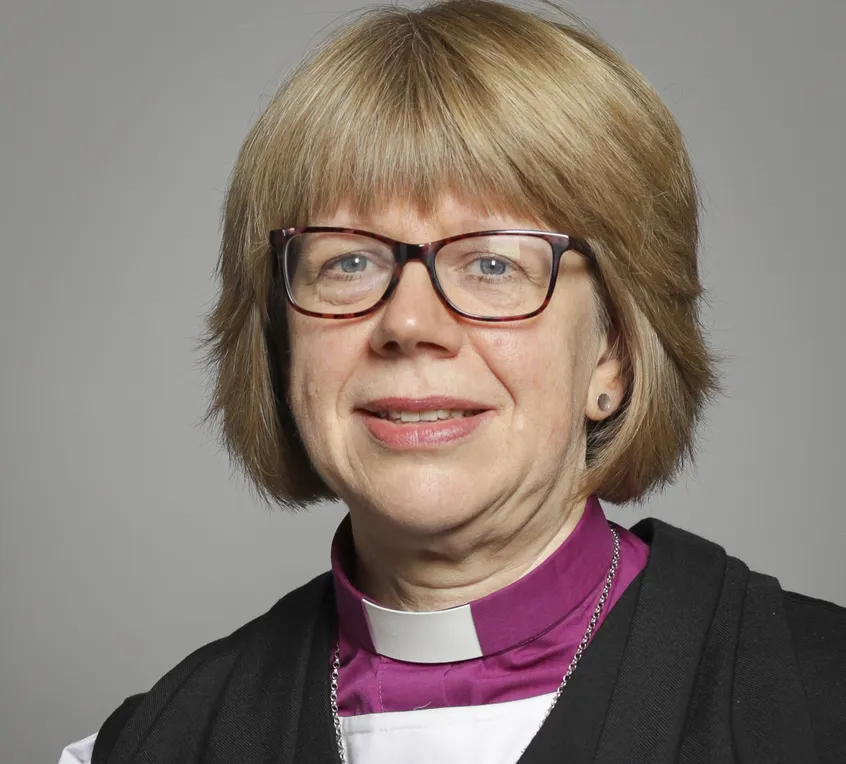
Image: Sarah Mullally who has today been named as the new Archbishop of Canterbury. Source: Wikimedia Commons

Nolo episcopari! No, not a Harry Potter spell. It’s a Latin tagline – meaning "I don’t want to be made a Bishop!" – a reaction that has almost become traditional when someone is nominated to significant office in the church.

It’s an intuitive idea: the best person to be given power is the one who isn’t grasping for it. Given how much influence and authority the role entails, perhaps the most becoming candidate for an overseer in God’s church is one who refuses it.

On the day we learn of Dame Sarah Mullaly’s nomination as Archbishop of Canterbury, one can understand that reticence for another reason. Who would want to undertake this role, at this present time? Who wants to exercise leadership of a Church marked by bitter division, numerical decline and financial difficulty? Whatever path taken, thousands within the Church of England, and many more across the Anglican Communion worldwide, are bound to be disappointed. Human judgment will be severe; divine judgment, immeasurably more so: James 3v1 warns that those in the church’s teaching office will be judged more strictly. For these reasons, one can understand wanting to say "Nolo episcopari."

And yet, the Bible cuts across that, since one of the "trustworthy sayings" of Paul’s final letters (two to Timothy, one to Titus) makes the opposite point: "Here is a trustworthy saying: whoever aspires to be an overseer desires a noble task" (1 Timothy 3v1). It is this Bible word, "overseer", which lies behind the office of Bishop, as it is understood in the history of the Church of England. And Paul says that wanting that is a GOOD thing. Oversight of the kind he goes on to describe is God’s gift to the Church, making it a household where church members are cared for (verse 5), able to be a pillar and foundation of the truth (verse 16). This is a noble task.

I write as an Anglican evangelical, and as an ordained Church of England minister, so today’s news impacts me significantly. My feelings are mixed: a sense that while other candidates could have been better, others would have been so much worse. Many of you might be joyfully serving the Lord in other churches, and feel unburdened by the woes of the Church of England, but today’s news impacts us all. Should the established Church lose touch with gospel convictions and scriptural practice, that would tilt our culture even more decidedly against these things.

By contrast, an Archbishop of Canterbury who leads prayerfully, is unashamed of the gospel, quick to point to Jesus and call others to follow Him, would be a tremendous blessing. And we can only pray for Bishop Sarah to have the courage to prioritise those things above the political machinations and intrigue that have dominated Anglican politics. Especially given some of the key issues facing the Church of England, I must confess some trepidation: will the new Archbishop seek to understand where I, and so many like me, are coming from? Will she refute false teaching, and uphold her ordination vows by guarding the good deposit of the Gospel? She will be earnestly in my prayers on that front.

And while much media attention has already been given to the fact that she is the first female Archbishop, this will not be straightforward for those in churches like mine which, in accordance with the teaching of Scripture and the consensus of history, are not able to accept the oversight of women as presbyters or bishops. As a complementarian with global majority heritage, I am a minority twice over in the Church of England: in one area, my ethnicity, I experience a church which is eager to accommodate me and seek my flourishing; in the other, my complementarianism, I experience the opposite (and today’s news, from one angle, only confirms that).

But as I look to Scripture for guidance, and especially as our evening services at church work through 1 Samuel, here are two ways I am led to respond.

  1. First, to tremble at the God who can abandon His tabernacle. The ministry at Shiloh falls into sin – and the Lord abandons it. Eli’s sons are evil and exploitative, and Eli fails to discipline them (1 Samuel 3v13). God is not mocked. He is not to be treated as a talisman; when Israel try that, taking the ark into battle, they experience a humiliating defeat (1 Samuel 4v11). The Church of England ought to hear this as a solemn warning: its heritage and institutional heft, its past experience of God’s faithfulness, are precious gifts. But they cannot be relied on, if we depart from the Lord.
  2. Second, we can learn from David’s example. We spend many chapters in 1 Samuel waiting for the King God has promised; when we meet Saul, his promising start soon gives way to tragic failure. When David is anointed, and proves himself in combat against Goliath, it seems so straightforward: time to move from Saul to David. And yet, so many chapters are given over to the uncomfortable overlap: Saul on the throne and holding the reins, gradually driving David out in murderous jealousy. But how does David respond? Although he is a warrior, he never draws his sword against Saul. Though given multiple opportunities, David refuses to strike Saul down. He will not lift his hand against God’s anointed (1 Samuel 24v10), even though Saul is such an unworthy occupier of that office.

The overlap of Saul and David tells us that God’s judgment is to give us leaders we deserve, and His mercy is found in the reign of Christ. And Christ Jesus, great David’s greater son, is a peaceable Messiah, too. Although He wields ultimate power and authority, He refuses to kill His opponents. He dies for them, instead. And just as David respects Saul’s office, so too does Jesus relate with remarkable humility to the authorities of His day. He sends the healed leper to a priest, as a testimony to the priest (Mark 1v44). This is the same priestly apparatus that He knew would be turned against Him, and still Jesus sought to witness to them. He commands reverence to the teachers of the law and the Pharisees who "sit in Moses’ seat" (Matthew 23v2) even as He warns that their example is not to be followed.

Perhaps we will have to work along those lines within the Church of England, and outside it: peaceably, prayerfully and persistently proclaiming Christ and the refuge that is found in Him.

Read more

Share
< Previous article| Comment| Next article >
Read more articles on:   Church of England
Read more articles by Niv Lobo >>
Comment
Truth, shame & the search for blame

Truth, shame & the search for blame

There was a stream of articles and commentary in the weeks leading up to Jason Arday’s resignation as Professor of …

Comment
Farage, Lowe, Polanski... pray for them

Farage, Lowe, Polanski... pray for them

Some swords are double-edged; they can cut both ways, not just at those against whom they are wielded, but also …

Need to advertise?

We can help you reach Christians across the country

Find out more

About en

Our vision, values and history

Read more