Is your church 'toxic' to a child's faith?

Kay Morgan-Gurr  |  Comment
Date posted:  19 Aug 2025
Share Add       
Is your church 'toxic' to a child's faith?

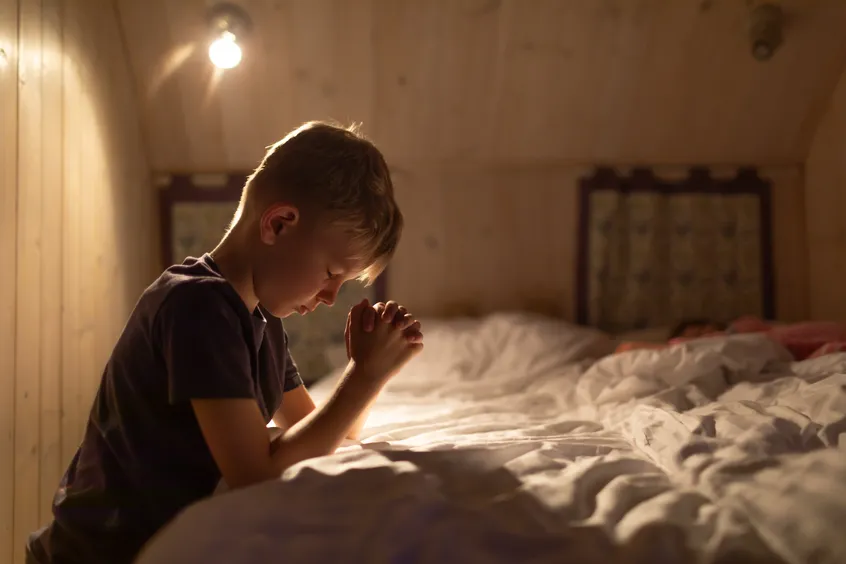
Source: iStock

Is church "toxic" to a child's faith?

In answer to my own question, I believe "the church" can sometimes be toxic to a child's faith.

I should probably point out that not every church is toxic in this way. But it's worth every church asking themselves this question.

It was toxic to people in my family, and that toxicity has gone on to affect them for many years.

It can be a problem.

Chemically speaking, toxicity is often due to a combination of substances rather than just one, and in much the same way, I believe the problem of church being toxic to a child's faith is down to a combination of factors - but it's not always the same mix.

There will be a different recipes of toxins for each individual child, as something that affects one child may not affect another and vice versa.

For children with additional needs, these toxins can be amplified or made more toxic just because many question so many things about them, including their ability to have faith. Whenever a negative response is heard or experienced by these children it adds extra toxicity on top of what other children may experience. But also, being disabled or having additional needs makes these children more likely to come face-to-face with toxicity.

Within that mix, that recipe for toxicity, I believe there are a five constants - things that will affect the majority of children, especially those with additional needs. They are:

  • A lack of acceptance and grace and therefore not being fully part of the church.
  • A lack of opportunities for children to serve.
  • A lack of a safe spaces for children to make mistakes and learn from them, to wrestle with faith and ask the difficult questions.
  • A lack of vision - for both the child and the children's work, especially when that child has an additional need or disability.
  • A lack of solid theology, taught in a child friendly and accessible way that takes into account the age and stage of the child.

    We often either give the children a twee theology that only gives milk and no meat, wrongly assuming they can't manage meat, or we give a thuggish theology that is either badly taught ideals or gives so many rules that a child just cannot live up to them.

    All of this, when actually, we should be giving meat, cut up into child sized pieces - the right size for their stage of the faith journey.

But - there is a "recipe" for an antidote to the toxicity (because I can't help putting a positive point in)! Here it is:

  • Acceptance - regardless of additional needs or disability.
  • Love - by seeing needs and meeting them, whether practical, emotional or spiritual.
  • Guidance - by example, by the way we teach and disciple, plus the way we include all within this.
  • Significance - because all have a need for this in healthy emotional and spiritual development. God sees our significance and we need to demonstrate this practically.

Let’s be the antidote as we prayerfully work with, and alongside, those children who have additional needs and disabilities, whilst also remembering that they grow up.

Share
< Previous article| Comment| Next article >
Read more articles on:   disability & accessibility
Read more articles by Kay Morgan-Gurr >>
Comment
Zoo incident sparks debate on disability, care & public reaction

Zoo incident sparks debate on disability, care & public reaction

In the news recently, we heard the shocking story of a child being "thrown" into the crocodile enclosure at Johnson’s …

Comment
My church friend has become disabled: What do I do?

My church friend has become disabled: What do I do?

Disability affects 12 per cent of children, 25 per cent of working-age adults, and 45 per cent of people over …

Need to advertise?

We can help you reach Christians across the country

Find out more

New here?

Register and get three free articles each month!

Register