

When I was a boy growing up in Wales, World Cups arrived with a particular smell: the smell of a freshly opened packet of Panini stickers.
Before social media, before 24-hour football coverage, Panini albums were how many of us first discovered the wider world of football. I can still remember sitting on the floor staring at teams from countries I barely knew existed, learning flags, kits and improbable surnames long before I understood geography.
Football enlarged the imagination. Panini helped it happen. But the real joy was never simply collecting.
The playground became a trading floor. Stickers spread across damp benches. Endless duplicate goalkeepers. Fierce negotiations over "shinies". Everyone knew the thrill of finally landing the player you needed, and the despair of opening another packet full of repeats. Very few of us ever completed the album - but that was beside the point. The real value was relational, not transactional.
That is why the news that FIFA is ending its long partnership with Panini feels oddly significant. We are told the future will be more digital, interactive and commercially expansive. There will still be collectibles, apparently, just redesigned for modern audiences.
Yet something important is being lost.
"Even childhood is now curated through screens rather than discovered in playgrounds."
Modern life increasingly struggles to value embodied human experience. Everything must become faster, personalised and monetised. Even childhood is now curated through screens rather than discovered in playgrounds. Digital life offers connection without presence, community without inconvenience, and entertainment without patience.
The gospel and embodied realities
Christians should recognise the spiritual danger in that.
The Christian faith is stubbornly physical. God does not merely send information; He sends His Son in the flesh. The gospel comes to us through embodied realities: gathered worship, shared meals, baptismal water, bread and wine. Christianity refuses to believe we are isolated consumers of content.
And many of the practices that shape us spiritually are small and ordinary: kicking a ball against a wall, travelling to matches with your father, swapping stickers with friends in the playground. Such habits quietly teach patience, loyalty, friendship and belonging.
A culture that no longer sees the importance of children gathering in playgrounds to trade football stickers will eventually find it harder to understand why physical presence matters at all.
"We already live in a world that increasingly treats church as content to consume rather than a people to belong to."
We already live in a world that increasingly treats church as content to consume rather than a people to belong to. But God does not form Christians primarily through isolated consumption behind screens. He shapes us through embodied, inconvenient, joyful life together: singing alongside other voices, sharing meals, praying in the same room, carrying one another’s burdens face to face.
Of course, Panini stickers were commercial. Even as children, we knew the whole thing was a brilliant racket. But they also created community in ways digital culture often cannot. You needed other people. You had to talk, negotiate, share and wait.
Perhaps the sadness people feel over something as trivial as Panini stickers reveals something deeper. We were not made for isolated digital consumption. We were made for fellowship, for shared rituals, for embodied community — and ultimately for communion with God and one another.
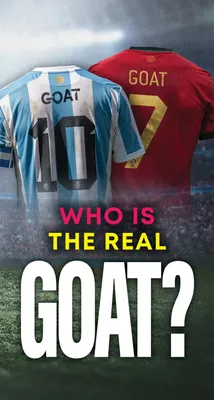
Graham Daniels and Jonny Reid have written an evangelistic tract for for the World Cup called Who is the Real GOAT?, published by 10ofthose and able to be purchased here.
Dr Graham Daniels is the General Director of Christians in Sport, he is also a Director of Cambridge United FC and an associate staff member at St Andrew the Great church in Cambridge.





Manchester City: Would we care if it was our club?
Last Sunday, Manchester City produced an emphatic 3–0 victory over Liverpool at Anfield. Haaland, Doku and Cherki scored the goals. …